
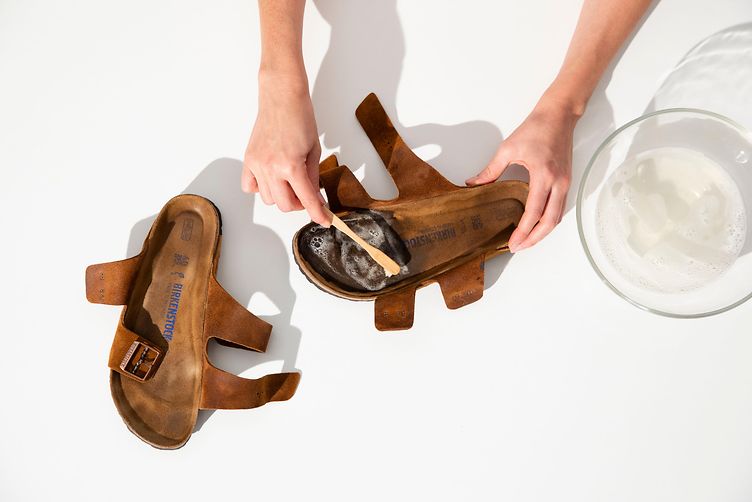
Sandals with a cork footbed are very comfortable for the summer season and also suitable for those who walk a lot or spend a good part of the day on their feet. They are practical, they match almost every outfitsthey are very easy to put on because very often they are clogs without closures and straps.
Cork, comfortable and breathable, is a very delicate material that must be protected so that it retains its properties (first and foremost, its softness). First of all, it blackens quickly, and this can affect the original beauty of the sandal.
Furthermore, since it is a very absorbent material, it can quickly turn into a deposit of bacteria, sweat and bad odors: our feet, especially in summer, sweat a lot and sweat and dead cells are deposited on the sandals, creating an environment that is anything but healthy.
Finally, if exposed to heat sources or simply to sunlight, cork will tend to dry out, losing its softness: this increases the risk of cracks within the material which can make our sandals uncomfortable, if not unusable.
Prevention
In addition to periodic cleaning, it is useful to take some precautions to prevent deterioration of the cork. A useful tip is to alternate the use of sandals with other footwear, avoiding wearing them every day for long periods: in this way the material has time to “breathe” and dry completely between one use and another. It is also good practice not to store wet sandals in closed boxes or poorly ventilated cupboards, as trapped moisture encourages the proliferation of bacteria and mold.
How to clean cork sandals
Luckily, cleaning cork sandals is a rather simple operation, which requires the use of ingredients that we can easily find in our kitchen: bicarbonate of soda, lemon juice, olive oil, warm water. Let’s see how to do it.
If our sandals are blackened, just mix a few tablespoons of bicarbonate of soda with a few drops of lemon juice to create a sort of paste. We then spread this paste over the entire surface of the cork insole and leave it to act for an hour before rinsing with hot water: the whitening action of bicarbonate and lemon will eliminate stains and marks.
Another effective natural remedy, especially for those suffering from excessive sweating, is talcum powder or rice starch. Simply sprinkle a small amount on the footbed in the evening, after use, and leave it to act until the following morning: these products absorb residual humidity and help keep the cork dry, reducing the risk of bad odors and the formation of dark stains due to sweat.
If, however, the cork of the footbed has now hardened, we can “nourish” it with a little olive oil. In this case, we pour a few drops of oil into the center of the footbed and massage the entire surface well with the hand, then leave it to act overnight. Before wearing your sandals again, remember to clean them with a damp cloth to remove excess oil.
Finally, if the sandals have now taken on a bad odor (due to colonies of bacteria and accumulated foot sweat) we can act with pure bicarbonate, given its powerful anti-odor action. All we have to do is sprinkle the footbed with baking soda powder, leave it to act for a few hours and then rub vigorously with a soft cloth to remove the dust.
For this purpose, if we have it at home, we can also use white clay: this product, in fact, also absorbs toxins and neutralizes bad odors, sanitizing our sandals. It is used in the same way as bicarbonate.
How to dry cork sandals after washing
A final aspect not to be underestimated concerns drying after washing: cork should never be exposed directly to the sun or to heat sources such as radiators or hairdryers, because it would risk drying out and cracking quickly. The best choice is to leave the sandals to dry in the shade, in a well-ventilated place, perhaps temporarily padding the footbed area with absorbent paper to speed up drying without compromising their softness.
FAQ
How to clean blackened cork footbed sandals?
Just prepare a paste with a few tablespoons of bicarbonate of soda and a few drops of lemon juice, spread it on the insole, leave it to act for an hour and then rinse with hot water.
How to soften hardened sandal cork?
Pour a few drops of olive oil into the center of the footbed, massage the surface well and leave to act overnight. Before wearing, wipe with a damp cloth to remove excess oil.
How to eliminate bad smell from cork sandals?
Sprinkle the footbed with bicarbonate powder, leave to act for a few hours and then rub with a soft cloth. Alternatively you can use white clay or talc/rice starch.
How often should cork sandals be cleaned?
There is no fixed rule, but it is advisable to intervene as soon as you notice stains, odors or signs of hardening, and to carry out a more thorough cleaning at the end of the season before storing them.
Can cork sandals be washed in the washing machine?
No, cork is a delicate material that should only be treated with manual cleaning and natural remedies: washing it in the washing machine would risk ruining it irremediably.
How to properly dry cork sandals after washing?
Never in direct sunlight or near heat sources: it is better to leave them to dry in the shade, in a well-ventilated environment, possibly with absorbent paper on the footbed.
Why does the cork in sandals dry out and crack?
Prolonged exposure to heat and sunlight dehydrates cork, causing it to lose softness and increasing the risk of cracking and splitting.
