
I arrived in Aquileia in Friuli Venezia Giulia with the idea of a simple visit, but from my first steps I understood that history is not exposed here: it is still alive. The sensation is that of walking inside a stratification of eras, where each street seems to rely on a different memory. The air itself has something still, almost suspended between the Roman Empire and the Christian tradition.
A city born to control the Adriatic and become a crossroads of worlds
Aquileia was born in 181 BC as a military and commercial outpost, designed to control the borders and routes to Central Europe. In a few decades, however, the city changed scale: from a strategic settlement it became one of the most important ports of the Roman Adriatic, a meeting point between merchants, armies, cultures and religions. This cosmopolitan vocation transformed it into one of the key cities of the Empire, so much so that today the entire archaeological area is recognized by UNESCO as a world heritage site.
@RebeccaManzi/GreenMe
The Basilica and the mosaics at a glance
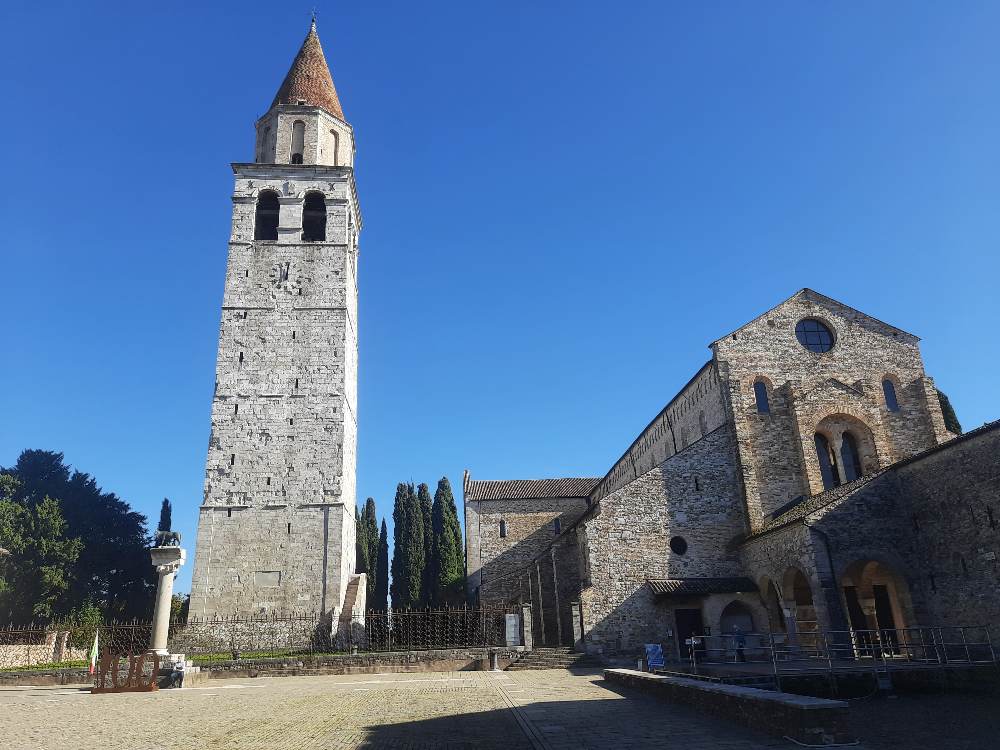
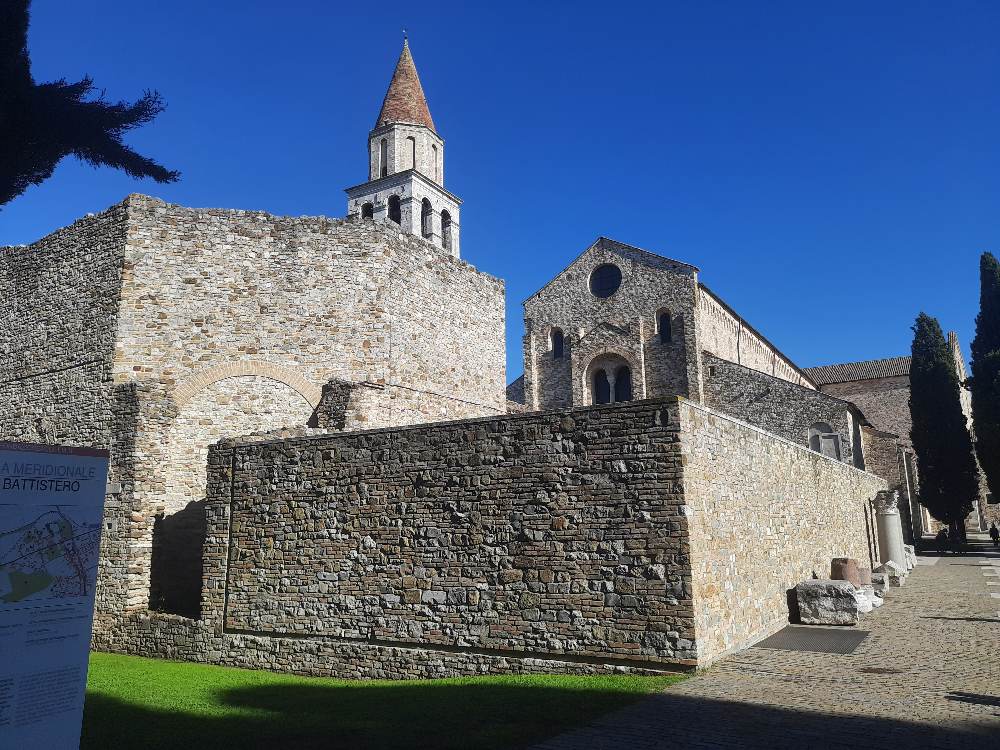
The first real impact is the Basilica of Santa Maria Assunta, which dominates the square with a sober but imposing presence. Inside, the mosaic floor is what captures the eye without the possibility of distraction: figures, symbols and scenes that tell of an ancient world with surprising force. The mosaic of the South Hall, among the largest in the Christian world, is a surface that seems to never end, a story in images that is more overwhelming than any explanation.
@RebeccaManzi/GreenMe
@RebeccaManzi/GreenMe
The Roman Forum and the political heart of the city
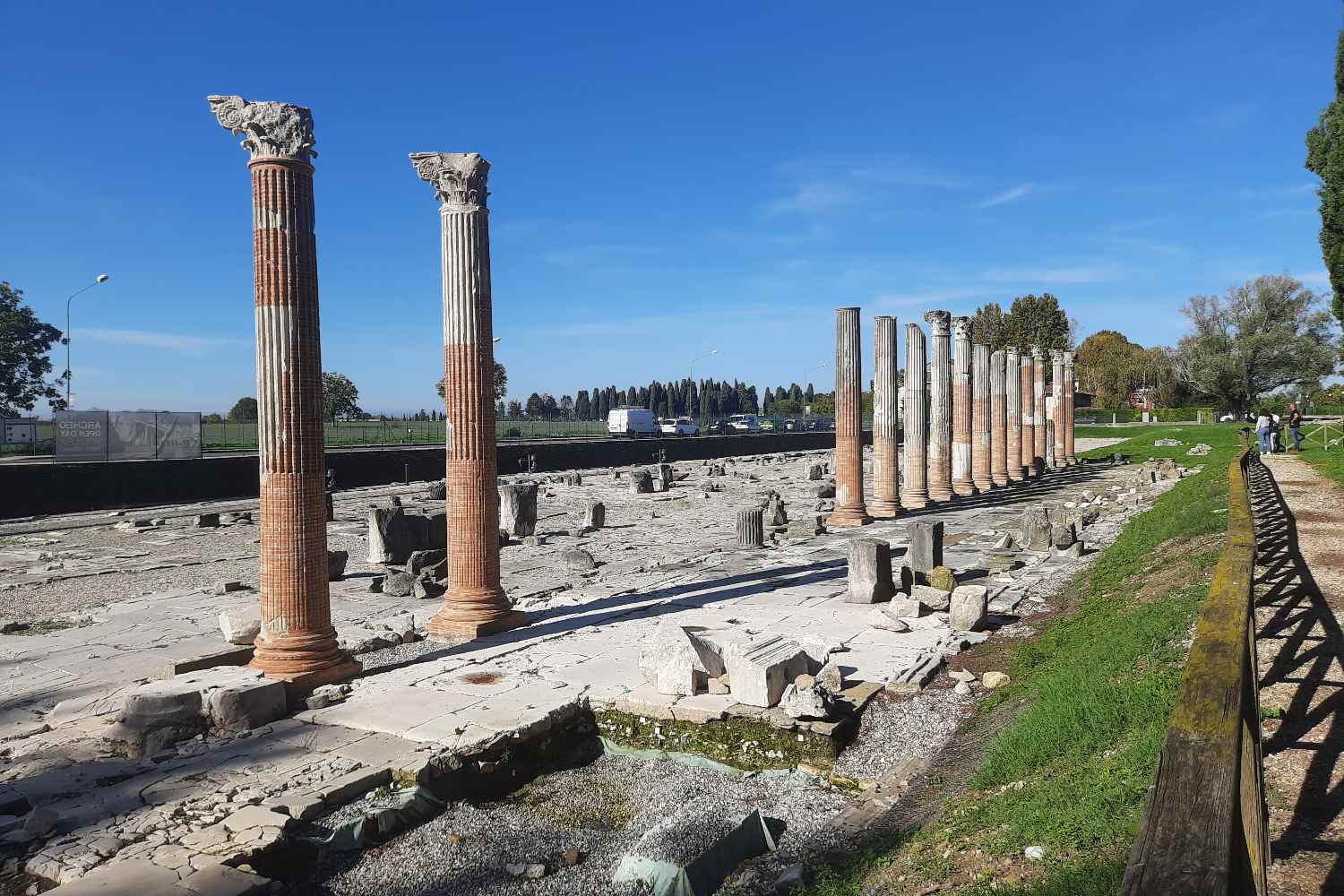
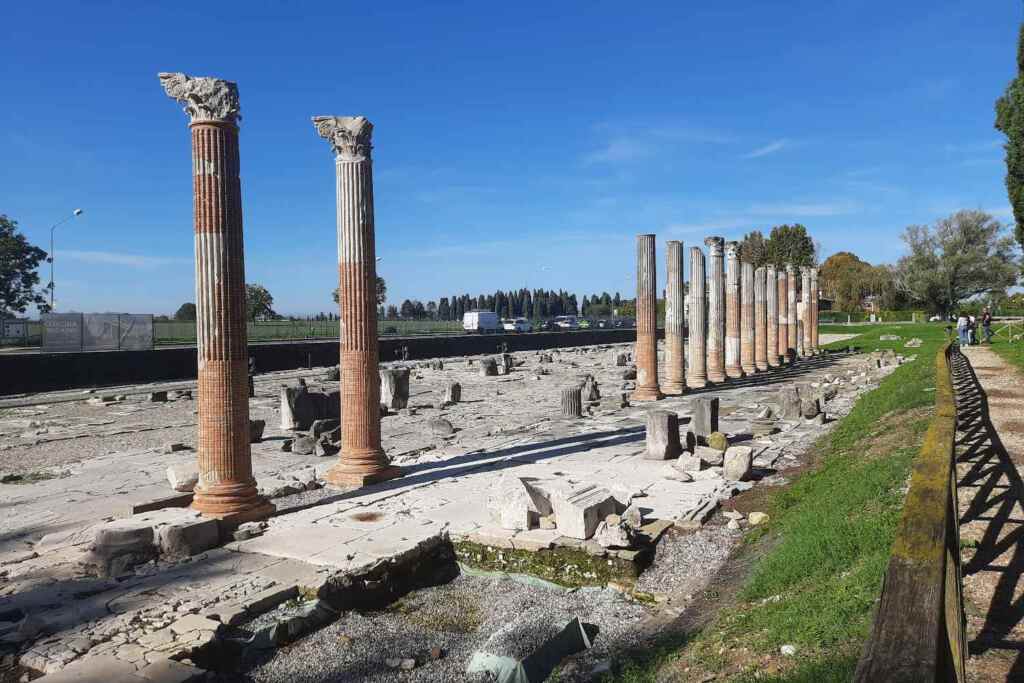
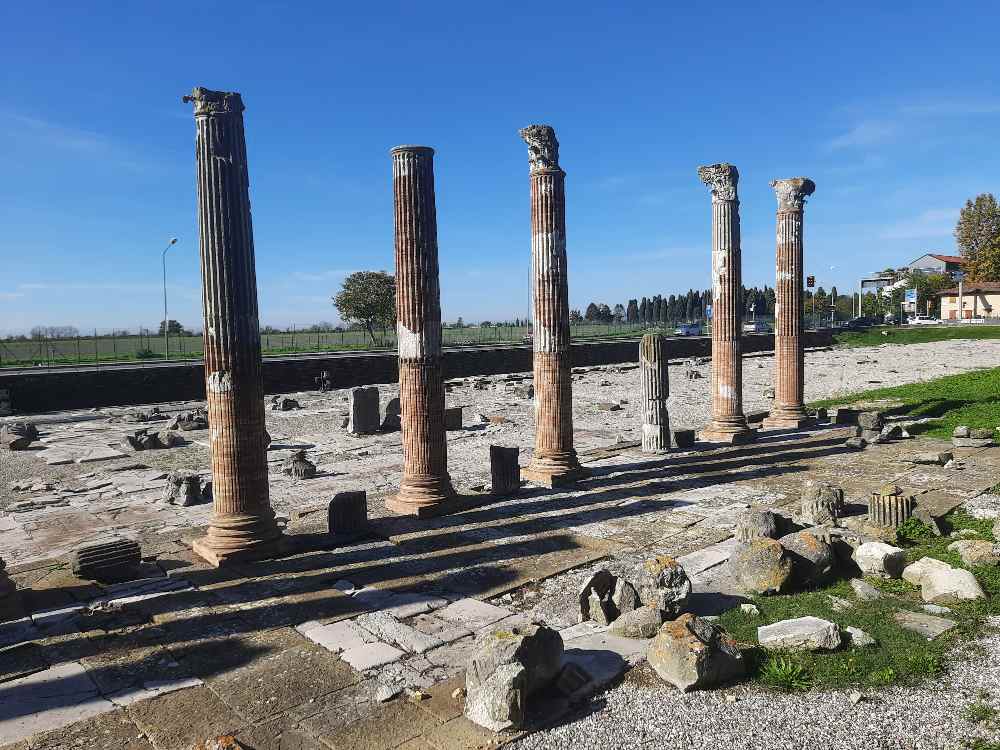
Continuing along the archaeological route you arrive at the Roman Forum, today an open area which still preserves columns, bases and traces of the original colonnade. Walking here means imagining the continuous movement of a city which, in imperial times, was one of the most important centers in the Northern Adriatic. The current silence contrasts with the role that this space had as a political and commercial center. A real ancient Rome, but in Friuli.
@RebeccaManzi/GreenMe
It was a large limestone-paved square, over one hundred meters long, surrounded by porticoes and public buildings. Political, religious and administrative activities were concentrated here: the civil basilica for justice, the temples, the shops. The surviving columns and decorative remains tell of a city designed to amaze, with a monumental structure that was consolidated as early as the 2nd century BC and was enriched in the imperial era with sculptural apparatus and symbolic reliefs.
@RebeccaManzi/GreenMe
The Via Sacra up to the river port
One of the most evocative stretches is the Via Sacra, an avenue that connects the Basilica area to the old port on the Natissa river. If the Forum represented power, the river port was the economic engine with docks and warehouses that connected Aquileia to the Mediterranean. Today there remains the sign of a city that lived on continuous traffic and exchange. The so-called Via Sacra, today an archaeological walk, follows the route of the ancient riverbed and leads you through remains of decorations, inscriptions and port structures which show how intense commercial life was.
Ancient markets and new excavations: the daily face of the city
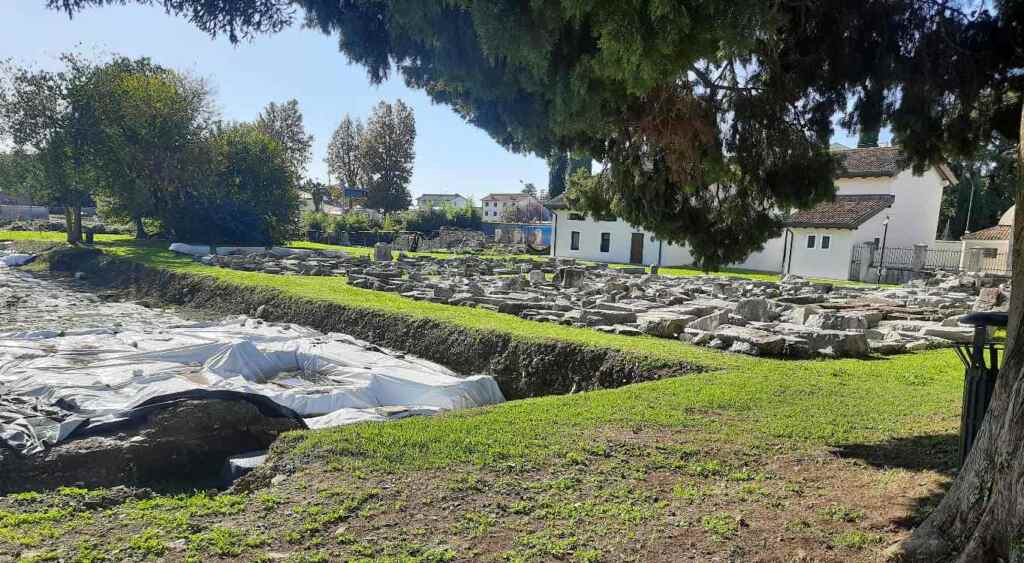
One of the most interesting discoveries concerns the Fondi Pasqualis area, where excavations have brought to light a complex of markets and public spaces. Here emerges a paved square with porticoes and pillars, dating back to late antiquity, which confirms the strong commercial vocation of Aquileia. Not only exchanges of goods, but also daily life: signs of games with pawns were found on the curbs, proof that these spaces were also places for meeting and socializing. More recent research suggests that the complex was even larger, with multiple squares connected to each other.
@RebeccaManzi/GreenMe
A city that is not just archaeology
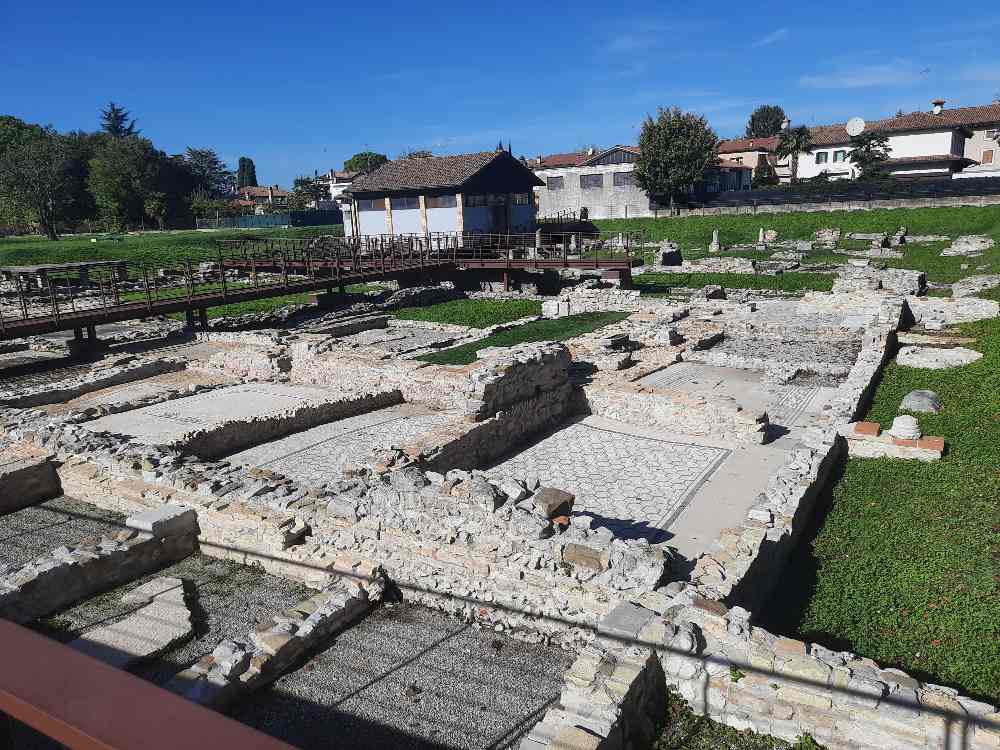
Before leaving, I had the feeling that Aquileia is not just an archaeological site, but a complex system of overlapping narratives. Visiting the city means crossing a landscape where history is not closed in cases, but extends outdoors. From the Basilica to the Roman remains, everything contributes to building a continuous story between power, faith and daily life. It is this continuity, between excavations, mosaics and urban spaces, that makes the archaeological area of Aquileia one of the most important and legible complexes in the Roman world.
@RebeccaManzi/GreenMe
You might also be interested in:
