
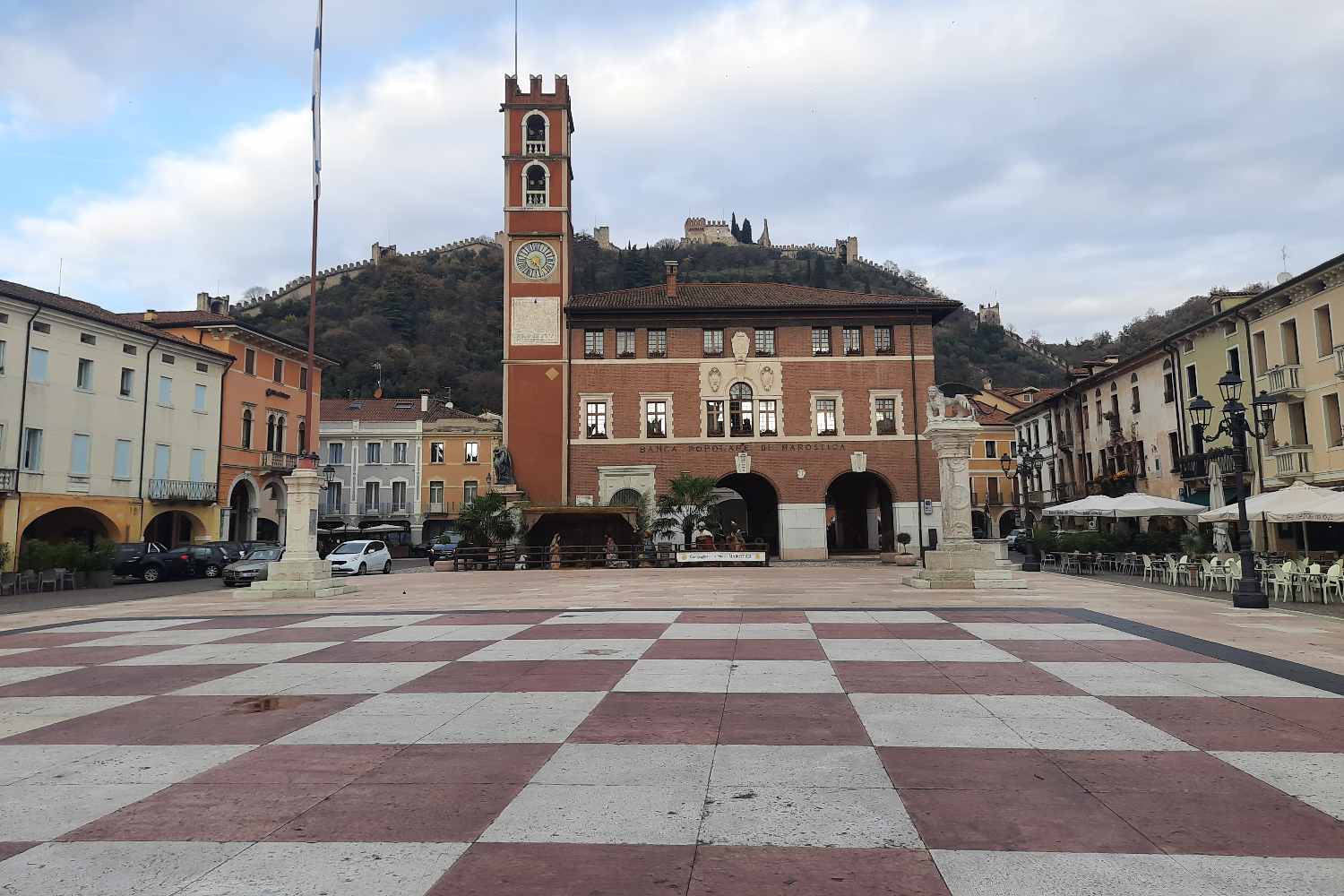
Marostica is a village where history still moves to the rhythm of pawns, medieval drums and fortified walls. As a chess enthusiast that I am and having always played it, during my camper trip in the Vicenza area I decided to stop here for a day, attracted by the reputation of the famous living chess game. The first impression is that of a cozy, elegant city, dominated by towers and bastions that tell of centuries of defense and traditions. In just a few hours you can visit everything, but the charm is such that it encourages you to slow down and enjoy every corner of the historic center.
@RebeccaManzi/GreenMe
The Piazza degli Scacchi, the symbolic heart of the city
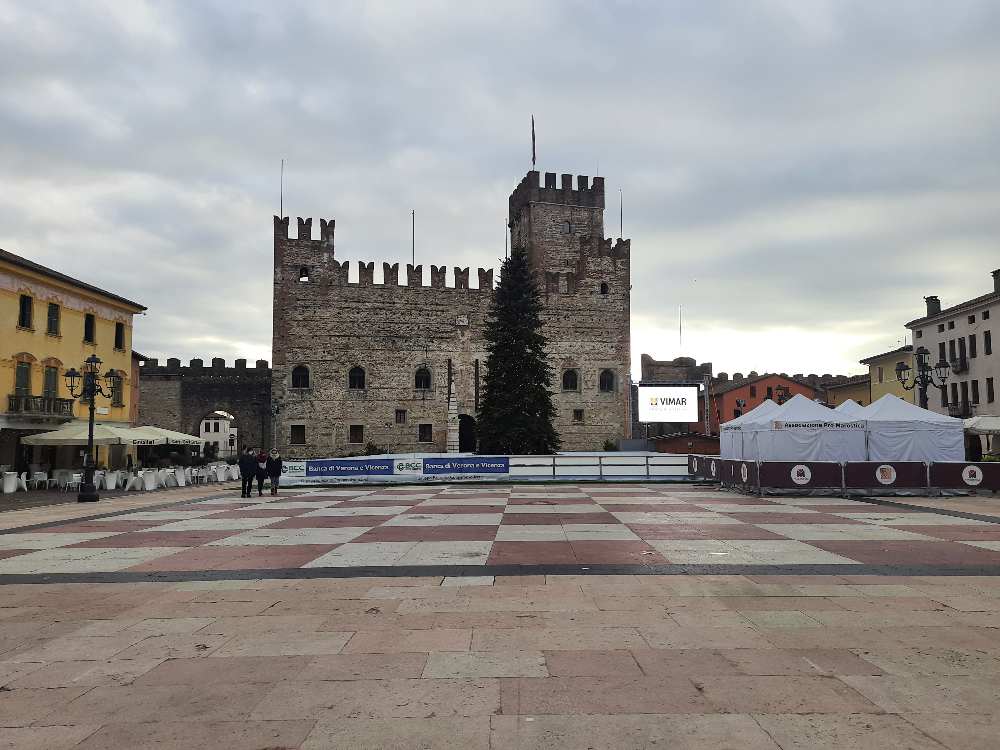
The visit inevitably starts from the scenic Piazza Castello, also known as Piazza degli Scacchi. Here, in the center of the pavement, there is the famous giant chessboard, which has become the symbol of Marostica and surrounded by historic buildings and medieval walls. Walking on it has a strange effect: it feels like entering a real game, a bit as if it were the famous scene from Harry Potter and the Philosopher’s Stone with Harry, Ron and Hermione playing chess in first person.
@RebeccaManzi/GreenMe
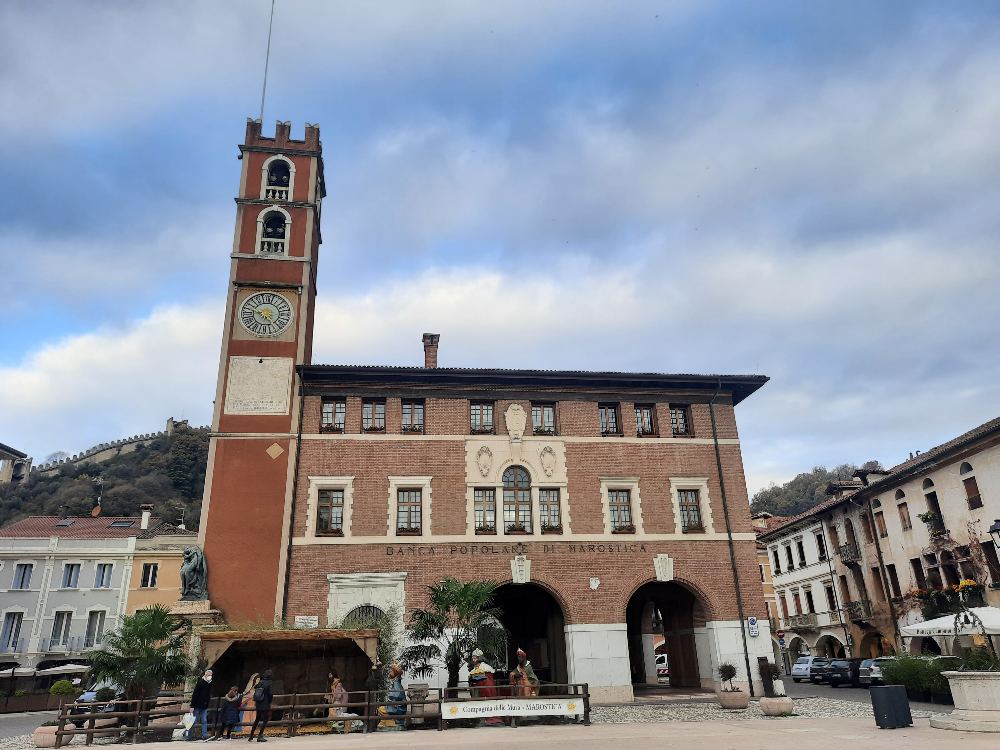
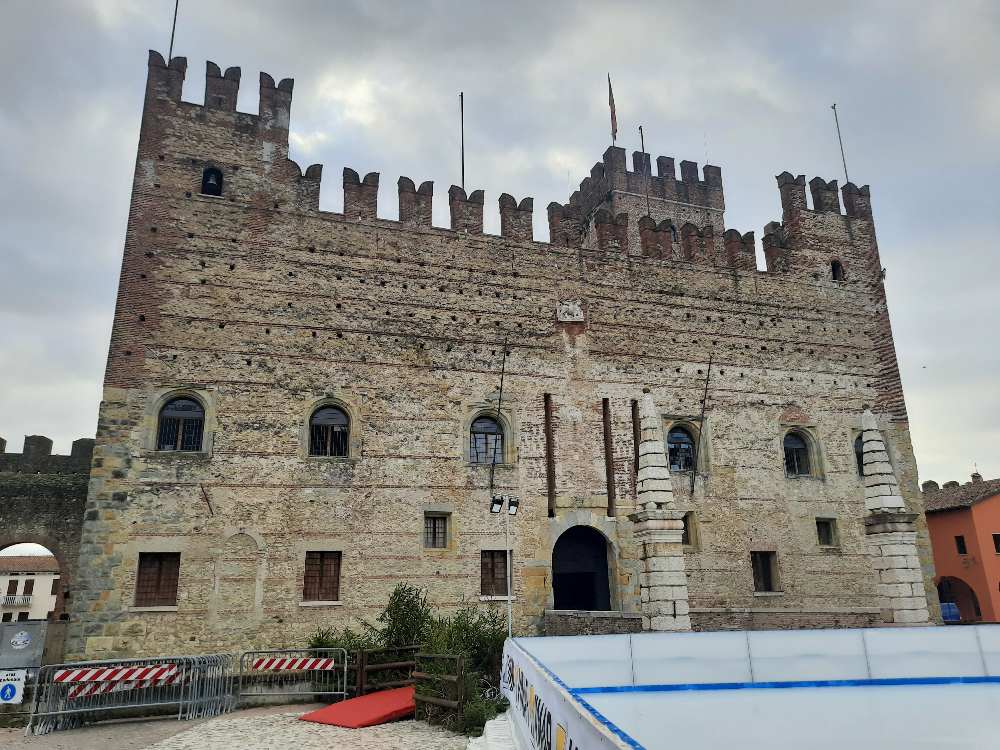
On one side of the square stands the Lower Castle, with its rectangular structure and well-preserved battlements. Going up to the walkways you can enjoy a privileged view of the historic center and the chessboard. Opposite, however, is the Palazzo del Doglione, the ancient administrative center of the city during the Venetian domination.
@RebeccaManzi/GreenMe
The legend of the living chess game
But where does Marostica’s most famous tradition come from? It all originates from a legend from 1454. Two noble knights fell in love with the same young woman, Lionora, daughter of the castellan. To avoid a bloody duel, the father decided to have them compete in a game of chess. The winner would marry the girl, while the loser would have his younger sister as his wife.
The challenge took place in the castle square with living pieces, men-at-arms, ladies and knights in costume. Today that story comes back to life every two years with the spectacular Chess Game with living characters, which involves hundreds of participants and transforms the city into an open-air medieval theatre.
@RebeccaManzi/GreenMe
From the Lower Castle to the Upper Castle
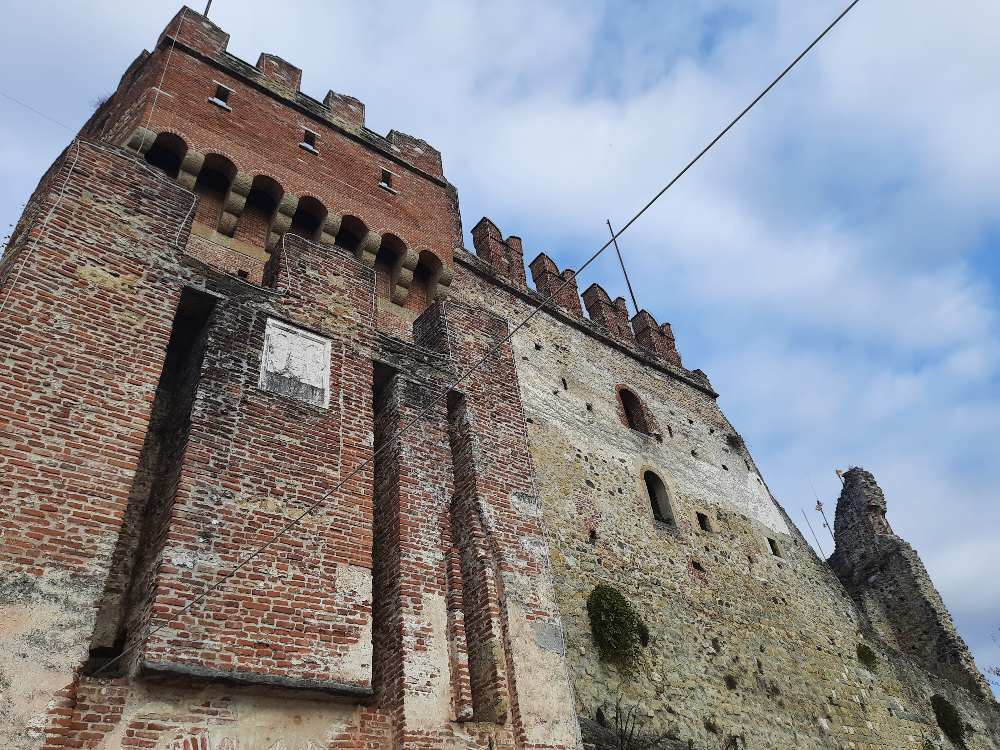
Continuing with the visit, from the historic center you can go up towards the Upper Castle, connected by a suggestive city wall about two kilometers long. The route passes through the Carmini path, short but uphill, which offers increasingly wider views of the Vicenza plain.
Once you get to the top, the view repays the effort: you dominate the entire village, with the red roofs enclosed by the walls and the chessboard perfectly visible in the centre. Even without visiting the interiors, the atmosphere is that of a fortress suspended in time.
@RebeccaManzi/GreenMe
Historic churches and medieval views
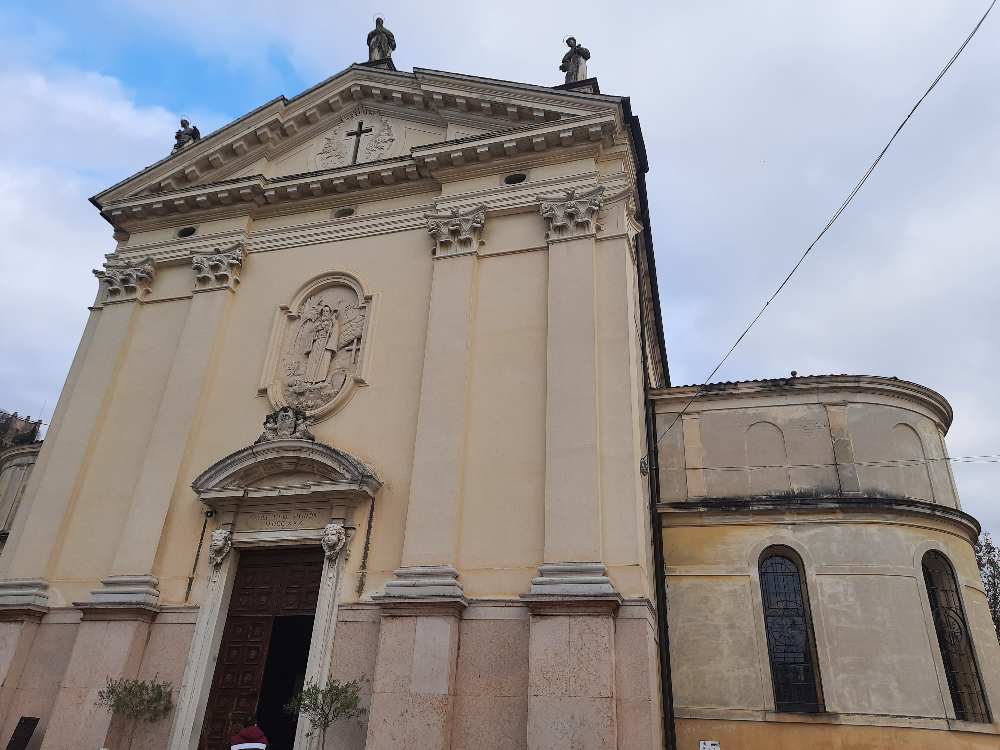
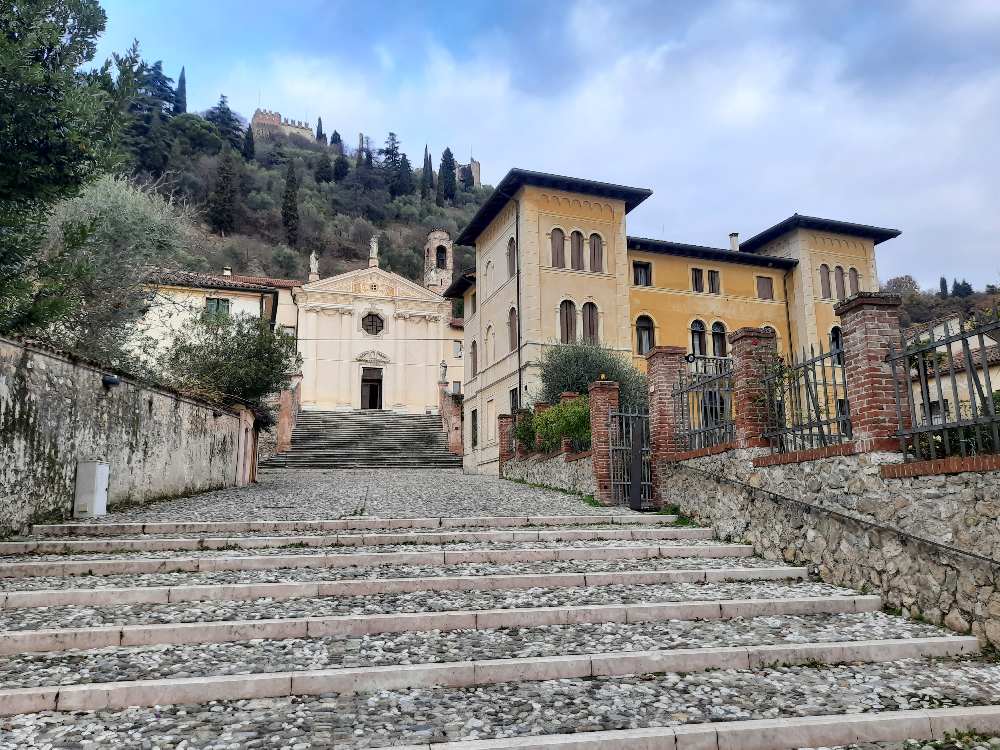
Going down towards the center you come across the Church of Sant’Antonio Abate, a small medieval building which houses works from the Da Ponte school. Not far away is the Scalinata dei Carmini, one of the most evocative views of the city, which leads to the Church of the Madonna del Carmine.
@RebeccaManzi/GreenMe
Walking along Corso Mazzini, the main street, you will find porticoes, shops and elegant buildings. Continuing beyond the walls you reach the Pieve di Santa Maria, one of the oldest religious buildings in the village, with a baroque façade that stands out among the houses.
@RebeccaManzi/GreenMe
A small but surprising village
Marostica can be visited in a few hours, but is surprising for its concentration of medieval history, traditions and panoramas. Between castles, walls and the famous chessboard, the Venetian village manages to transform a simple walk into a journey into a legend. A perfect stop to combine with Bassano del Grappa or the Vicenza hills, but also capable of leaving its mark on its own.
You might also be interested in:
