
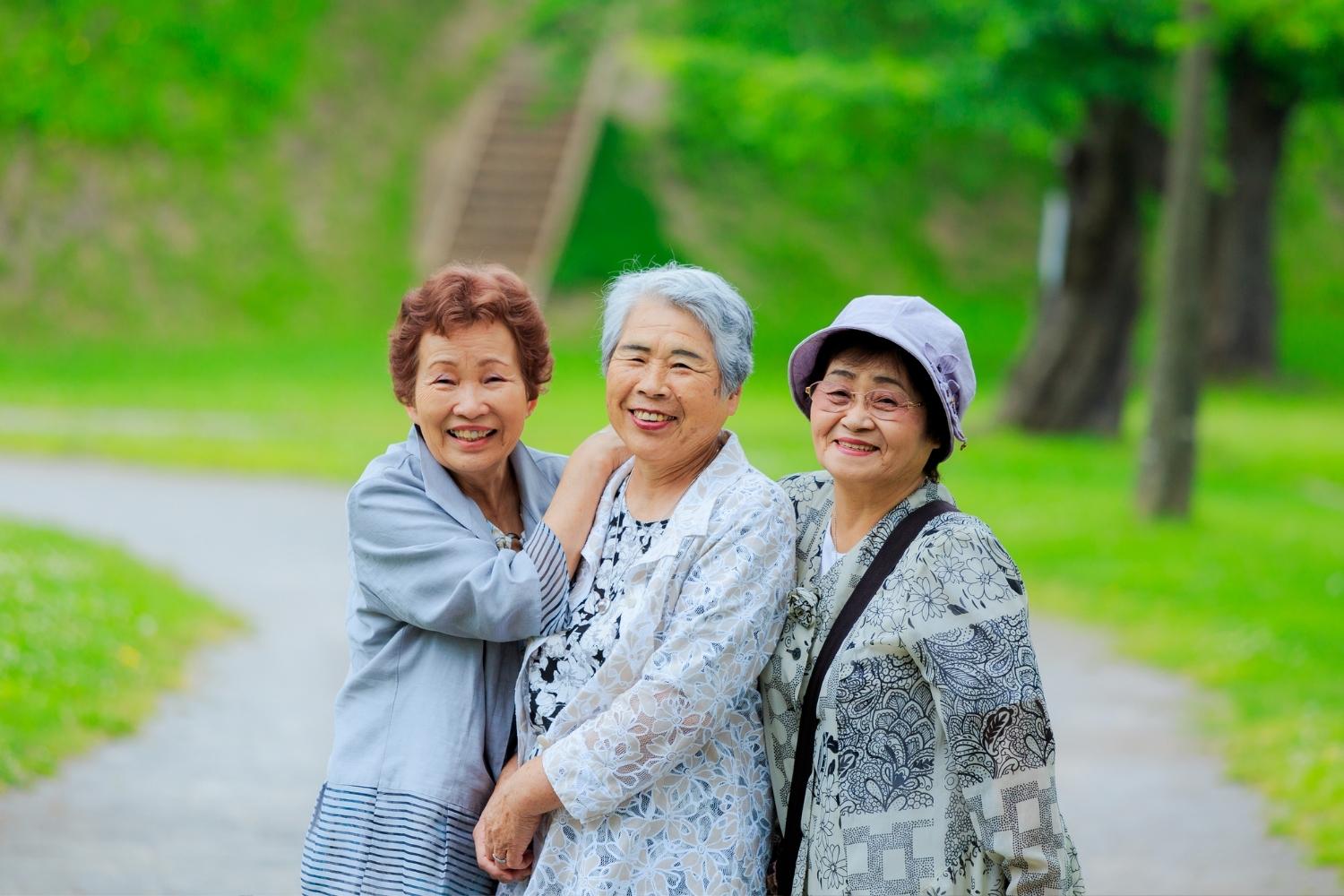
The number of centenarians living in the Japanese archipelago had never been so high in sixty years of censuses: as of 1 September 2026, 107,677 people in Japan have exceeded 100 years of life. 87% are women.
A record that has been renewed for 56 years
This was announced by the Ministry of Health, Labor and Welfare of Tokyo on the occasion of Respect for the Elderly, the holiday which every year, on the third Monday of September, celebrates the longevity of the population. As of September 1, there were 107,677 people aged at least one hundred years old, 7,914 more than in 2025. The 100,000 milestone had never been reached before, and the number has been growing continuously for 56 years. Women remain a clear majority: they are 94,298, equal to 87.6% of the total, while men are 13,379.
From 153 people to over one hundred thousand
The comparison with the first censuses gives an idea of the trajectory: in 1963, when the ministry began to count centenarians, 153 were registered throughout the country. The threshold of one thousand was crossed in 1981, that of 10 thousand in 1998, that of 50 thousand in 2012. In just over sixty years the number has multiplied by seven hundred.
The caution of Minister Ueno
Health Minister Kenichiro Ueno linked the figure to advances in medicine and technology, expressing satisfaction that so many people are living long, healthy and active lives. However, he added a reservation that weighs as much as the goal, because keeping the social security system sustainable, with a population aging at this rate, remains an open challenge for the government.
The empty cradle behind the record
Because behind the record of centenarians the opposite shadow lengthens, that of the empty cradle. Japan’s fertility rate, which last year fell to a record low of 1.14 children per woman, is far from the 2.1 needed for a population to remain stable without immigration. Those over sixty-five already make up almost 30% of the inhabitants and, according to institutional projections, they could reach nearly 40% by 2070. With a median age of 49.9 years, Japan today has the second oldest population in the world, second only to the Principality of Monaco. The downside is measured in very concrete terms, such as labor shortages, increasing social spending and an ever-shrinking tax base.
The secret is (also) at the table
As to why the Japanese live so long, the most accepted answer remains that of the table: a diet based on fish, soy, vegetables and green tea, with a limited consumption of red meat and saturated fats. Obesity rates in the country remain at around 5.6%, compared to 37% in the United States, and the incidence of ischemic heart disease and cancer remains among the lowest in the world. If other countries, such as Sweden, Switzerland and Italy, hold the record for male longevity, Japan wins the ranking thanks above all to women.
A country that organizes itself
In the meantime, the industry is organizing itself to accompany aging rather than combat it, through robotic prostheses, smart glasses that adjust themselves and motorized exoskeletons designed to support the daily movements of the elderly. A country that is unable to give birth to enough children, and which in the meantime reinvents the way to stay on its feet and live an easier life.
