
Iowa is now a case study for American oncology. It is one of only two countries in the States — the other is Kentucky — where the incidence of cancer is constantly growing, in clear contrast to the decline recorded at the national level. But if in Kentucky the data is historically linked to factors such as smoking and systemic poverty, in Iowa the surge in cases appears closely connected to an environmental root.
This is confirmed by the report “Environmental Risk Factors and Iowa’s Cancer Crisis“, published by the Iowa Environmental Council in collaboration with The Harkin Institute. The document, based on the analysis of 29 experts including epidemiologists and health professionals, points the finger at a “toxic mix”: an accumulation of pollutants that belies the narrative of genetic “bad luck” or incorrect lifestyles alone.
The weight of the agroindustrial system
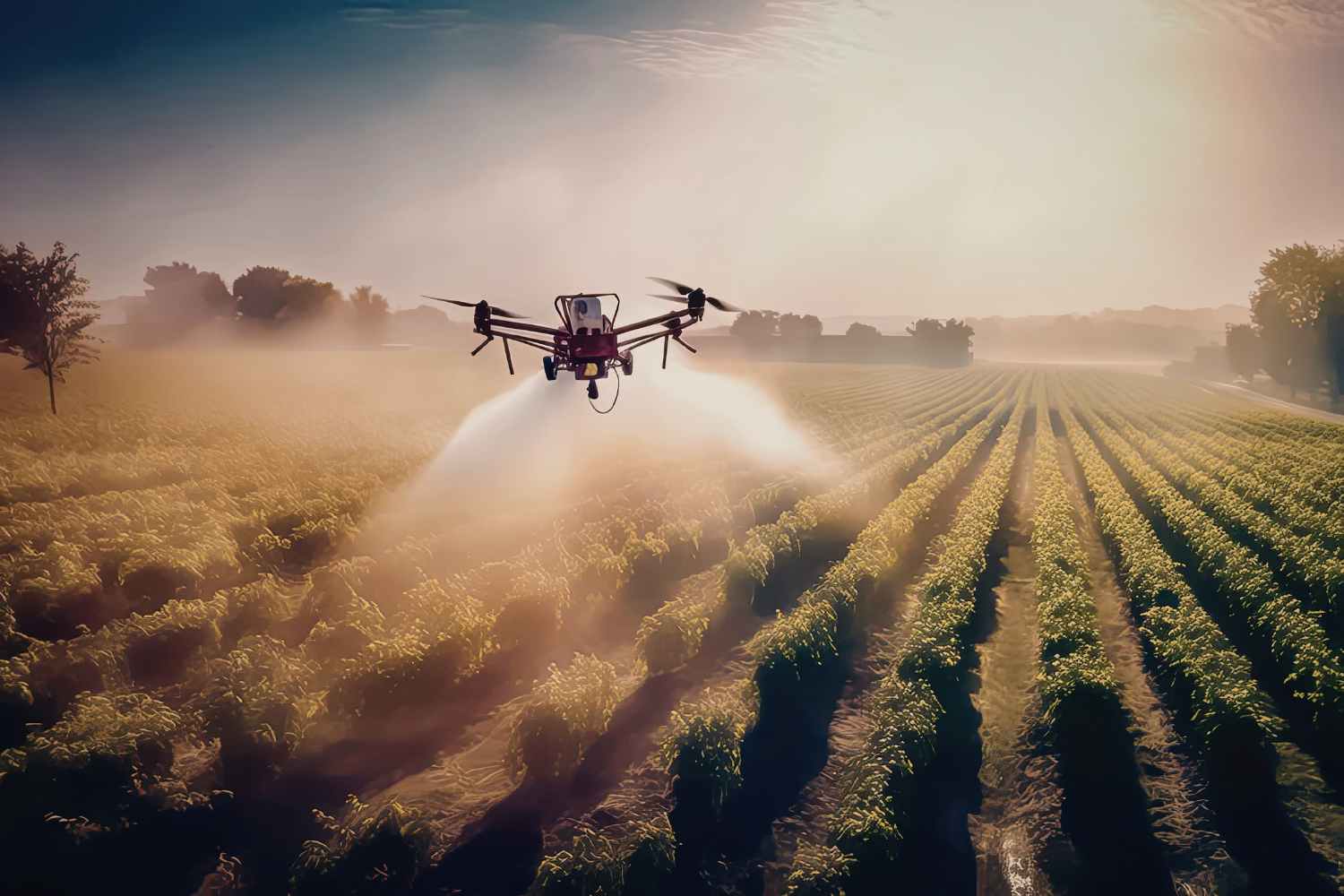
The story of Chris Henning, collected by Nina B. Elkadi for the online newspaper Sentientis the emblem of this crisis. Henning saw his family decimated by cancer, but genetic tests ruled out a hereditary predisposition. What his relatives shared was the territory: decades spent on a farm in Greene County, aerially spraying fungicides and handling herbicides.
Eighty-five percent of Iowa’s land is used for agriculture or ranching. The state hosts a concentration of intensive farming two and a half times higher than that of the second state in the ranking. This production saturation generates an unprecedented nitrogen load. Manure and fertilizers, spread on fields or spilled into waterways, penetrate the aquifers in the form of nitrates, contaminating the drinking water of thousands of citizens.
The four risk factors
The report identifies four major ubiquitous contaminants: nitrates, pesticides, PFAS and radon (a naturally occurring radioactive gas). The pesticides under attack are the most widespread in local monocultures: glyphosate, acetochlor and atrazine. While research has often focused on the direct exposure of agricultural workers, new data shows a systemic impact on the general population through air and water.
The most alarming data concerns young people: among residents under 50, six of the ten most common types of cancer are associated with these four environmental factors. Nitrates, in particular, are correlated with an increased risk of colorectal and bladder cancers, pathologies that are affecting increasingly early segments of the population.
Absent environmental supervision
“Iowans deserve to know what risks they are facing,” the study authors write. However, the political management of the problem appears lacking. Kerri Johannsen, policy director of the Iowa Environmental Council, emphasizes that it is not just a matter of creating new regulations, but of rigorously enforcing existing ones, which are often overlooked so as not to slow down the productivity of agribusiness.
The report by the Iowa Environmental Council and The Harkin Institute shifts the center of gravity of the debate: from a question of individual choices to industrial land management. If a citizen can decide not to smoke, he cannot choose not to breathe the radon that filters from the ground or not to drink the water from his water supply if it is saturated with nitrates and PFAS.
Technical data indicates that changes in individual behavior alone are not sufficient to mitigate risk. For this reason, experts call for the rigorous application of existing laws: for example, stringent supervision is needed on the spreading of manure from intensive farming and systematic monitoring of agricultural runoff. This is not an ideological battle against the primary sector, but a need for survival for a system that currently produces food at the cost of the health of its inhabitants.
Biology does not wait for politics
The urgency of a structural intervention is dictated by a non-negotiable factor: biological latency. Cancer is not an immediate threat, but the result of a decades-long accumulation. The chemical exposures occurring in Iowa’s fields and aquifers today are the diagnoses doctors will write between 2040 and 2050.
Without a change of direction that includes monitoring of private wells (often ignored by current regulations) and a drastic reduction of contaminants at the source, Iowa risks consolidating its negative record. The “skyscraper of risks” described by the report already has too solid foundations; the only journalistically and scientifically sound solution is to stop adding floors to this toxic structure before it becomes the sole defining feature of America’s breadbasket.
