
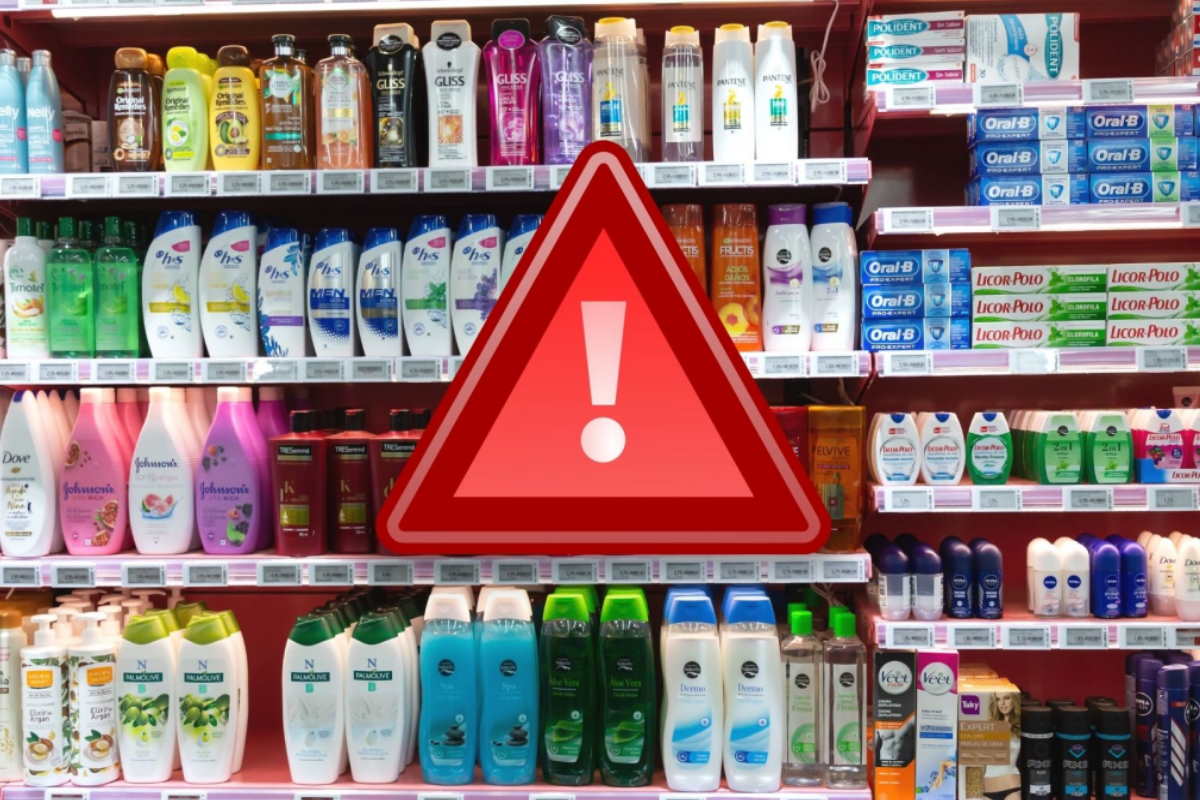
Lilial is a synthetic fragrance used for years in many cosmetics and personal care products. It has been banned in the European Union since 2022 because it is classified as a reproductive toxicant: studies and assessments by scientific authorities have highlighted possible risks to fertility and the development of the fetus. Despite the ban, old products containing this substance continue to be found on the market and recalled, even among well-known brands and everyday products such as perfumes, shower gels and creams.
A ban not always respected
Two years after the European ban came into force, the problem of Lilial in cosmetics is still not resolved: tens of thousands of products have been seized because they contain this substance, banned from 2022 as it is classified as toxic for reproduction. Despite the ban on use in new formulations, old batches continue to be on the market and are still being recalled.
Among the latest products reported include, for example, the 100 ml Hello Kitty Eau de Cologne, the 250 ml Sanosan shower gel and the 300 ml “Spa – Pink Love Potion” shower gel by Spuma di Sciampagna, all found to contain Lilial and subject to a recall through the European Safety Gate alert system.
But how is this possible? Let’s take a step back.
Lilial, the fragrance that hurts
The substance I’m talking to you about can be found in the INCI, i.e. the ingredients, on the packages as Butylphenyl Methylpropional, Butylphenyl methylpropional, Lilial or BMHCA.
Lilial, in which products is it found?
This harmful substance was in virtually every product before the ban:
Lilial is in fact one of the most widespread fragrances that in the past was included in these products, namely lily of the valley. Both delicate for the nose and dangerous for your health.
Why is Lilial harmful?
Lilial has been banned by the European Union starting from March 1, 2022 because after a long series of scientific investigations it was concluded that it can:
It is also harmful
The risk also depends on the type of product and the contact time with the skin. In “leave-on” cosmetics, i.e. those that remain on the skin without being rinsed off, such as perfumes, body creams, face creams and deodorants, exposure may be greater because the substance remains in contact with the skin for longer. In “rinse-off” products, however, such as shampoos, soaps and shower gels, contact is shorter because the product is eliminated with rinsing. This does not mean that products with Lilial are safe to use, but it helps to understand why authorities evaluate the overall exposure and quantity of the substance to which the consumer may be subjected.
The effects associated with Lilial are not those of a substance that necessarily causes immediate damage upon simple contact. The risk depends on the amount of exposure, frequency of use and type of product. In cosmetics that remain on the skin, such as creams and perfumes, exposure may be higher than in products that are rinsed off quickly
Because Lilial is still on the market
The European ban concerns the production and placing on the market of new cosmetics containing Lilial, but it did not automatically make all the products already manufactured previously disappear. Some packages may have remained in warehouses, stores or online distribution, continuing to circulate until stocks run out or are withdrawn.
The problem is that consumers often cannot know when a product was manufactured: a package purchased today may still contain an old formulation made before the ban.
For this reason it is useful to check the products you already have at home, especially perfumes, creams and leave-in cosmetics. If Butylphenyl Methylpropional, Butylphenyl methylpropional, Lilial or BMHCA appears in the list of ingredients, it is advisable not to use it and follow the manufacturer’s or point of sale instructions for possible return or disposal. There is no reason to be alarmed by a single occasional use, but continuous exposure to banned substances is precisely what European regulations aim to avoid.
