
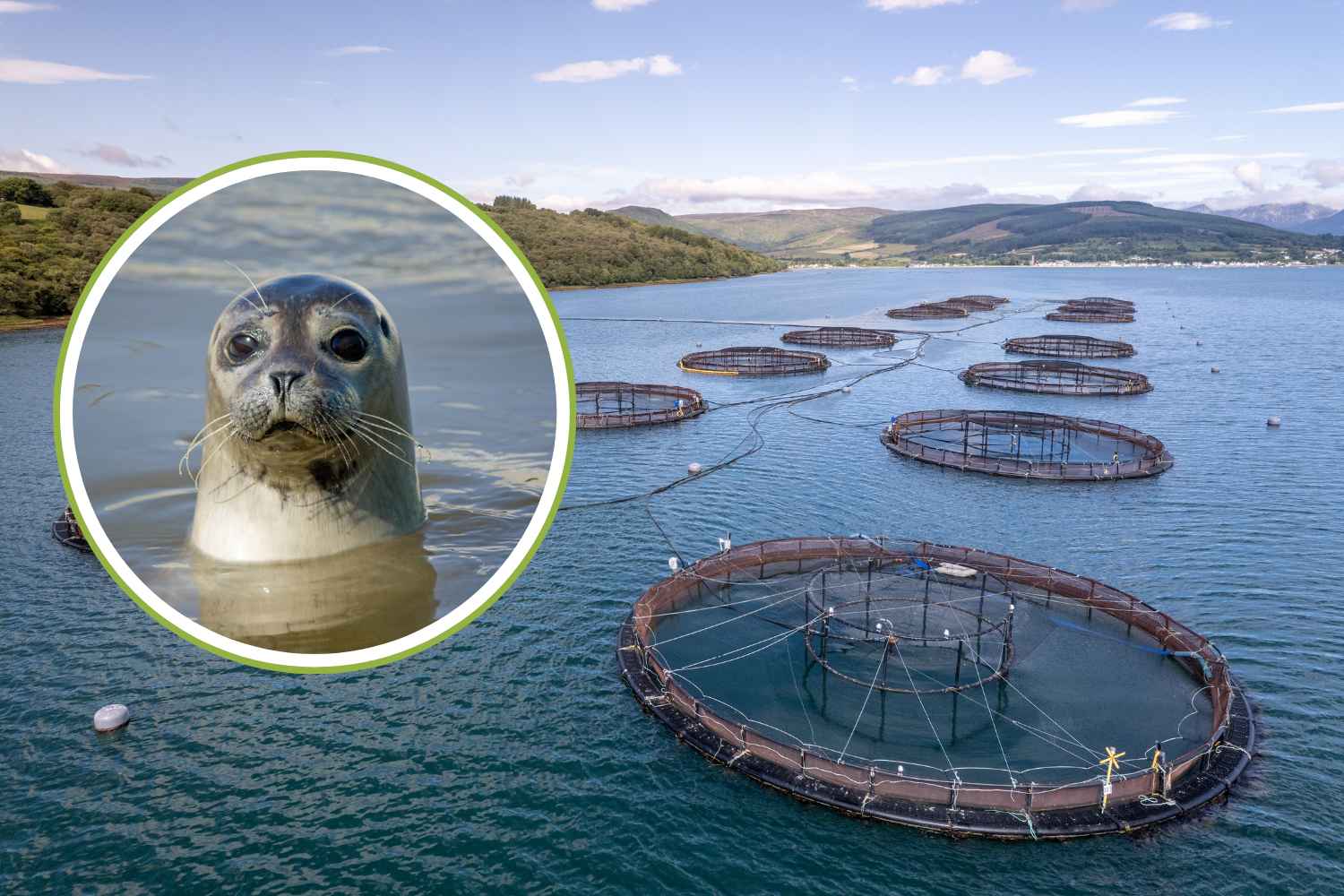
Salmon farms have long been at the center of debate due to their environmental impact and the conditions in which the fish live. But there is another aspect, much less known, which concerns wildlife: what happens when animals that live in the sea try to get close to the cages where thousands of salmon are locked up?
Seals, for example, can reach farms and try to prey on fish. To keep them away, various deterrent systems are used, including the so-called “seal crackers”, explosive devices that are detonated underwater.
And the numbers, released by the Tasmanian authorities, are impressive.
The latest data, published last week by Department of Natural Resources and Environment Tasmania, show the extent of the use of these tools: from 2016 to June 2026, a total of 150,488 explosives were used to ward off seals on the three main salmon farms in the state – Huon Aquaculture, Tassal and Petuna.
It is therefore a practice that has been going on for about ten years and which, although it is less frequent today than in the past, has not yet disappeared. In fact, almost 1,800 devices were used in the first six months of 2026 alone: 1,126 by Huon Aquaculture, 551 by Tassal and 120 by Petuna.
But let’s try to better understand what they are and why they are used. So-called seal crackers are devices that are detonated underwater, at a certain distance from the animals, producing a loud noise and a flash that should scare them and cause them to move away.
Their use is linked to the fact that seals sometimes manage to reach the cages where the salmon are bred, biting the fish through the nets, entering the enclosures or damaging the structures. For farmers, these incursions therefore represent a risk for the salmon and for the integrity of the facilities.
Tassal, one of the companies involved, reported to Guardian that in the last three years the seals have accessed the cages approximately 1,100 times. However, in 2025, according to company data, raids decreased by 26% compared to the previous year.
To try to prevent these accesses, various dissuasion systems are used. In the first months of 2026 Tassal also used 31 “bean bag” projectiles, ammunition containing fabric-covered lead pellets.
Damage to seals
This is one of the most delicate aspects of the story. Seal crackers are not designed to physically hit seals, but to scare them away through the loud noise and flash caused by the underwater explosion. Their functioning is therefore based precisely on the ability to scare the animal and cause it to escape.
Their use is obviously very controversial. RSPCA Australia reports that seal crackers can cause stress and fear in seals, as well as possible hearing damage. Furthermore, if used incorrectly, they can also cause physical injury to animals.
The problem of interactions between seals and farms, among other things, does not end with deterrents. 48 seals have died on Tasmanian salmon farms since 2021, according to government data reported in September 2026. Four deaths were recorded in the first six months of 2026: two seals were trapped in cages, one died after being struck by a boat and another during an attempted sedation and relocation.
However, it is important not to confuse these data with the effects of seal crackers: the 48 deaths are not attributed to explosives, but include different types of interactions between animals and aquaculture activities. The data therefore provides a broader picture of the conflict between wildlife and facilities, in which deterrents represent only one of the tools used to keep seals away from cages.
Then there is another question to consider: how effective are these systems really in the long term?
The available evidence on the use of acoustic deterrents in fish farms shows variable results. A review by the Scottish Animal Welfare Commission found that in some situations these devices may succeed in repelling seals, while in others the animals may become accustomed to the noise or manage to overcome it when highly motivated by the presence of food.
The report therefore highlights that their effectiveness is not uniform and that these tools cannot be considered, alone, a definitive solution to the problem of interactions between seals and farms.
In other words, these are systems designed to create a stimulus strong enough to push the animal to move away, but which do not eliminate the cause of the conflict: the presence of salmon inside the cages continues to attract the seals.
For this reason, rather than relying only on systems capable of scaring them, animal welfare strategies increasingly focus on physical exclusion, i.e. on nets and structures designed to prevent seals from reaching the salmon and thus reduce the very need to resort to deterrents.
Alternatives to explosives
At this point the question is: instead of finding new ways to scare the seals, can we make sure they can’t reach the salmon?
According to RSPCA Australia, the priority should be physical exclusion, through more resistant nets and cage protection systems both above and below the surface of the water. The aim is to prevent seals from reaching the salmon and thus reduce the need for deterrents.
However, if a seal still manages to enter, the RSPCA advises to first give it the opportunity to exit spontaneously, even lowering some parts of the net to facilitate its escape. Only when these measures are not sufficient can the use of a deterrent be considered.
But this leads to another question: does replacing explosives with a different type of deterrent really eliminate the problem? Not necessarily. There are, for example, Acoustic Deterrent Devices (ADD), which use very intense sounds to scare seals away. Even these systems, however, can have effects on marine mammals and their effectiveness is not always constant.
In fact, the Scottish Animal Welfare Commission has found that, in some situations, seals can get used to the noise or return to the area, especially when they are strongly motivated by the presence of food. The alternative to explosives, therefore, is not necessarily another sound: the most effective solution is to intervene first, preventing the seals from reaching the cages.
For this reason, rather than finding ever new ways to scare them, the path indicated by the RSPCA is to reduce the possibility of conflict occurring at the source, investing in more effective networks, structures and systems of exclusion. The objective, in perspective, is to progressively reduce the need to use any type of deterrent.
The real problem is upstream
Ultimately, however, the question is not just about what is the least invasive way to remove a seal. The problem arises upstream, from the very idea of breeding millions of salmon in cages immersed directly in the sea, creating an artificial concentration of prey which inevitably attracts wild predators.
And the critical issues of salmon farming do not only concern seals. RSPCA Australia itself recognizes several welfare problems for farmed fish, related among other things to density, water quality, frequent handling, transport and slaughter. On the environmental front, the Tasmanian Environment Protection Authority also reports the effects that marine farms can have on the seabed and on water quality due to feed waste and excrement.
And so what appears to be a problem of seals entering cages is actually the result of a conflict created by man: on the one hand wild animals looking for an easily accessible source of food, on the other thousands of fish concentrated in structures immersed in their own habitat.
Perhaps, then, the question should not just be how to find an increasingly effective way to scare away seals, but how to rethink a farming system that creates this conflict.
