
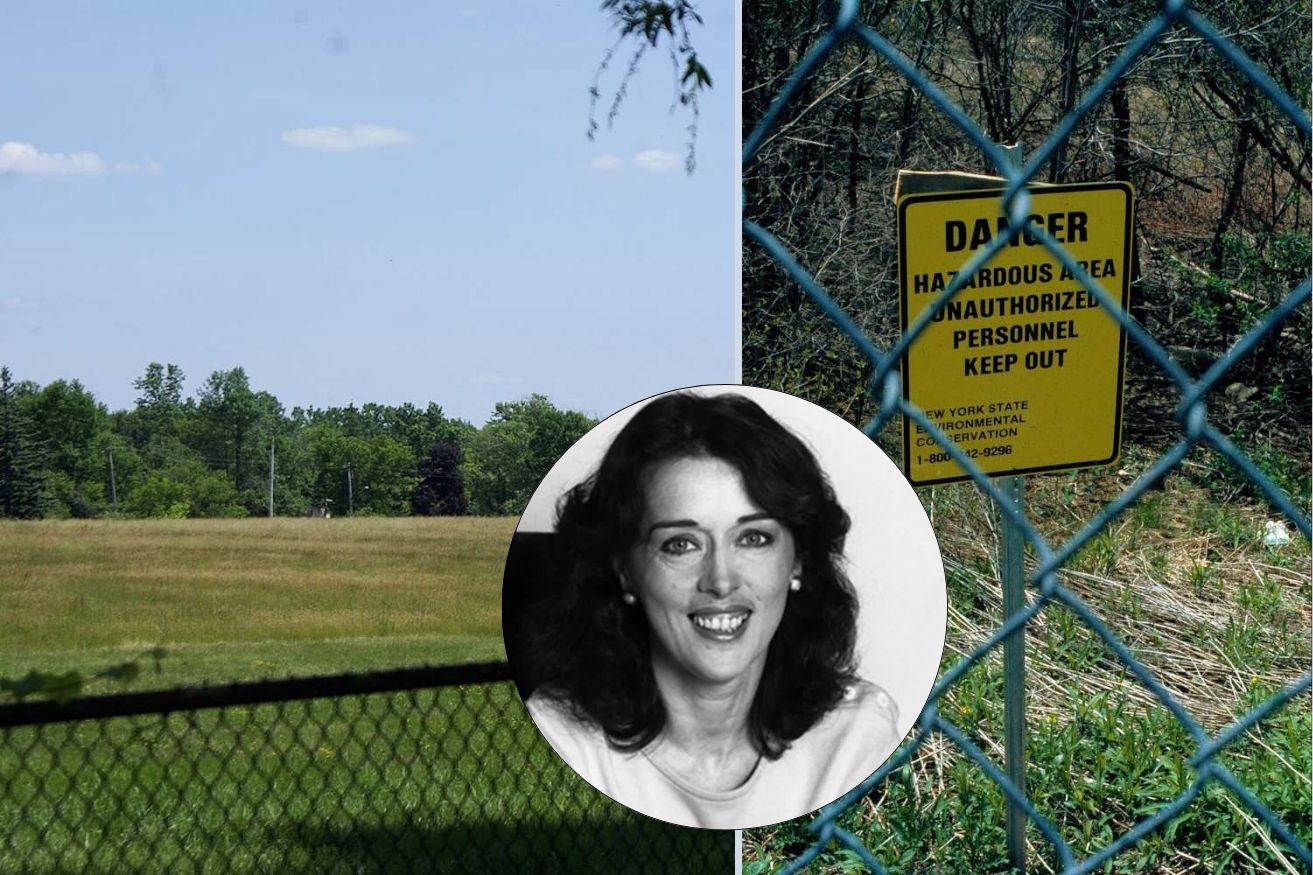
Imagine being a mother. Your child is often sick, strange smells appear in the school he attends when it rains, dark liquids begin to emerge in the garden at home. Then you discover something impossible to accept: under your home, under your children’s school, under the streets where you pass every day, there are thousands of tons of dangerous chemical waste.
This is the story of Love Canal, the neighborhood near Niagara Falls, in New York State, which has become one of the world symbols of environmental disaster and citizens’ fight against pollution.
A story that talks about toxic waste hidden underground, about people who got sick without knowing. And it is above all thanks to a woman, Lois Gibbs, who decided not to give up, that the way the United States deals with contaminated sites has changed forever.
The story of Love Canal
It all begins at the end of the 19th century, when the entrepreneur William T. Love imagined a great industrial project: building a canal in the Niagara Falls area to produce hydroelectric energy and create a new city powered by water from the Great Lakes.
The project, however, fails. The economic crisis and the advent of alternating current make the idea of producing energy near industries useless. The canal remains unfinished and remains an open wound in the area for years. In the 1920s that same area was transformed into a landfill for urban and industrial waste. Among the companies that download materials there is Hooker Electrochemical Companywhich deposits approximately 21 thousand tons of dangerous chemicals, contained in barrels that begin to deteriorate over time.
@US Environmental Protection Agency
It seems like a paradox, but the landfill is then covered over and forgotten. At least until, after the Second World War, a school and a residential neighborhood began to arise on that land. And this is where the story becomes dramatic: hundreds of families move into homes unknowingly built on top of a mountain of toxic waste.
For years the inhabitants have lived with disturbing signs. During the rains chemical odors appear, oily substances emerge in the gardens, suspicious liquids accumulate in the cellars. Then come the first studies and a reality that is difficult to ignore: dangerous substances such as benzene, chlorinated solvents and dioxins are found in the soil, water and air.
The Strength of Lois Gibbs
Among those who start asking for explanations is Lois Gibbs. He is 27 years old when he discovers that the school his son attends is located right above the landfill. Concerned about the health of the child and the other inhabitants, she began to gather information, involve the neighbors and organize a mobilization that would last for years.
The Love Canal community asks for answers, controls and above all one simple thing: to be taken away from a place that is no longer safe. Epidemiological studies conducted in the following years highlight an increase in spontaneous abortions in the local population and a greater concentration of problems in fetal development in the areas closest to the contamination. In 1978, President Jimmy Carter declared Love Canal a federal emergency and began relocating families.
Approximately 950 families were evacuated and the site underwent a long cleanup operation that lasted decades.
But the most important victory of that battle isn’t just about Love Canal. The mobilization led by Lois Gibbs contributed to the birth of the Superfund, the US federal program which obliges those who caused contamination to participate in the cleanup of polluted sites.
The Superfund
The story of Love Canal has in fact transformed Lois Gibbs into one of the symbolic figures of the American environmental movement. His battle brought contamination by toxic chemicals to the center of national debate, contributing to the birth of the program Superfund of the Environmental Protection Agency, created precisely to clean up contaminated sites, and has drawn the attention of the scientific community to the risks of exposure to chemical agents for human health.
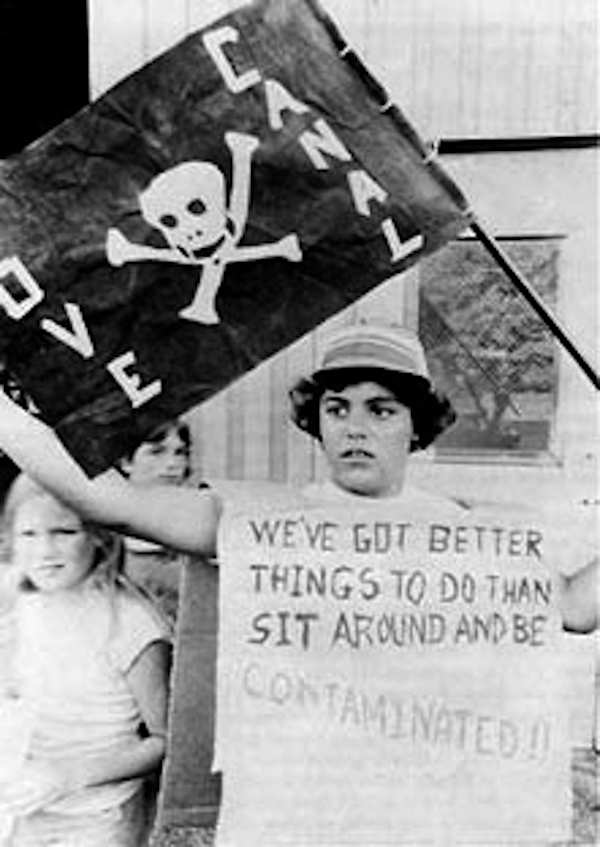
@Commons Wikimedia
His story, together with that of the inhabitants who fought for environmental justice, has become a source of inspiration for films, documentaries and generations of activists. But the victory also had a very high price: the community that had united to defend itself was dispersed. The evacuation took the residents of Love Canal to different locations across the United States, and ultimately, the entire neighborhood was demolished.
Even today, Lois Gibbs says she has concerns about the health of her children and future generations, but she considers that battle a victory. After Love Canal he founded the Center for Health, Environment and Justicecontinuing to support communities affected by pollution and demonstrating that even a small group of citizens can change things.
The Love Canal affair doesn’t just belong to the past. Even today it reminds us of what can happen when economic interests come before people’s health and when communities discover too late what lies beneath their feet. From landfills to pesticides, from persistent chemicals such as PFAS to industrial contamination, the problem remains the same: it is often citizens who have to demonstrate that something is wrong, even before the institutions intervene.
A story, that of Lois Gibbs, which still poses an uncomfortable question today: how many more people will have to fight before protecting the environment and health truly becomes a priority?
Sources: National Geographic / EPA / University Libraries
