
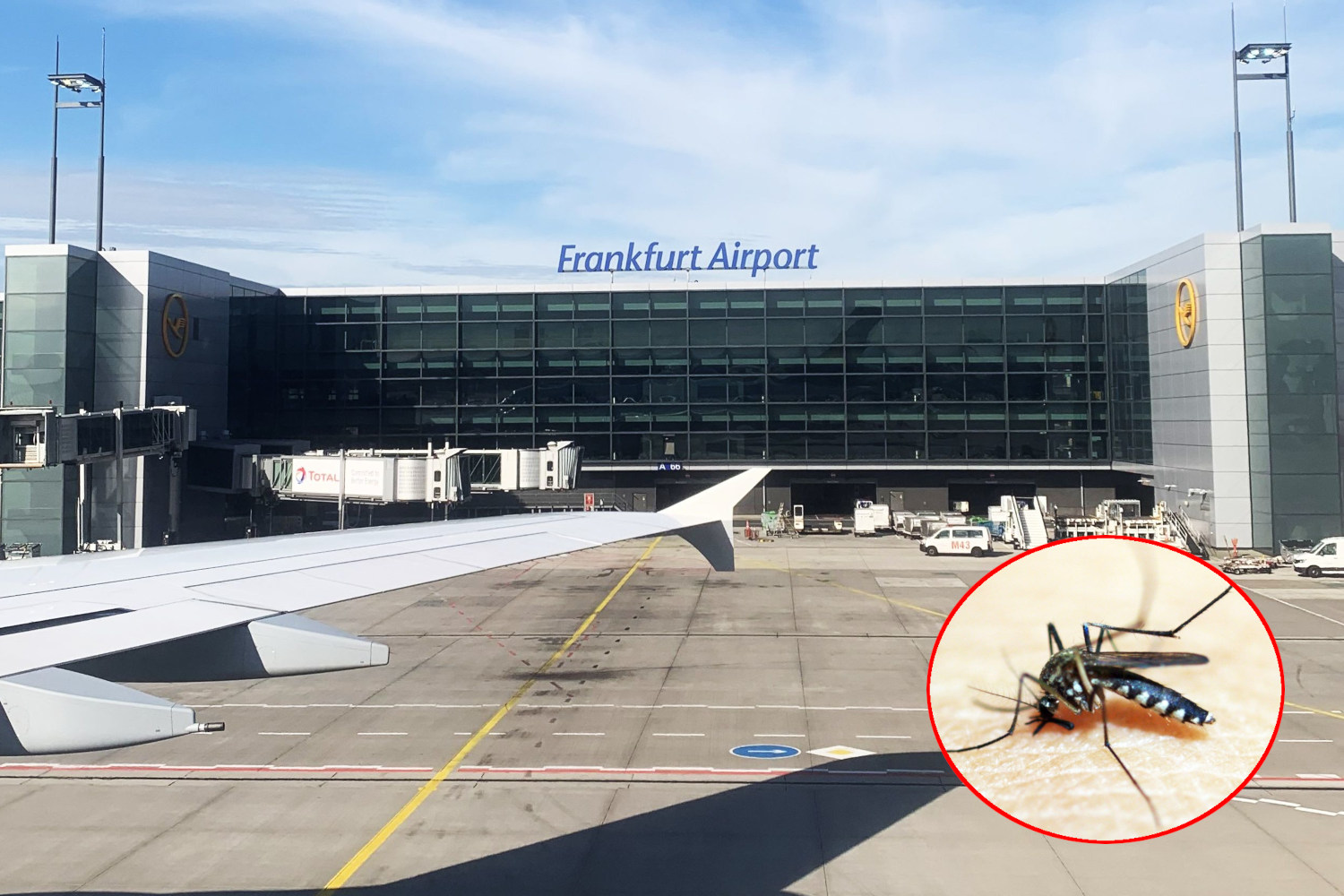
An unusual and lethal contagion has shaken the heart of Germany. At Frankfurt am Main airport, the main continental air traffic hub, an outbreak of airport malaria was recorded, an infectious condition that is very rare outside tropical endemic areas. The epidemiological balance sheet records six infected employees and two deaths, all employed at the airport.
The first victim passed away in early July, with a diagnosis confirmed only post-mortem by the local health office, while the second death occurred in August. The official data were released by the airport management company Fraport and the Robert Koch Institute, the German federal body for the surveillance of infectious diseases.
The dynamics of the infection and the absence of human-to-human contagion
The source of the infection would be one or more female mosquitoes of the genus Anophelesvehicle of the parasite Plasmodium. The insects would have arrived in Germany by traveling clandestinely in the cargo hold or baggage of a flight coming from tropical areas of Africa, Asia or South America. Once they landed, between July 4 and 6, the mosquitoes bit the six workers.
The Robert Koch Institute was keen to point out that malaria is absolutely not transmitted from man to man through direct contact, eliminating fears of epidemic contagion between passengers. The other four affected workers are currently undergoing targeted drug therapies in hospitals in the region.
Traps, analysis in Antwerp and emergency measures of the Fraport company
To contain the threat and clean up the loading areas, the Fraport company has installed a dense network of insect traps inside the cargo and passenger terminals. Several mosquito specimens already captured and killed were sent to specialized laboratories in Antwerp, Belgium, to be analyzed and verify the actual presence of the pathogenic protozoan. In the meantime, the company has promoted an extensive internal information campaign to encourage staff to immediately report the presence of high fever or flu-like symptoms to the health authorities, specifying their work duties at the airport to facilitate timely diagnoses.
Reflections and epidemiological surveillance in Italian airports
The event also takes on importance for Italy due to the high volume of traffic connecting the Peninsula to the German hub. With over 63 million passengers registered in 2025 and a transit share close to 50%, Frankfurt airport represents a primary bridge for intercontinental routes. Through the European rapid alert system EWRS, the Italian Ministry of Health was officially informed by the German authorities, pre-alerting the maritime and air health offices (Usmaf). Even in the presence of strengthened epidemiological surveillance, experts reassure that the real risk for the general population and for travelers in transit remains extremely low.
