
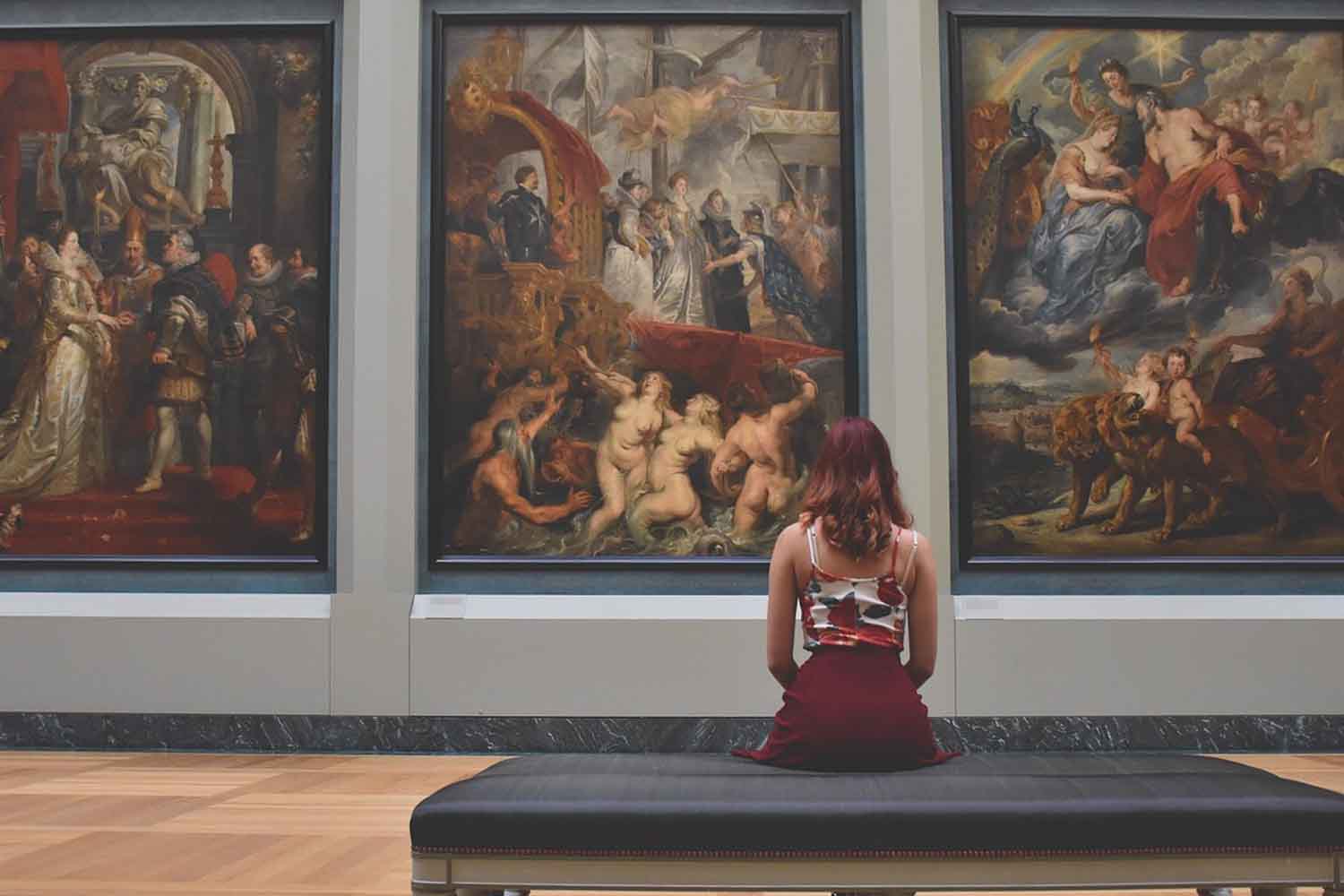
There are habits that seem too light to enter the great catalog of things that are “good for you”. A walk to the museum, a concert you actually listened to, a few pages read without your phone vibrating next to you, an exhibition squeezed into an ordinary Sunday. Free time stuff, one might say. Instead the body, apparently, also registers this. And it does so in a much less romantic place than a room full of paintings: in the blood, in the DNA, in the chemical signs that accompany biological age.
A new study conducted by researchers at University College London and published on Innovation in Aging analyzed data from 3,556 adults in the UK, comparing responses on cultural behaviors and blood test results. The goal was to understand whether activities such as reading, listening to music, visiting museums, frequenting galleries or participating in artistic activities might have a measurable link to how the body ages. The result must be taken with the right caution, because we are talking about associations observed in the data, but it remains very interesting: those who participated more often in artistic and cultural activities showed a slower rate of biological aging and, in some indicators, a younger biological age.
The body keeps track
To measure this effect, the research team used seven “epigenetic clocks,” that is, tools that observe age-related chemical changes, in particular DNA methylation. They are modifications that affect the functioning of genes without changing the genetic sequence. Translated outside the laboratory: the genetic heritage remains the same, however the way in which some information is read and activated can tell something about the passage of time in the body.
The most interesting data comes from the most recent epigenetic clocks, DunedinPoAm and DunedinPACE, designed to estimate the rate of aging. With DunedinPACE, participating in arts activities at least three times a year was associated with 2% slower aging; doing it every month came to 3%; doing it at least once a week at 4% compared to those who participated less than three times a year. A difference similar to that observed between those who did physical activity at least once a week and those who declared they did not do it.
The comparison with physical exercise is the most striking part, because it moves art out of the context of an elegant pastime. In the study, artistic and cultural commitment appears close to physical activity in terms of effect size on some epigenetic indicators. In another test, called PhenoAge, those who participated in artistic and cultural activities at least once a week were on average one year biologically younger than those who rarely did so. For weekly physical activity, the average difference observed was just over half a year.
Music, museums, books
The data works better if we imagine it in its concreteness. Reading activates attention, memory, language. Music involves emotions, rhythm, body, memories. A museum forces you to walk, observe, connect images, dates, stories, details. A creative laboratory adds manual skills, relationships, concentration. Each activity brings different ingredients: cognitive, emotional, physical and social stimulation. And it is precisely this variety, the researchers explain, that can make the cultural experience richer in terms of health.
The link was stronger in middle-aged and elderly adults, i.e. aged 40 and over, and remained present even after taking into account factors capable of altering the results, such as body mass index, smoking, education level and income. This detail matters, because access to culture often also depends on economic availability, free time, education, and the city in which one lives. The study tries to reduce this statistical noise, without turning the result into definitive proof of cause and effect.
The same team points out that the older epigenetic clocks analyzed in the study showed no clear benefits for either art or physical activity. This undercuts any facile enthusiasm and reminds one simple thing: biological age research is still a field in flux. The instruments change, they become more sensitive, they measure different aspects of aging. Here the signal comes above all from the most recent indicators, those closest to the pace of age-related decline.
A cure without a gown
Daisy Fancourt, first author of the study, talks about the impact of art on health “at a biological level” and proposes considering cultural participation as a health-promoting behavior, similar to exercise. Feifei Bu, senior author, links these findings to an already large line of studies in which artistic activities have been associated with reduced stress, lower inflammation and improvement in cardiovascular risk factors.
Seen from Italy, this research also says something very practical. Art doesn’t only live in big museums, on expensive tickets or at festivals with well-printed programmes. It can be in a municipal library, in a neighborhood choir, in a painting workshop, in a free visit on the first Sunday of the month, in a borrowed book, in a small concert, in a provincial hall with uncomfortable chairs. If cultural participation really is one of the behaviors that help us age better, then accessibility and continuity become part of the health issue, even if they sound much less clinical than a prescription.
Naturally, no study authorizes replacing walking, medical checks, sleep and nutrition with a visit to the tunnel. It would be comfortable, and also very elegant, but the body doesn’t like shortcuts. The useful point is another: daily health is also built with activities that keep thoughts, emotions, relationships and curiosity awake. A painting looked at carefully, a song listened to without doing anything else, a page read to the end may seem like small gestures. DNA, it seems, takes them a little more seriously.
You might also be interested in:
