
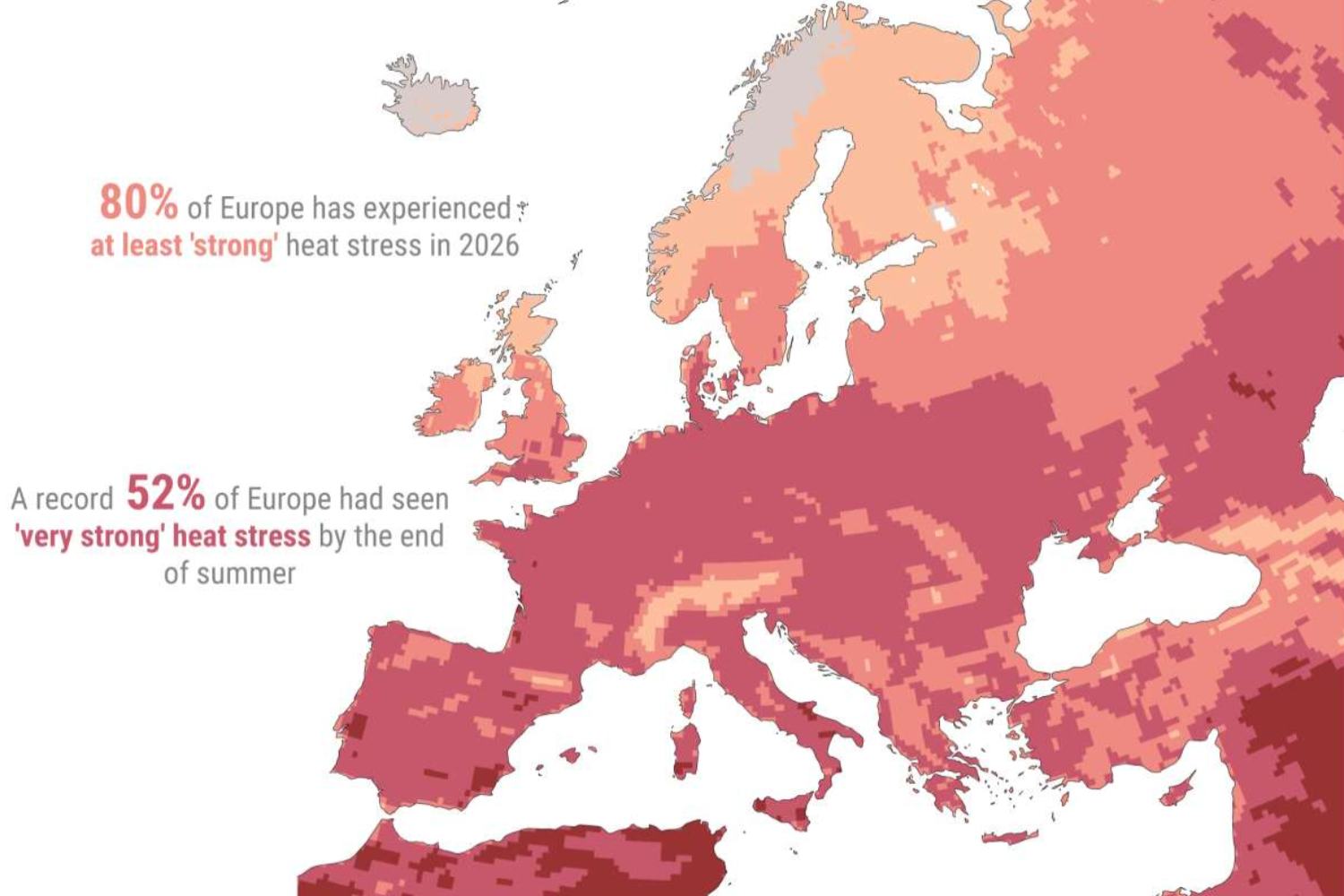
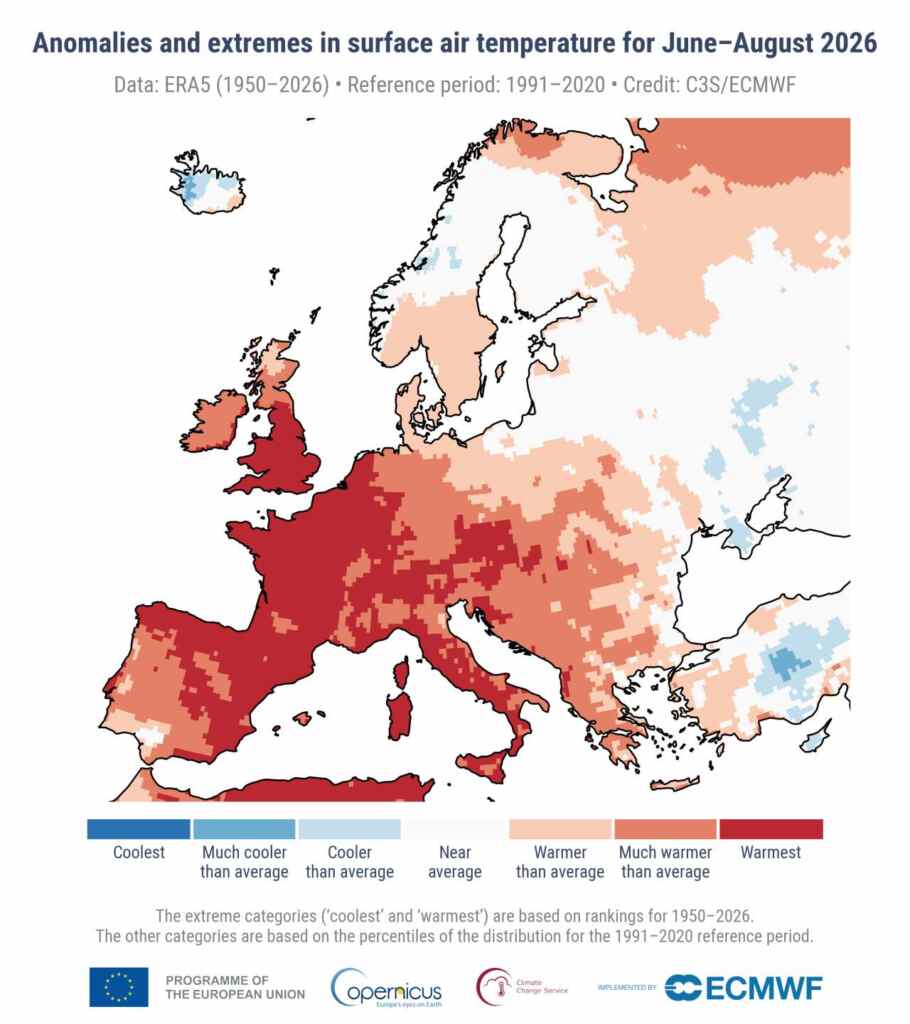
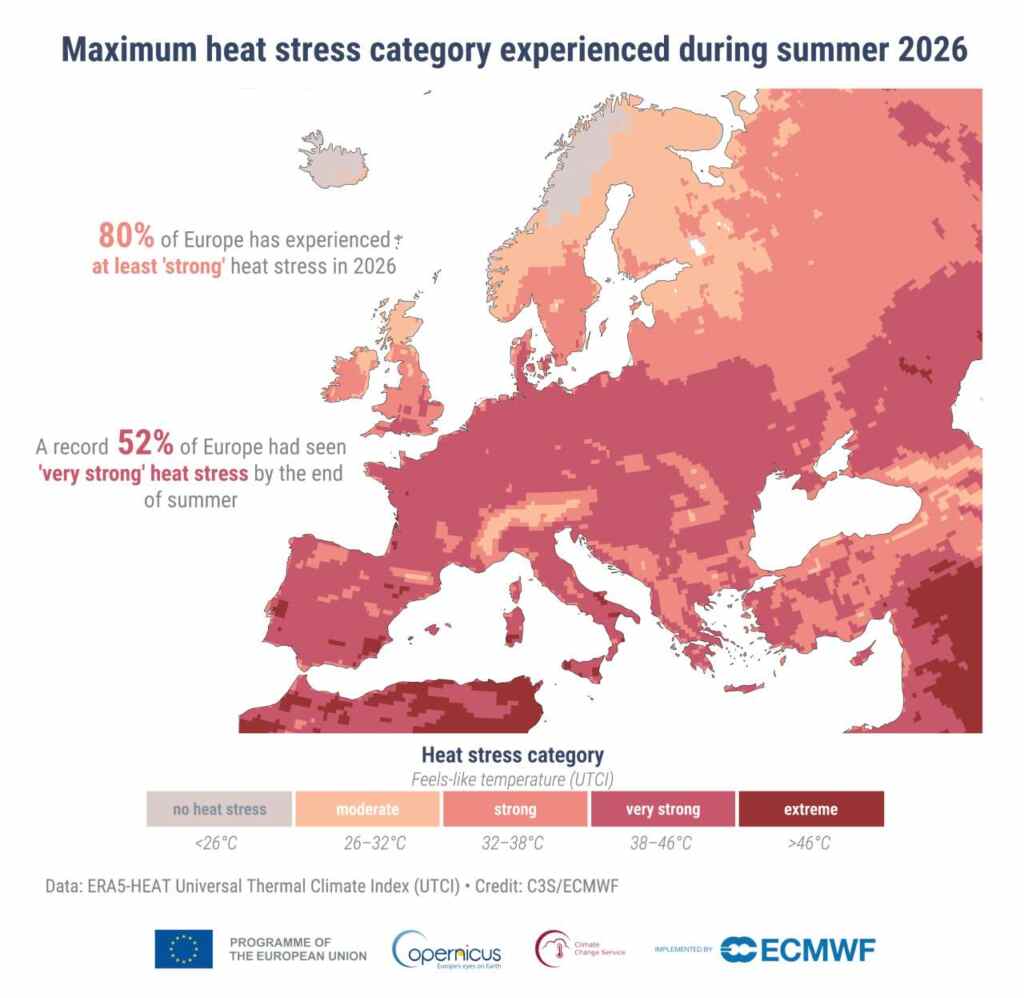
The summer of 2026 officially enters climate history as the hottest ever recorded in Western Europe, pulverizing the previous record established in 2003. According to data released by Copernicus through the Climate Change Service (C3S) and the European Center for Medium-Term Weather Forecasts (ECMWF), the average seasonal temperature reached 21.7 degrees centigrade, exceeding the average calculated for the period by 2.5 degrees 1991-2020. The anomalous heat was not limited to the central months, but struck early in May and lasted until September, affecting around 80% of the continent with levels of severe thermal stress (perceived temperatures above 32 degrees) for 41 days.
@Copernicus
@Copernicus
The geographical extension and persistence of the phenomenon were exceptional: for 17 days at least 60% of Western Europe recorded temperatures above 30 degrees, while 52% of European territory experienced very strong thermal stress with peaks perceived above 38 degrees. Samantha Burgess, strategic climate manager at the European Center for Medium-Range Weather Forecasts, highlighted how the current climate crisis manifests itself through multiple records that simultaneously affect the entire environmental system.
@Copernicus
River water crisis, boiling seas and devastating surge in forest fires
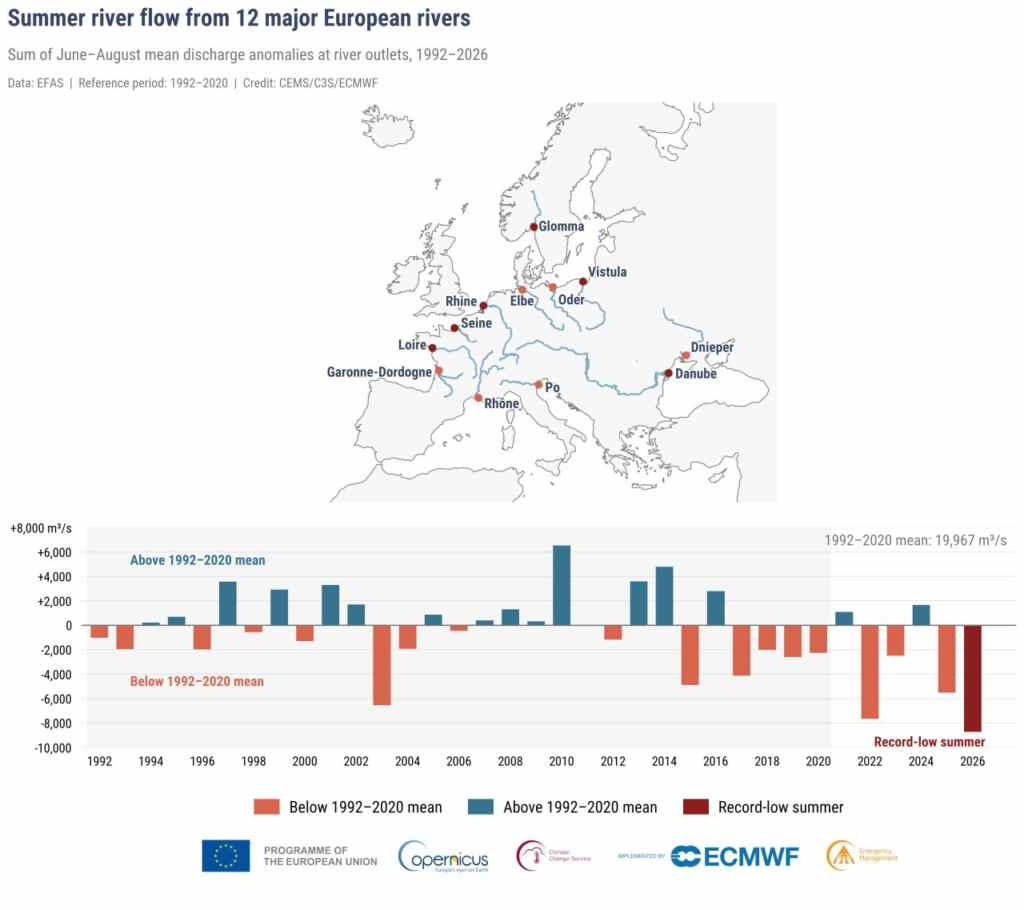
The consequences of this prolonged furnace have also been dramatically felt on water resources and natural ecosystems. At the end of August, drought affected almost half of the European continent, while river flows reached the lowest values since the beginning of the European Flood Warning System surveys started in 1992. Key waterways such as the Rhine, the Danube, the Loire and the Rhone recorded minimum flows which paralyzed freight transport, put agricultural irrigation in crisis, hindered hydroelectric production and compromised the cooling of nuclear reactors.
@Copernicus
At the same time, sea surface temperatures have reached record levels along the Atlantic coast and in the western and central Mediterranean, fueling marine heat waves that have intensified humidity and nighttime heat in coastal areas. In this critical scenario, the forest fire season has recorded alarming numbers: as of 2 September, the surface burned in the European Union was almost double the average for the period 2006-2025, with particularly large fires in Spain and France and with polluting emissions among the ten highest since 2003.
The Mediterranean saw its highest number of marine heatwave days in two decades.
Avg sea surface temperatures reached 1.23°C above the 1982–2024 baseline, w the E Mediterranean experiencing the most extreme conditions.
Discover the findings in #OSR10: https://t.co/ET5jDfz4Uo pic.twitter.com/PVrpysp9ZL
— Copernicus EU (@CopernicusEU) September 30, 2026
