
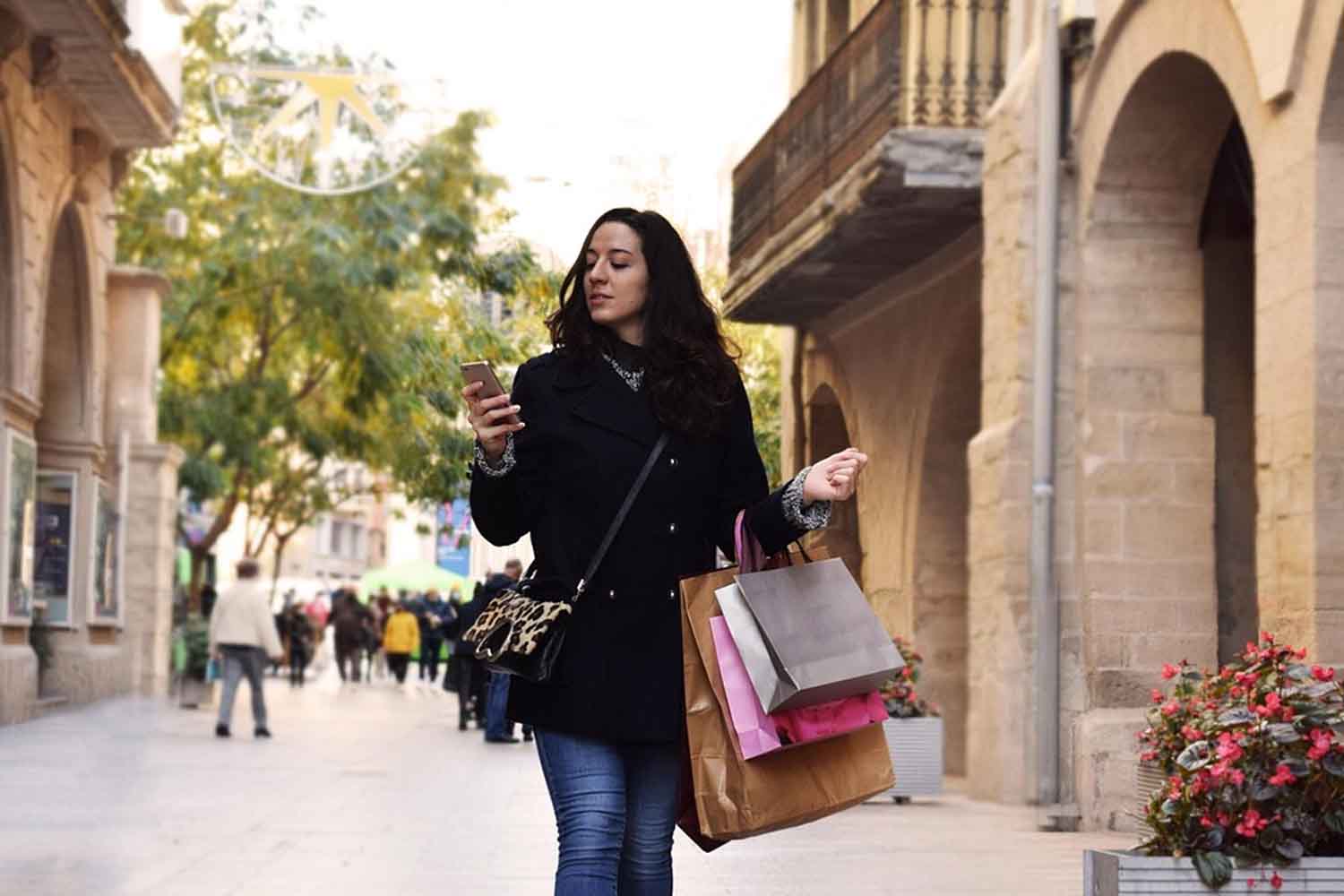
It happens to everyone, sooner or later, especially on difficult days, when it seems that everything costs too much, not only in terms of money but also of energy. You go into a shop where everything is cheap, you take a look around the shelves, take a candle, a cup, any object. Spend five euros. For a moment you feel better.
This is not superficiality or lack of self-control. It is what many today call low-cost retail therapy: a silent, widespread, almost invisible form of self-consolation that works precisely because it is small, accessible and requires no justification.
The lipstick effect
In psychology and behavioral economics this mechanism has a precise name: lipstick effect. Indicates the tendency to increase small, rewarding purchases in times of economic crisis and uncertainty. Not out of whim, but out of adaptation.
Research published in Journal of Behavioral and Experimental Economics analyzed consumption during the Great Recession and showed a very clear fact: while many expenses decreased, those related to cosmetics increased, especially among younger women. Not to please others more, not for work reasons. But because, by giving up clothes and more demanding purchases, we were still looking for a way to “treat ourselves well” without putting the budget at risk.
Basically, when everything seems out of control, the brain chooses what is manageable. A small purchase is a simple, concrete, immediate decision. And this is precisely what makes it reassuring.
Why shopping for a few euros gives us relief (but doesn’t solve the problem)
From a neurological point of view, these micro-purchases activate a rapid pleasure response. There is novelty, there is choice, there is the feeling of having done something for yourself. And there is a fundamental detail: the cost is low, so the sense of guilt remains below the threshold.
The problem is not the gesture itself. The problem arises when we confuse relief with solution. Because that feeling doesn’t last long. The object remains, the anxiety does not. Or rather, come back. And we often find ourselves repeating the same pattern, without even realizing it. Not because we are weak, but because no one has ever explained to us that in that moment we are not looking for an object, we are looking for a break.
Understanding this is not to judge yourself, but to protect yourself
Here is the point, and it is also the most important part. Knowing how this mechanism works does not mean stopping buying, nor demonizing those who do. It means becoming a little less automatic. Sometimes it’s fine to give yourself that little gratification, knowing that it’s a cuddle and not a cure. Other times it may be enough to stop for a moment and ask ourselves what we really need in that moment: rest, silence, a walk, someone to talk to.
Low cost retail therapy does not describe an individual problem, but a collective discomfort. We live in a context that asks us to endure a lot, with very few tools to release tension. It is normal to look for simple holds. The real change is not in saying “I shouldn’t do it”, but in saying to yourself: “Now I know why I do it”. And from there, choose with a little more kindness towards yourself.
You might also be interested in:
