
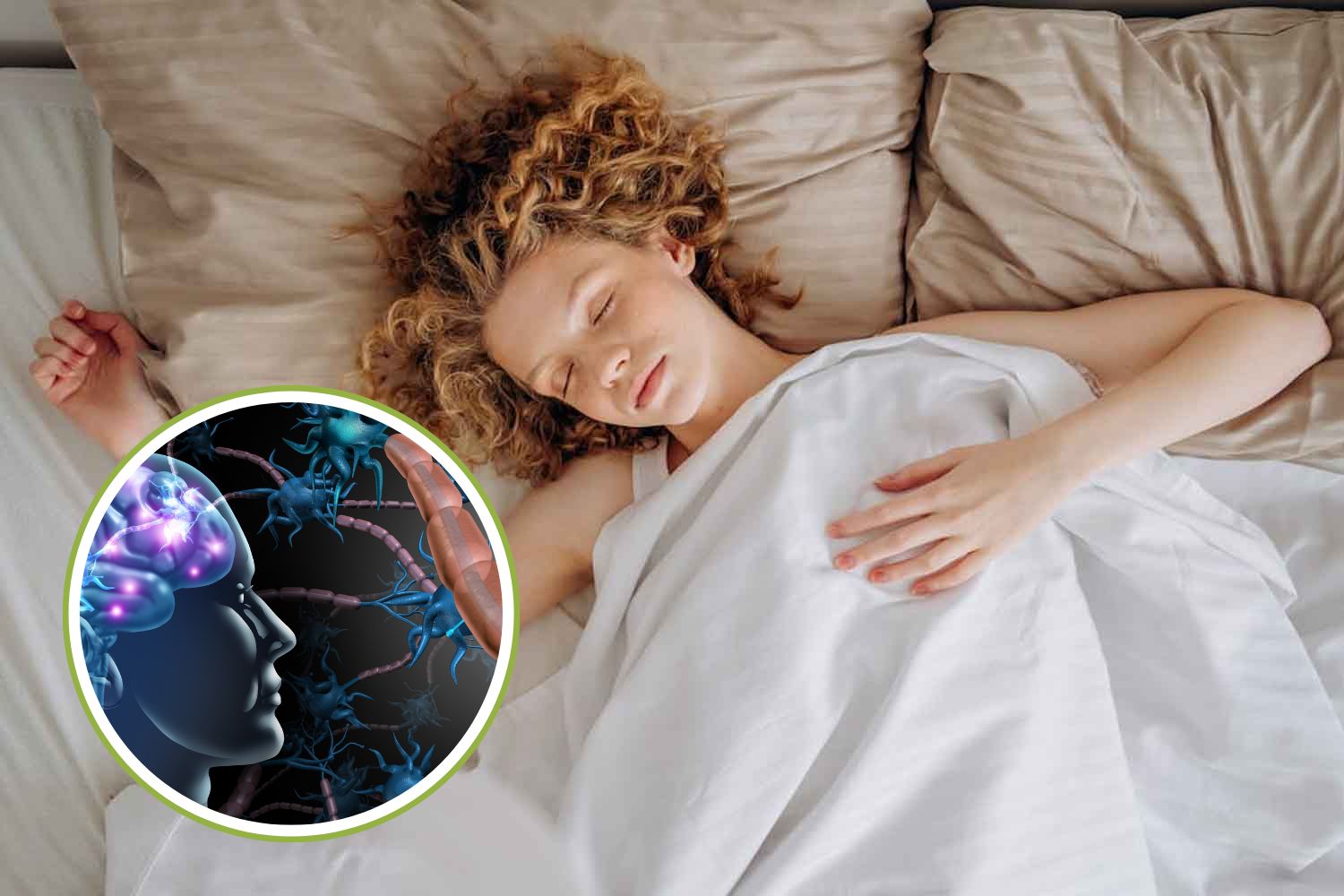
They always told us that falling asleep was a slow fade, almost a walk towards relaxation. The classic romantic image: eyes closing slowly, mind settling down, breathing slowing down. And instead, according to what a group of researchers from Imperial College London discovered, the moment the brain falls into sleep something much less poetic and much clearer happens: a real collapse, as if the wakefulness switch were suddenly turned down.
Neuroscientist Nir Grossman managed to pinpoint the precise moment: while the EEG traces flow, at a certain point the brain activity plummets. It doesn’t fade, it doesn’t fade. It falls. That point divides the waking mind from the sleeping one so clearly that scientists now call it a measurable boundary. A detail that may seem minimal, but for those who experience insomnia or risk falling asleep while driving, it could represent a new beginning.
Because the brain stops being awake in an instant
The discovery comes from a simple observation: not all areas of the brain fail at the same rate. The part that processes what we see, the occipital, “switches off” before the frontal part, which instead reasons, decides and holds daily worries together. It’s as if the mind begins to let go one piece at a time, until a hidden nucleus inside the brain takes the reins and closes the curtain without warning. It is there, in that invisible gesture, that real sleep begins.
Understanding this point of no return means being able to intervene in a more targeted way on those who take hours to unplug. And it also means recognizing that sleep doesn’t always tell you when it arrives: there isn’t always the classic “I’m collapsing”. For those who drive tired, for those who work at night or face exhausting shifts, the awareness that the mind can suddenly shut down is one more reason to protect yourself.
This sharp drop in brain activity, observed so clearly for the first time, reminds us that sleep is neither a luxury nor a whim: it is a biological necessity that acts with a force we cannot tame. However, we can understand it better. And, thanks to research like this, perhaps even learn to respect it.
You might also be interested in:
