
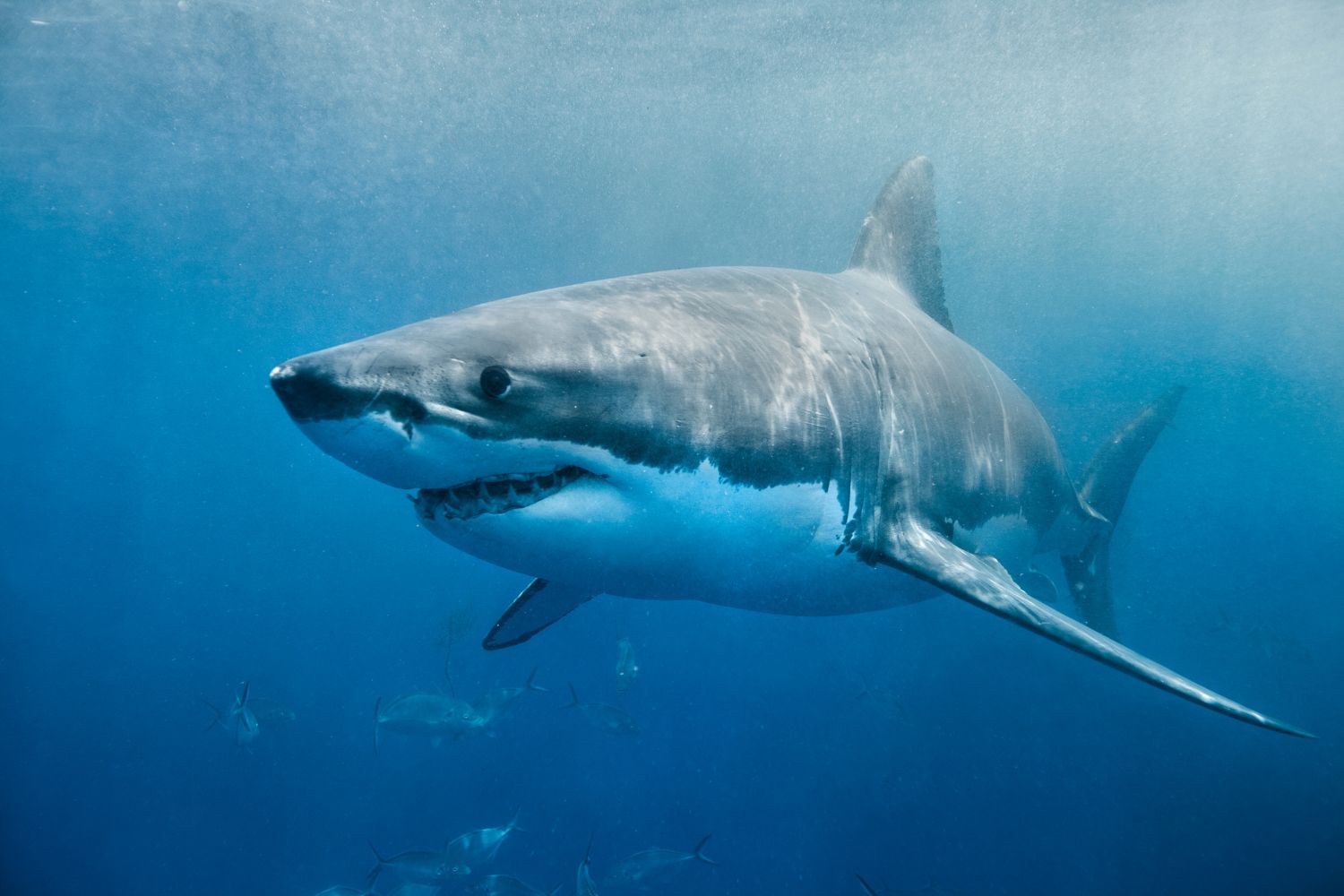
The teeth of the sharks are ruining themselves due to the acidification of the oceans, among the direct consequences of climate change: a study fromHeinrich Heine by Dusseldorf (Germany) has in fact shown that the decrease in the pH of sea water causes corrosion of the minerals of which they are made, with risk for the survival of these splendid animals, which use the bite to feed, and cascade repercussions on marine ecosystems.
Sharks are known for their ability to replace the teeth, with the growth of new ones that replace the old ones when consuming. This mechanism is fundamental for their survival, since they rely on the teeth to capture prey.
But now the scientists have examined the impact of the acidification of the oceans on the teeth of the sharks, positioning shark teeth in water containers at different levels of acidity: at the current pho of the oceans and the pH scheduled for the 2300.
With the increase in the release of carbon dioxide, I have known a greenhouse gas, in the atmosphere a greater amount of this gas by the oceans is absorbed. Consequently, the pH (i.e. the acidity rate) of sea water decreases, making it more acidic. The forecasts on 2300 were made on the basis of the trend expected for the increase in greenhouse gases dissolved in the oceans.
The shark teeth contain highly mineralized phosphates, very sensitive to corrosion – explains Maximilian Baum, the first author of the research – the most acidic water in the simulated scenario for the 2300 has damaged the shark teeth, including roots and crowns, much more than water with the current level of acidity. Global changes are therefore of such vast flow that they can have an impact on the microstructure of shark teeth
On the other hand, it is not the first study that highlights this type. In 2020 a study led by the Southern California Coastal Water Research (USA) had shown how the acidification of the oceans was dissolving the shells of the crabs.
For this latter work, the teeth have been used naturally by the black fin sharks of the Reef (Carcharhinus melanopterus) kept at Sealife Oberhausenthen divided into separate containers, one containing sea water with a pH of 8.1 (the current level) and the other with a pH of 7.3 (the one scheduled for the 2300) and kept there for eight weeks, finally examined under the microscope.
At a pH of 7.3, we have observed superficial damage such as cracks and holes, a greater corrosion of the roots and a structural deterioration – explains Sebastian Fraune, who led the work – in addition, the surface morphology was more irregular, which can weaken the structure of the teeth and make them more susceptible to breakage
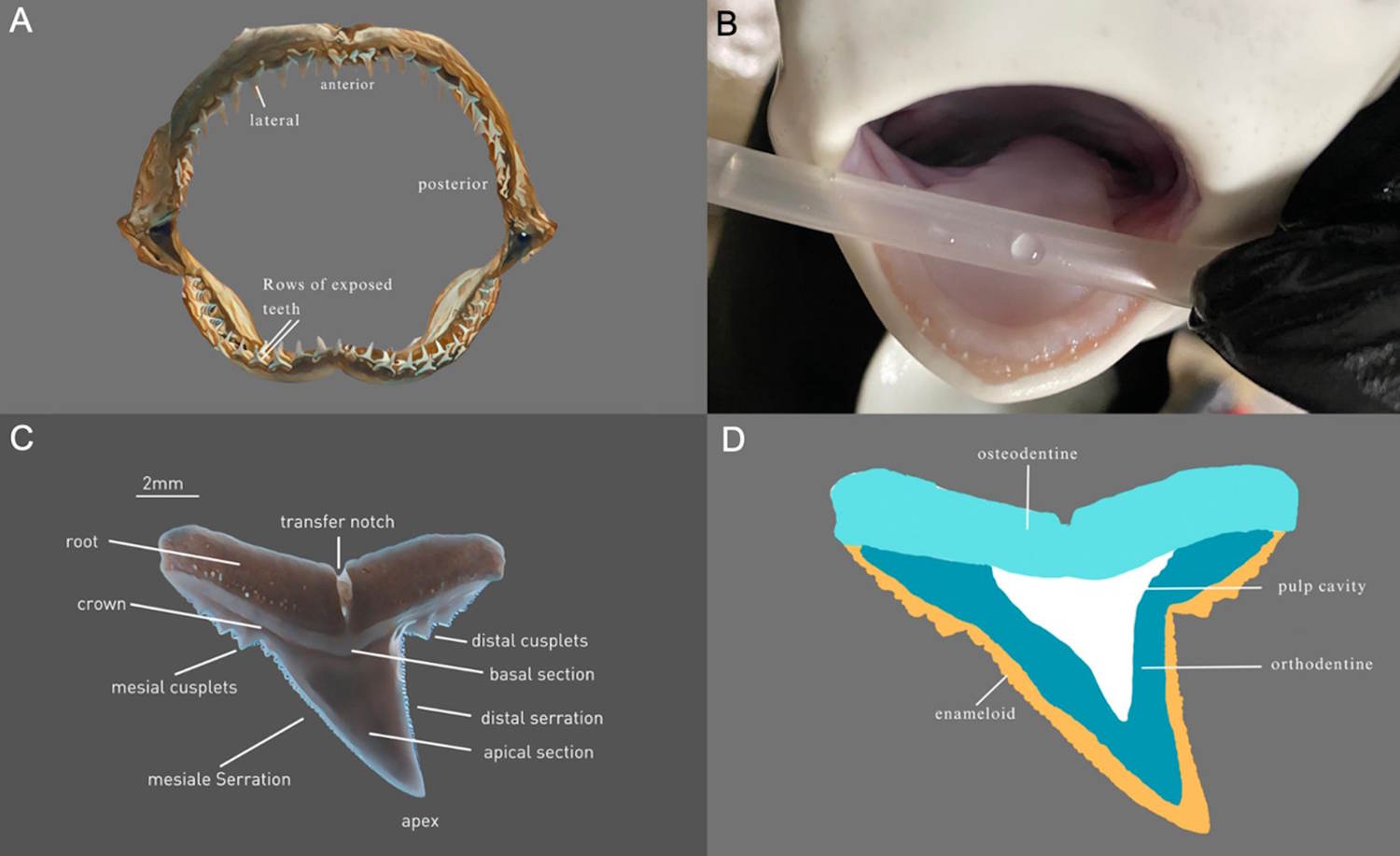
However, the researchers specify, having used teeth that fall naturally implies that the study does not take into account any repair processes that can occur in living organisms. The situation could therefore be more complex in living sharks, as they could be able to mineralize damaged teeth again, but still with a greater energy expenditure.
Moderate decreases of pH values can also have an impact on the most sensitive species with cycles for replacing slow teeth or having a cumulative effect over time – adds Baum – for sharks, it is certainly of great importance that the PH value of the oceans remains close to the current average of 8.1
This once again recalls that anthropogenic changes can have an impact on entire food networks and ecosystems. Yet sometimes it seems that many “forget it”.
The work was published on Frontiers in Marine Science.
Don’t you want to lose our news?
Sources: Heinrich Heine University / Frontiers in Marine Science
- Sharks on the run: I’ll tell you why climate change pushes these predators away from coral reefs
- Discovered a new terrible side effect of plastic (yet another), whose existence we ignored
- Climate change: the sociologist Liana Daher reveals the work opportunities of a sustainable lifestyle
