
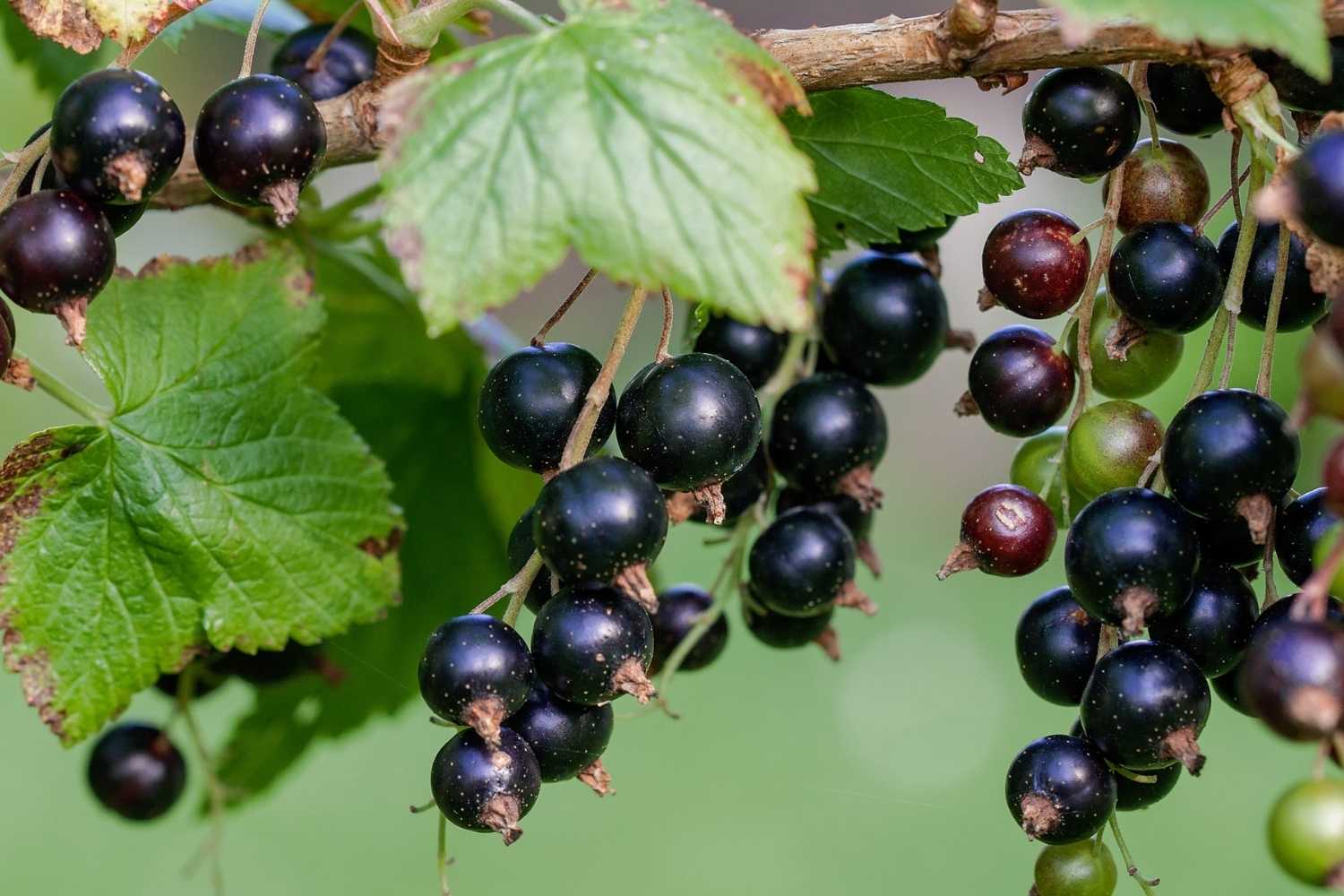
The wild currant is a precious natural resource for those who love to collect the spontaneous fruits of our territory, whether they are woods or mountain areas. The ribes berries are rich in beneficial properties, they can be consumed fresh and transformed into delicious products such as jams and syrups. The plant belongs to the family of Grossulariaceae and includes different species, such as black currant (Ribes Nigrum) and the red currant (Ribes Rubrum), among the most widespread and useful as a starting point of our article.
The problem arises from the fact that the currant berries are often confused with other toxic berries, absolutely non -edible, because they are very similar and therefore easily overlapping. So let’s see how to recognize the wild currant from other poisonous plants, even if we advise against the less experienced by trying the collection, because the pitfalls are around the corner.
The edible varieties of Ribes
The black currant – scientific name Ribes Nigrum – It is a shrub that can reach the meter and a half of height.
The cortex is smooth, from Chiara to reddish in the young drums, darker in adult individuals. The leaves are large, divided into 3-5 lobes, toothed along the margins, rich in secreting glands on the lower page and scented. The fruits, protagonists of our story, appear like globular black berries rich in seeds, with the apex the vestiges of the flower. The distinctive feature of this species is the intense aromatic perfume that emanate leaves, gems and fruits, due to the presence of essential oils.
The red currant – scientific name Ribes Rubrum -It is a small perennial shrub, a cadcipol and deafolio, a maximum of 1-2 meters high, very branched. The leaves are green with three lobes, while the flowers are color that varies from yellow to green. It blooms in March-April and fruits in July-August. The fruits are small red, edible berries. Unlike the black currant, this species presents berries with a sweetest flavor flavor, particularly appreciated for fresh consumption.

Both species are widely widespread in the spontaneous state in the Italian mountain and hilly areas, where they preferably grow in fresh and partially shaded environments. The plant is originally from the mountainous areas of Aurasia, and is spontaneous in the north and in the center of Europe and northern Asia.
The problem of confusion with toxic plants
We come to the focus of the article. As mentioned above, the collection of wild berries requires particular attention and botanical knowledge, since there are several plants that produce fruits apparently similar to those of the currant but highly toxic. Confusion can have serious consequences, especially for children who are naturally attracted to colored berries.
Bryonia: the first danger to avoid
Common brionia (Bryonia Creats SubP. dioic) is a climbing herbaceous, perennial, belonging to the family of Cucurbitaceaewhich produces spherical berries of 7-8 (10) mm, smooth, glabrous, green by young people then from orange and finally coral red to maturity.

The danger of Bryonia is extreme, given that the whole plant is poisonous, especially the berries: a figure between 12 and 15 berries could in fact kill a child! The toxic active ingredients are made up of various triterpene glucosides-known as cucurbitacins-such as brionin and brionidine, which act at a gastro-intestinal level causing a strong irritation of the mucous membranes, violent pains with nausea, vomiting, diarrhea, colic, hemorrhages and hematuria.
To distinguish Bryonia from the currant, the characteristics of the plant must be carefully observed: the first is a plant with a fleshy root similar to a large turnip but of acrid and nauseating smell, it has climbing bearing and drums long from 2 to 4 meters with pentolboed leaves. The Ribes, on the other hand, looks like an erected shrub with fragrant leaves and has never climbed.
The aforementioned Actaea: black berries to avoid
Another particularly insidious plant is theActaea exhaustedcommonly known as Capra beard. We are talking about perennial glabrous herbaceous plants whose height varies from 10 to 80 cm. The fruit is an ovoid polysperma berry of black-sport in color, with dehiscence it is lateral and diameter of about 6-8 mm.

The toxicity of this specimen is remarkable: the whole plant is poisonous, like other types of the family to which it belongs, the Ranunculaceaesuch as anemone. Especially berries, if ingested, can cause many intestinal problems, loss of knowledge, and in the most serious cases, cardiac arrest and death.
To distinguish the Actaea from the black currant, also in this case it will be necessary to observe the structure of the plant: the Actaea is a herbaceous plant with leaves up to 40-50 cm long, 3-thinking in the sub-cutting outing, while the currant is a woody shrub with much smaller leaves with a completely different shape. In addition, the ovoid berries of the goat beard are distinguished from the spherical ones of the currant and grow on a herbaceous plant rather than on a shrub.
How to recognize the wild currant with certainty
To avoid dangerous confusions, it is essential to know how to precisely identify the distinctive characteristics of the currant. Here’s what to observe more carefully:
Conclusions and Recommendations
The collection of wild currant can be a rewarding and healthy activity, but requires knowledge and prudence. As already observed, Ribes berries, both black and red, are rich in vitamin C and anthocyanins and offer numerous health benefits. The black currant in particular has a diuretic, purifying, vasoprotective and anti -inflammatory action.
To ensure safety during the collection, it is essential to follow some basic rules: never collect berries of which you are absolutely not certain of identity, pay particular attention in the presence of children, always observe the entire plant and not only the fruits, avoid plants with a climbing or herbaceous bearing when looking for the currant.
In case of doubt, it is always preferable to give up the collection rather than risk an intoxication, because it is true that nature can generously offer its fruits, but it is necessary to respect respect and a good basic knowledge to be able to enjoy it safely. Botany training and direct experience, perhaps accompanied by experts in the sector, represent the best way to learn to recognize with certainty the edible species from toxic ones.
Don’t you want to lose our news?
