
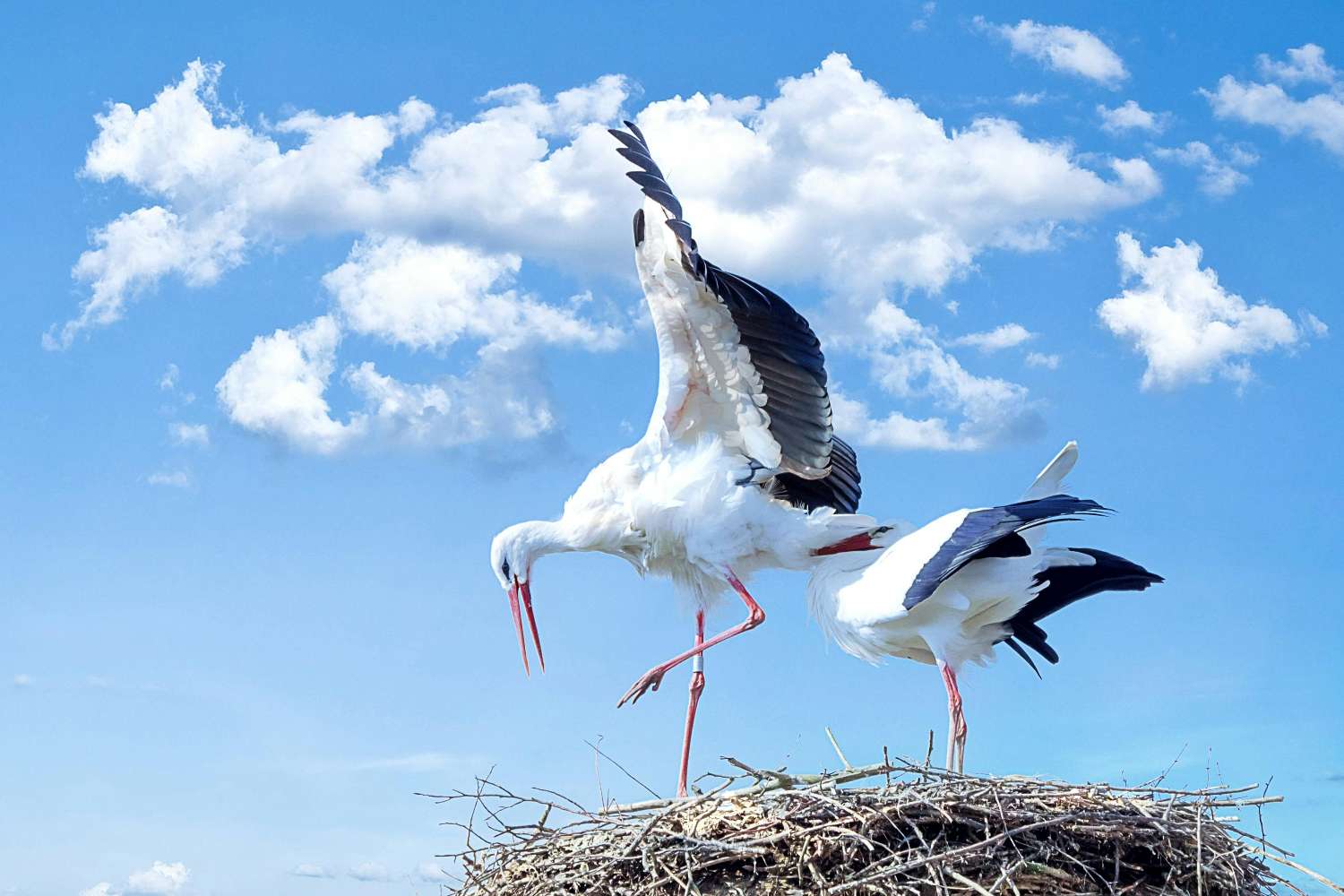
The ancestral charm of migration is giving way to the toxic comfort of our suburbs. European white storks are gradually giving up their historic transcontinental journeys to Africa, attracted by a resource that is as abundant as it is harmful: junk food residues that infest waste collection areas. This radical nutritional transition is not only changing their silhouette, but is penetrating the most intimate strands of their biological code, triggering structural alterations never documented before.
The invisible threat in the DNA of chicks
The details of this metamorphosis emerged in Florence during the conference of Society for Experimental Biology. A team of scientists from the University of Veterinary Medicine in Vienna monitored white stork communities in Poland and found systemic anomalies. Anustup Bandyopadhyay, researcher and doctoral student at the University of Vienna, explained how systematic access to urban waste guarantees birds an unprecedented body mass and artificial energy reserves, but at a very high price.
The peak attendance of open-air landfills unfortunately coincides with the breeding season. By feeding their young with these industrial leftovers, adults expose the chicks to serious damage to the genetic system, with direct damage to the DNA structure during the delicate growth phase. In addition to biochemical toxicity, the landfill environment subjects birds to the lethal risk of ingesting fragments of plastic, heavy metals, glass and conducting wires.
Goodbye to Africa and distorted migration routes
This change in diet is undermining a thousand-year-old evolutionary behavior. Since the mid-1980s, an increasingly large number of specimens have stopped wintering beyond the Mediterranean. As highlighted by Bandyopadhyay, the populations of the Iberian Peninsula have now transformed from totally migratory to partially sedentary or sedentary. The mild temperatures and the constant availability of what scientists define as anthropic “food subsidies” make the journey to African territories superfluous and uneconomical, from the point of view of immediate energy expenditure.
The global metamorphosis of urban fauna
The phenomenon observed in storks is part of a domino effect that is overwhelming all wildlife in contact with our cities. Sugars and complex carbohydrates generate different organ responses depending on the species. If in metropolitan rats there is a biological dependence that pushes them to look for increasingly caloric food, in red squirrels the intake of chips and biscuits produces a paradoxical weight loss compared to their woodland counterparts. In geese, carbohydrate malnutrition triggers angel wing syndrome, a bone deformity that forever prevents flight, while coyotes that rummage through home composts show a very high vulnerability to intestinal parasites. The boundaries of animal biology are therefore being redrawn inside our garbage bags and the fault, unfortunately, is totally ours.
