
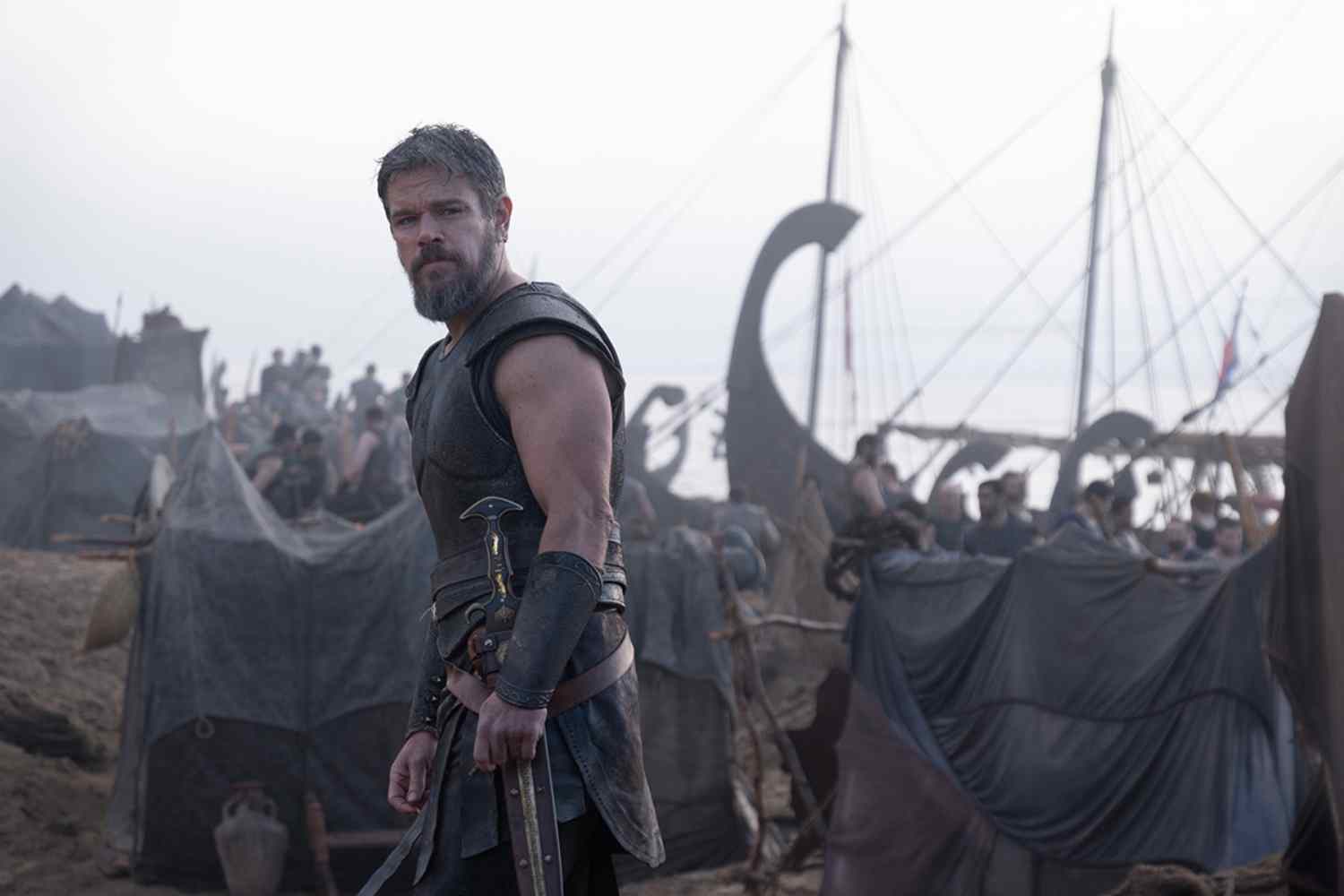
When you think about theOdysseythe Trojan horse, Polyphemus, the Sirens, sea monsters and Odysseus’ long return to Ithaca come to mind. It is the story of one of the most famous heroes of Western culture, but if you read it carefully a less obvious aspect emerges: the poem attributed to Homer is crossed by female figures who continually determine its developments.
Interest in this great classic has also grown again thanks to Odyssey (The Odyssey), Christopher Nolan’s new film with Matt Damon in the role of Odysseus, Anne Hathaway in that of Penelope and a cast that also includes Tom Holland, Zendaya, Robert Pattinson, Charlize Theron and Lupita Nyong’o. The film will arrive in Italian theaters on July 16, 2026, one day before its release in the United States, and is the most expensive project of the director’s career, shot entirely with IMAX cameras.
But, beyond the cinematic spectacle, Homer’s work continues to be relevant because it tells of a type of heroism that is very different from what we are used to.
A journey decided by women
View this post on Instagram
The protagonist is Odysseus, Ulysses of course. However, almost every stage of his journey depends on a woman’s decisions, intelligence or will.
The first is Calypso, the nymph who keeps him for seven years on the island of Ogygia. It is not just imprisonment: it represents the possibility of forgetting the past and definitively giving up the return. Odysseus could stay with her and even obtain immortality, but he chooses to return home, despite knowing that mortal life awaits him with all its difficulties.
Then there is Athena, probably the most important character in the entire poem after the protagonist. She is the goddess of wisdom and strategy, the one who convinces the gods to help Odysseus and intervenes several times to protect him. It accompanies him without replacing him: it suggests, organizes, hides, persuades. On several occasions it takes on a masculine appearance, as if to remind us that in a world dominated by men, even female power must often act indirectly.
Penelope doesn’t just wait
Penelope is also very different from the traditional image of the faithful wife waiting for her husband to return.
During the twenty years of Odysseus’ absence she must defend the kingdom from the assault of suitors who want to marry her and take possession of the throne. To save time she invents one of the most famous stratagems in literature: she promises that she will choose a new husband when she has finished weaving the shroud intended for her father-in-law Laertes, but every night she secretly undoes the work done during the day, Penelope’s canvas being famous in fact.
His is a political resistance as well as a personal one. Without that long strategy of postponement, Odysseus would not have found a kingdom to reconquer.
The Sirens and Circe: danger is never just a monster
Many of the most famous episodes ofOdyssey revolve around female figures who embody charm and risk.
The Sirens do not kill with force, but with knowledge and desire. They promise to reveal everything a man would want to know and lure sailors to certain death. Odysseus does not give up listening to them: he orders his companions to tie him to the mast of the ship so that he can hear their song without giving in to temptation.
Even Circe, the powerful sorceress who transforms men into pigs, is not just an antagonist. After having put Odysseus to the test, she becomes a precious ally and shows him the path to reach Hades, an essential step to complete the journey to Ithaca.
In the poem the line between help and obstacle is almost always blurred. Women are not “positive” or “negative” characters: they force the protagonist to choose, to stop, to change direction, to understand who he wants to be.
A hero full of contradictions
This is perhaps the aspect that makes Odysseus still so modern. He is not the invincible hero of physical strength, but that of intelligence and adaptation. He lies, changes his identity, makes mistakes, allows himself to be seduced, loses companions, makes questionable decisions and often manages to save himself thanks to cunning rather than courage.
For some scholars, the long period spent with Calypso can even be read as the portrait of a man unable to process the trauma of the Trojan War, stuck in a sort of suspension before being able to return to his previous life. It is a contemporary reading that gives the character a surprising psychological depth.
Because it continues to be a classic
Almost three thousand years after its composition, theOdyssey continues to be read because it is about much more than a sea voyage. It tells of the desire to return home, the difficulty of finding oneself after a long absence, the relationship between power and intelligence and the need to live with one’s weaknesses.
Perhaps this is also why Odysseus remains one of the most current heroes in literature: not because he always wins, but because he manages to survive his mistakes. And throughout the journey, the people who most influence his destiny are not the warriors or kings he meets, but the women who, in different ways, continually show him which path to choose.
