
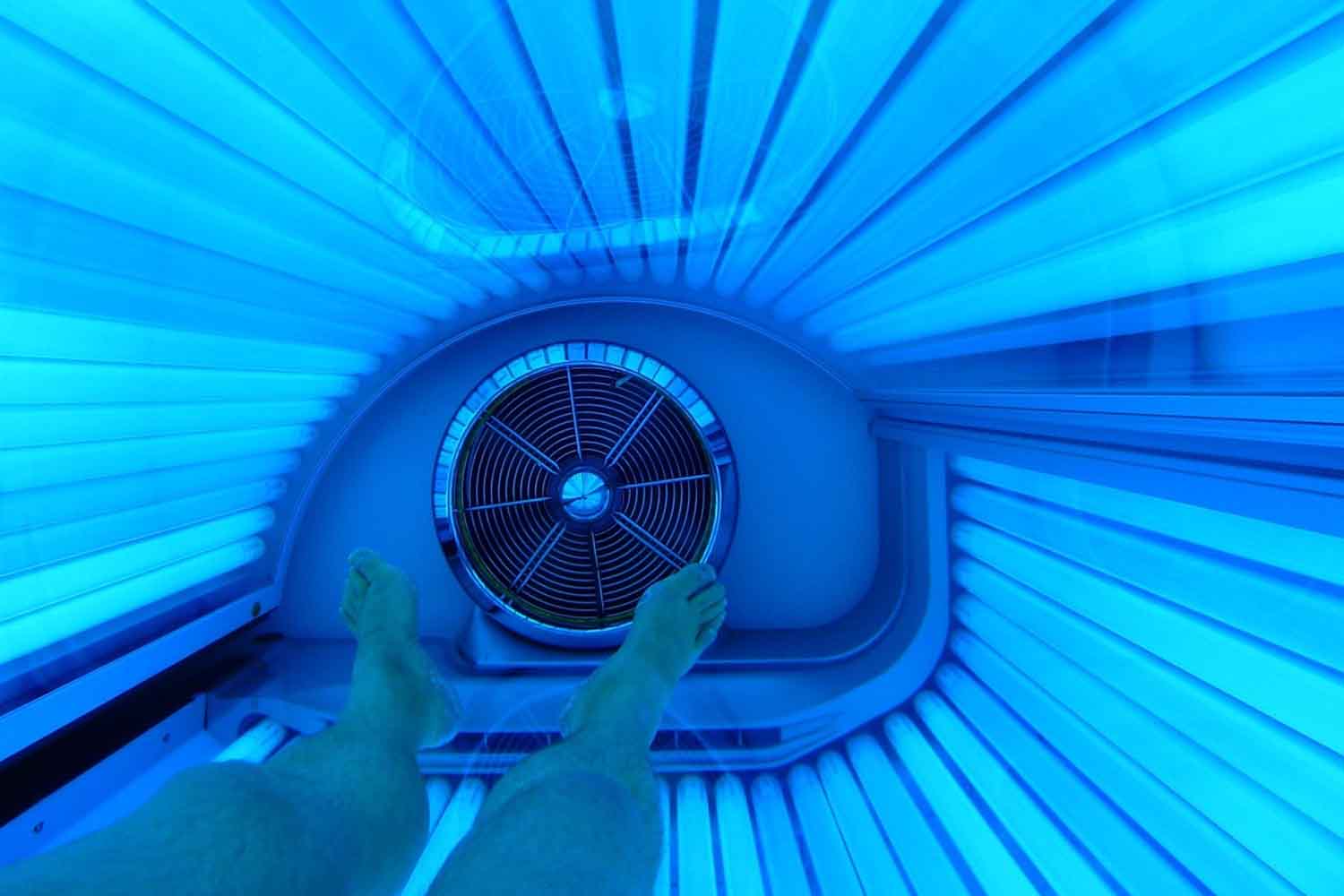
A new scientific study finally clarifies why tanning beds are associated with a much higher risk of melanoma, the most aggressive and lethal form of skin cancer. Research shows that artificial tanning does not only cause damage in areas directly exposed to light, but spreads potentially cancer-causing genetic mutations across almost the entire surface of the body, leaving a lasting imprint in the skin’s DNA.
The work was conducted by a team of scientists from Northwestern Medicine and the University of California, San Francisco, who analyzed thousands of medical records and sequenced single skin cells from people who had used tanning beds and from subjects who had never used them.
The results were stark and hard to ignore. The use of tanning beds was associated with an almost threefold increase in the risk of melanoma compared to those who had never used them. Even more relevant is the fact that cancer-linked DNA mutations have also been found in areas of the body that rarely see sunlight, such as the lower back and buttocks.
The data, published in the scientific journal Science Advancesrepresent the most solid biological evidence ever collected on the direct link between artificial tanning and systemic damage to human skin, damage that can persist over time and favor the onset of melanoma.
Tanning beds are no safer than the sun
Melanoma is the most dangerous form of skin cancer and causes approximately 9,000 deaths in the United States each year. Already in the 1980s and 1990s, when indoor tanning began to spread on a large scale, dermatologists had noticed an anomalous phenomenon: frequent users of sunbeds developed melanomas at a younger age and in unusual places on the body, different from those typically affected by natural sun exposure.
For years, however, a clear molecular explanation has been lacking. This scientific void was exploited by the artificial tanning industry to argue that sunbeds were no more dangerous than the sun. An argument that has never convinced Dr. Pedram Gerami, professor of skin cancer research at the Feinberg School of Medicine at Northwestern University.
Gerami, a dermatologist with over twenty years of experience in the treatment of melanoma, had observed a recurring pattern: many patients were women under 50, often with multiple melanomas, united by a very specific habit. The use of tanning beds.
To scientifically verify these observations, the team compared approximately 3,000 people who had used sunbeds with 3,000 similar subjects who had never used them. Melanoma was diagnosed in 5.1% of sunbed users, compared to 2.1% of non-users. Even after taking age, gender, sunburn history and family history into account, indoor tanning was still associated with a 2.85-fold increased risk of melanoma.
DNA damage and mutations spread throughout the body
To understand what was happening at the cellular level, the researchers analyzed skin samples from three distinct groups. The first included 11 patients with melanoma and a long history of tanning bed use. The second included nine people who had never had artificial tanning, but with similar characteristics in terms of age and risk factors. A third control group consisted of six cadaveric donors.
Through single-cell DNA sequencing, 182 melanocytes, the cells that produce pigment and from which melanoma originates, were examined. The cells of the subjects who had used sunbeds had almost double the mutations compared to the controls and more frequently showed genetic alterations already known to be associated with the development of melanoma.
The most impressive aspect concerns the distribution of these mutations. In natural sun exposure, damage tends to be concentrated in the most exposed areas. In subjects who used tanning beds, however, the same dangerous mutations were present on almost the entire skin surface.
As Gerami explained, in sun exposure “about 20% of the skin receives the greatest damage,” while with tanning beds the intense ultraviolet irradiation affects the entire body uniformly. Even apparently healthy skin, without visible moles, showed early mutations that predispose to cancer, something never before demonstrated with such clarity.
From aesthetic fads to permanent health scars
Among the donors of the analyzed samples there is also Heidi Tarr, 49 years old, who as a teenager used tanning beds two or three times a week. It was a widespread, normalized practice, associated with an ideal of beauty shared by friends and celebrities. Years later, a spot on her back turned out to be melanoma, dramatically changing her life.
After the surgery, years of continuous checks and over fifteen biopsies followed, amidst physical pain and constant anxiety. Despite this, Tarr chose to participate in the study to contribute to scientific research and help other people understand the real risks of tanning beds.
Health policies, prohibitions and prevention
According to Gerami, the combination of clinical and genetic data requires serious reflection on prevention. Banning the use of tanning beds by minors should be the bare minimum. Many patients began exposing themselves at a very young age, when they were most vulnerable to social pressure and marketing from the tanning industry.
The professor argues that tanning beds should carry warnings similar to those on cigarette packs. Not surprisingly, the World Health Organization has classified them as class 1 carcinogens, at the same level as smoking and asbestos.
The difference today is that the damage is visible black and white in the DNA of skin cells. For those who have frequently used sunbeds in the past, the advice is clear: undergo a complete dermatological examination and schedule regular check-ups, because prevention remains the most effective weapon against melanoma.
You might also be interested in:
