
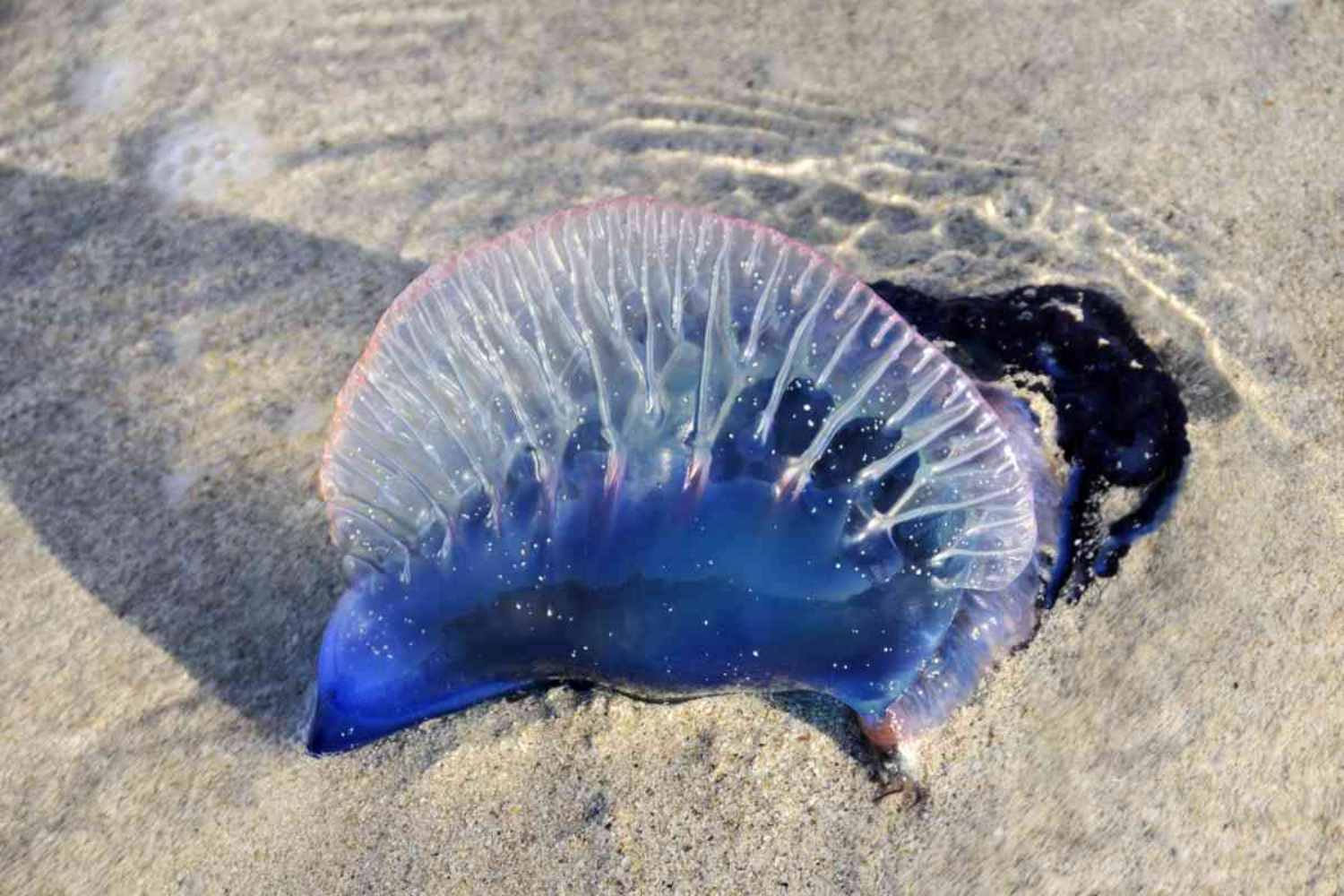
Climate change is increasingly brings to the Mediterranean waters, marine species originating in other habitats. Among these is the Portuguese caravel (Physalia Physalis), a creature that resembles a jellyfish but actually belongs to the siphonophores, organisms composed of colonies of small interdependent individuals. To distinguish it is the particular floating bag full of gas that remains on the surface, while tentacles extend below 30 meters, rich in stinging cells capable of injecting a very powerful poison.
Origins and diffusion in Europe
This animal normally lives in tropical and subtropical waters of the Atlantic and Caribbean, but the currents driven by global warming are bringing it closer to the European coasts. Today it is not uncommon to report his presence in Spain, France and, more sporadically, in Italy. Historical studies have already documented specimens in the Mediterranean in the mid -nineteenth century, but the increase in the temperature of the sea has favored new arrivals and a wider diffusion.
Where it was spotted in Italy
In our country the Portuguese caravel was observed especially in the south and in the major islands. The most affected areas include the Strait of Messina, the coasts near Catania, Sardinia and, in the past, also the Ligurian Sea. The first official sighting in the Mediterranean dates back to 2010 in Villaputzu, in the province of Cagliari. Some contacts had serious consequences, such as the case of a woman hospitalized after a meeting in the waters of the Cyclops.
The risks to human health
Contact with long tentacles can cause severe pain, erythema, blisters and injuries that recall the sunburn. In most cases the symptoms are resolved in a few days, but complications such as anaphylactic shock, fever, heart and respiratory disorders can arise. Alarm signs are persistent pain, extensive redness and worsening of skin symptoms.
What to do in case of puncture
If you are points from the Portuguese caravel, the first rule is to get out of the water and not touch the animal, not even if beached. It is essential to avoid home remedies such as fresh water, ammonia or sand, which can worsen the situation. The main recommendation is to immerse the affected part in hot water at about 45 ° C for 20 minutes, so as to neutralize part of the poison. It is then necessary to immediately contact the health personnel and notify the Port Authority or the ISPRA for the safety of the beach.
Don’t you want to lose our news?
You may also be interested in:
