
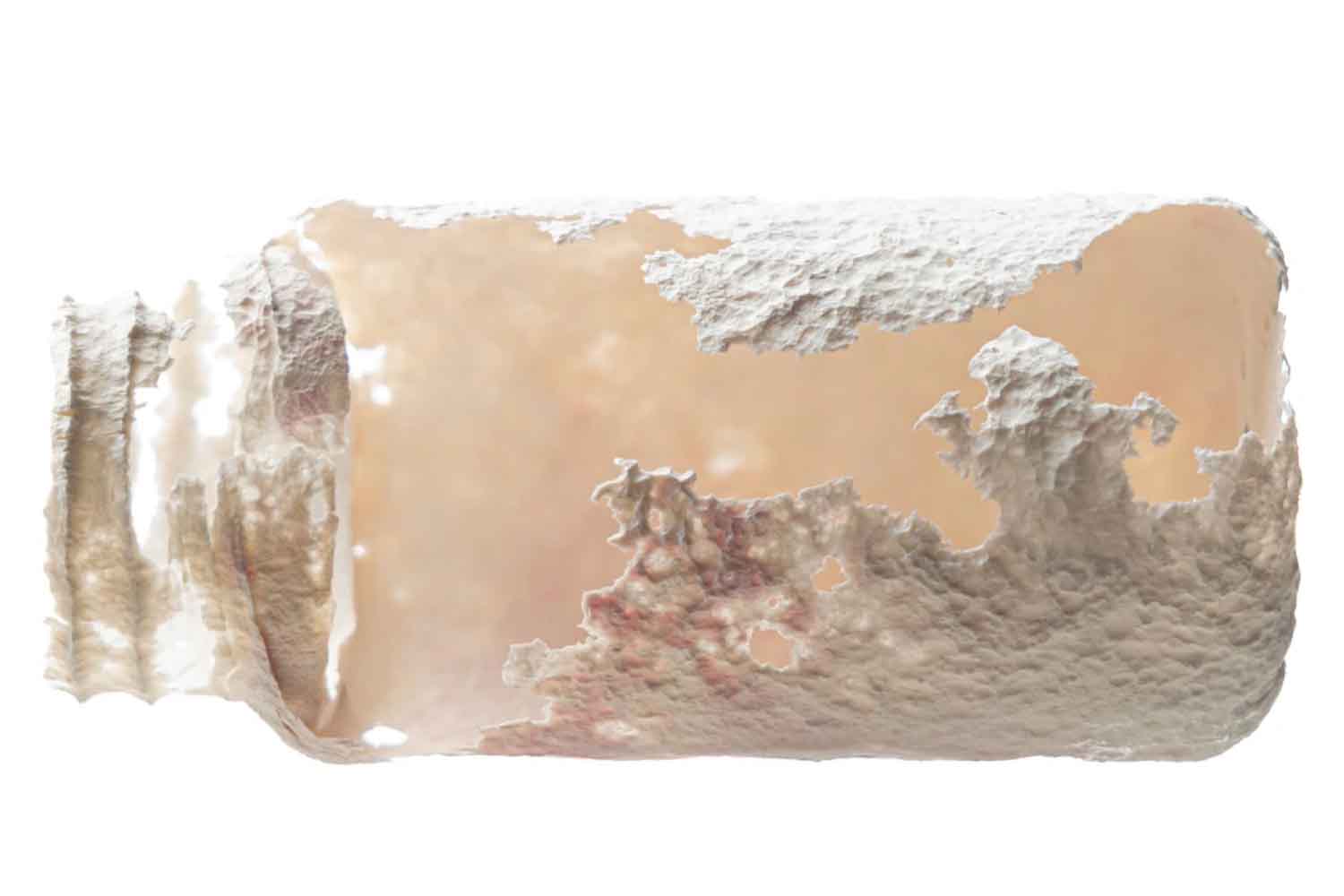
A kitchen cutting board that can go from the dishwasher to the home composter, naturally when it has exhausted its function. It was created by Shellworks, a London startup that developed it Vivomer, a material of entirely biological origin that behaves like traditional plastic and can decompose in home compost within a few months.
The cutting board is just one of the applications of the material, already used to produce cream jars, detergent bottles, droppers and perfume caps. From the United Kingdom to the United States, via the European Union, Shellworks claims to have already distributed over 8 million components. We are therefore well beyond the laboratory prototype.
Bioplastic produced by bacteria (which feed on plant waste)
Bacteria take care of the production of the raw material. Shellworks feeds them with plant by-products from agricultural and industrial processes, exploiting their ability to produce and accumulate natural polymers called polyhydroxyalkanoates, better known by the acronym PHA, inside their cells.
These polymers are obtained through a microbial fermentation process, which are then extracted and transformed into small granules. From here on, the processing is very similar to that of conventional plastic: the same industrial machinery can be used, using injection molding or extrusion.
Vivomer can be rigid or flexible, have a shiny, opaque or particularly soft to the touch surface. It can take on different colors and shapes, depending on the needs of the companies that intend to use it for their packaging. The industrial advantage is quite evident: you can change the raw material without necessarily having to change the entire factory.
It resists the dishwasher, but bacteria manage to decompose it
According to the specifications provided by Shellworks, Vivomer is waterproof, can withstand washing in the dishwasher and maintains its characteristics for over three years on the shelves. The company has also developed formulations suitable for contact with food. Its ability to decompose depends on the activity of microorganisms, which degrade the material through their enzymes.
Once introduced into the home composter, Vivomer can biodegrade over a few months, with variable times depending on the thickness of the object, humidity and temperature. Shellworks also declares to have obtained the home compostability certification issued by TÜV Austria for the material.
Among the most interesting applications is a cosmetic dropper made entirely of Vivomer, awarded in 2025 at the Pentawards for sustainable design. An apparently banal object which, in its traditional version, can contain glass, plastic and rubber: three materials that must be separated to correctly dispose of a few centimeters of packaging.
How much does it cost to replace traditional plastic?
The transition from fossil packaging to that of biological origin must also take into account the price, especially when we are talking about objects produced in the millions. Currently Vivomer can cost around double that of conventional plastic, but by increasing production volumes the difference is reduced. According to Shellworks, with orders in the range of 5 million units per yearthe material is already competitive with glass, aluminum and chemically recycled plastic.
In the meantime, the startup has also decided to experiment with direct sales, with its first kitchen cutting board made entirely of Vivomer: it measures approximately 25.5 by 38 centimeters, is resistant to stains and costs 38 pounds. It is currently only available to order in the UK and US.
Biodegradable, compostable and bio-based: let’s learn to read labels
The peculiarity of Vivomer also lies in containing three characteristics that we find more and more often on the packaging of the products we purchase. Three terms which, although they may coexist on the same label, indicate different things.
As the European Commission explains, the wording “bio-based” concerns the origin of the raw materials. A plastic can be obtained entirely or partially from biological resources, such as corn or sugar cane, and still have characteristics similar to those of a fossil plastic also in terms of persistence in the environment. The word “biodegradable” it concerns instead what happens to the material when it comes into contact with certain microorganisms. To understand how and how quickly it can decompose, it is also necessary to know the necessary environmental conditions.
The wording “compostable” indicates the possibility of subjecting the material to a composting process while respecting specific requirements, which include decomposition times and the quality of the compost obtained. Even in the latter case, however, there is an important distinction: that between industrial and domestic composting. Industrial systems can reach temperatures of 55-60 °C, which is difficult to reproduce in the compost bin we have in the garden.
To recognize products suitable for home composting we can look for specific certifications, such as the OK compost HOME brand from TÜV Austria. The OK compost INDUSTRIAL brand identifies products certified for treatment in specific plants. In Italy, to dispose of waste packaging, we can verify the presence of compostability marks compliant with the UNI EN 13432 standard and follow the instructions for separate waste collection shown on the packaging.
A concrete alternative to fossil-based packaging
Materials like Vivomer could find space especially in those sectors where plastic is particularly difficult to replace, from cosmetics to food preservation. The possibility of using vegetable waste, maintaining a large part of existing production processes and designing compostable packaging offers companies an already viable alternative.
Even more interesting would be to exploit these properties to create durable, washable and usable containers, through refill systems that also allow the quantity of packaging produced to be reduced. A jar of cream, after all, has every reason to resist water, humidity and a few years spent on the bathroom cabinet. Much less to survive the person who bought it.
