
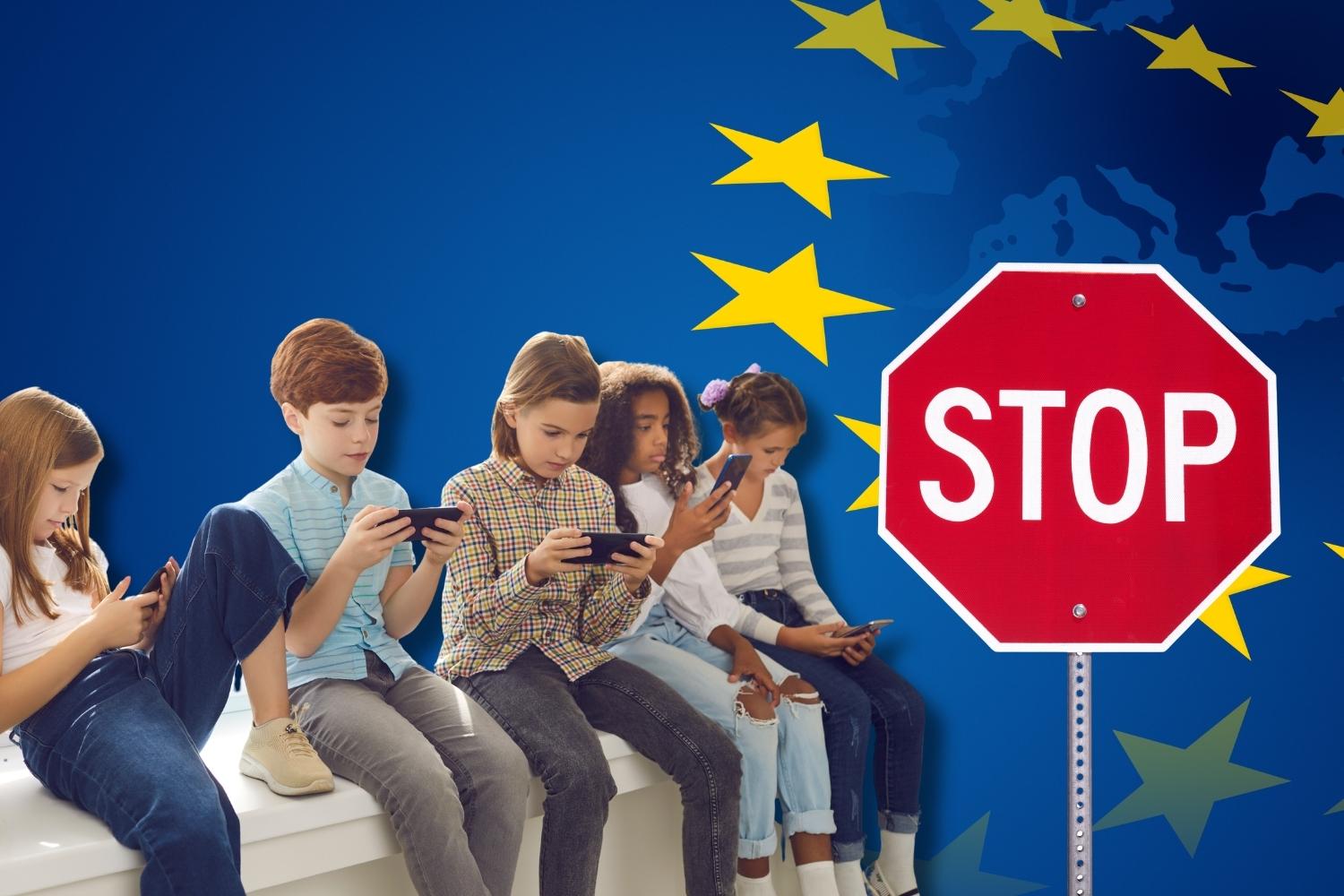
Is called EU Kids Act and it is the new legislative proposal that aims to make the digital world safer for children and adolescents. The European package, just adopted by the European Commission, introduces stricter rules for social networks, video sharing platforms, online video games and services based on artificial intelligence, with a specific objective: to put the safety of minors at the center right from the design of the platforms.
Among the main changes is the ban on children under 13 to access social media and the introduction of a common European minimum age of 15 to open a self-employed personal account. Up to that threshold, access must take place with parental control tools.
Another important change concerns the responsibility of platforms: the Kids Act reverses the burden of proof, establishing that online service providers will have to demonstrate that their products are safe and age-appropriate for users, according to the principle of “safe by design”.
The proposal arises from the work of the special group on the safety of minors online convened by the President of the European Commission Ursula von der Leyen, made up of over 60 experts among youth representatives, parents, educators, civil society organizations, child mental health specialists and technology experts.
What changes for children under 13
One of the pillars of the Kids Act concerns access to social media. The proposal provides that minors can only create an independent account on social media from the age of 15. For children between 13 and 15 years old, however, there will be a system with greater parental involvement: Guardians will be able to create mini-accounts linked to their profilesthrough which children will be able to access social media and video platforms considered suitable for their age.
These accounts will need to have some protections already built in, including:
For i minors up to the age of 13, however, will be prohibited from accessing social media. However, video sharing services designed specifically for them and usable through accounts managed by parents or guardians will be allowed.
Stop endless scrolling, harmful algorithms and addictive chatbots
The EU Kids Act introduces new rules for all platforms offering digital services to users under 18: social networks, video platforms, online video games, chatbots and AI-based virtual assistants.
Among the functions that will have to be eliminated or limited are those considered capable of encouraging compulsive use of platforms, such as:
Also artificial intelligence comes into the sights of the new rules. Chatbots and virtual assistants must be deactivated by default for minors and cannot simulate personal relationships in a way that creates forms of emotional dependence.
Children’s profiles will also have to be more protected: they will be private by default, while functions such as geolocation, camera and microphone will have to be automatically deactivated.
Age verification and new responsibilities for platforms
Another central element of the Kids Act concerns age verification. Online platforms and app stores will need to use tools to verify the age of users, including through a future European verification app.
According to the Commission, this system will be designed to protect privacy: it will not store identity documents or biometric data of users. For new accounts, social media and video platforms will therefore need to verify your age at the time of registration. For existing ones, however, they will have to use plausible indicators, such as some available account information or payment data.
The most important news, however, concerns the relationship between platforms and authorities: the providers of the largest online services will have to demonstrate that they have adopted adequate measures to protect minors. They will have to submit a compliance plan to the European Commission and an independent auditor, who will evaluate new features and services. In the event of problems, Brussels will be able to request corrective action and initiate accelerated procedures to verify any violations.
The proposal has now been transmitted to the European Parliament and the Council of the European Union, which will have to examine it as part of the legislative process before its possible final adoption.
