
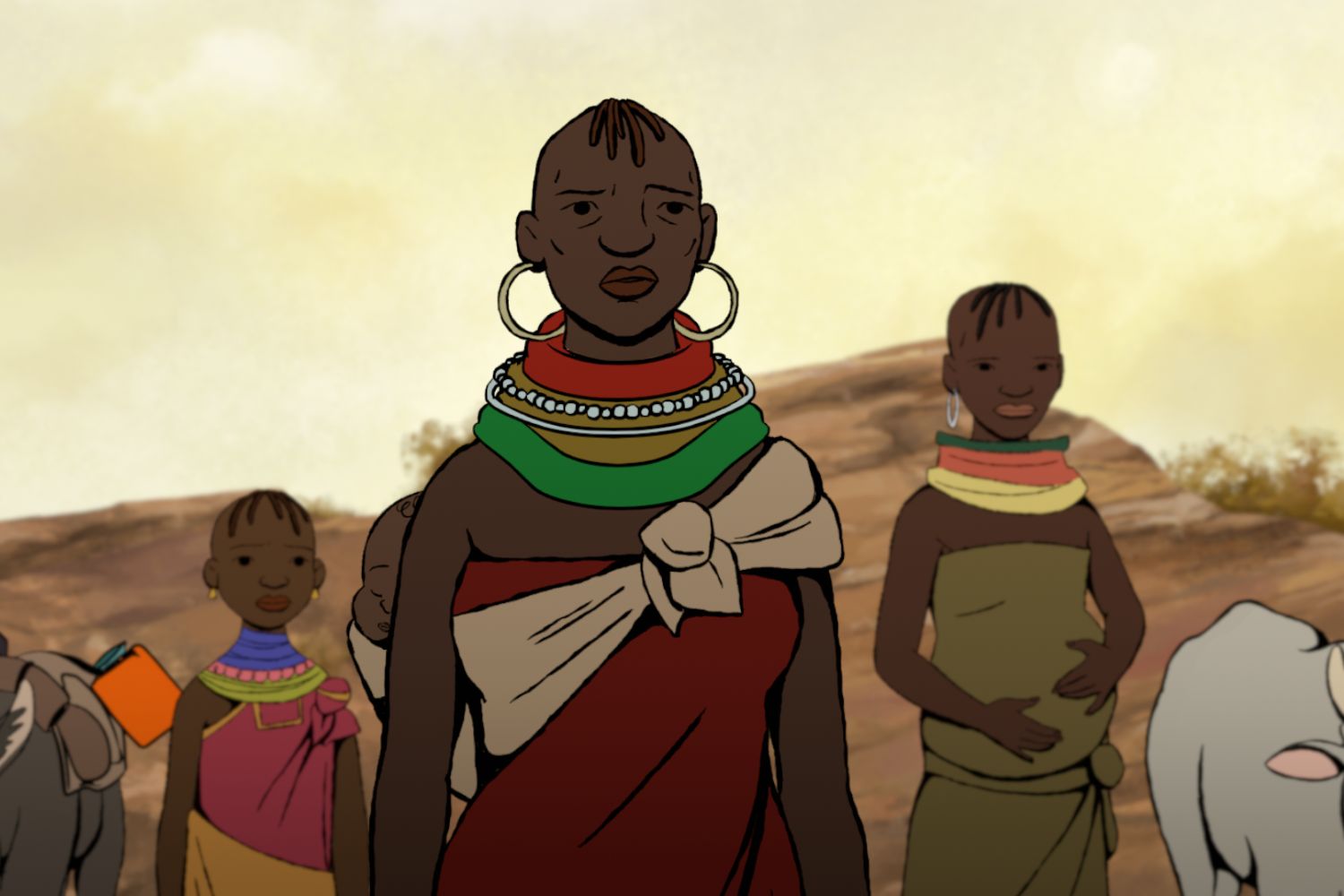
At the third edition of the Cinema in Green Festival in the capital triumphs a film that puts us in front of the drama experienced by climatic migrants. Last night, in the suggestive setting of the Botanicco garden, the gold ginko of “Mariposas Negras” was awarded, animated feature film by David Baute, who was also awarded by the jury sprouts, made up of young students who are passionate about cinema and ecology.
“A beautiful and intense film that, through animation, gives us a broad look at the current climatic crisis and its tragic consequences. It is estimated that in 2050 there will be between 100 and 200 million climate migrants. – With these words the president of the Jury of the Alessandro Preziosi Festival, he delivered the Goldo d’Oro to the screenwriter Yaiza Berrocal.
At the moment the status of climatic refugee, as the film devastates, is not recognized by any nation in the world, which also demonstrates the total unpreparedness of the most virtuous western states. “
View this post on Instagram
To animate the closing ceremony of the first International Environmental Festival in Rome also the music of Cristiano Godano, a soloist of the Marlene Kuntz, always on the front line for the environment.
“I think what I can do for the environmental question, which is truly a drop in the ocean, is to take on my civic adjustability and talk about it through my artistic form. – he commented on the stage of the final event – I hope to be able to contribute to reflection”.
Three women, the same fate: Mariposas Negras reveals the human face of the climatic crisis
The film “Mariposas Negras”, winner of the cinema in green, tells three forced migration stories that sees three women from the world’s different countries. The animated feature film brings to the screen a reality that is still talked about too little but which represents a real emergency: that of climate migrants. From the Caribbean threatened by the rising of the sea, to the Kenya affected by drought, up to the India submerged by the waters, the voices of the protagonists intertwine pain, resistance and hope.
The Spanish director David Baute has chosen not to limit himself to denouncing the question with numbers and statistics: he puts the daily life of those who have lost their home, their land in the foreground and, in many cases, their identity. The 2D animations, delicate and poetic, amplify the strength of these testimonies without ever falling into sensationalism, transforming the story into an intimate and universal experience at the same time. Talking about climatic refugees today is crucial. Although millions of people in the world are already forced to move due to environmental disasters, international law does not recognize them and does not guarantee them protection. They are, in fact, refugees without status, invisible to the laws and often forgotten also by the media.
The film therefore becomes a political as well as an artistic act: it recalls that the climatic crisis is not a distant phenomenon, but an ongoing process that is redesigning geographies, economies and society. Telling these stories means giving a name and a face to those who pay the highest price of a global disaster that has no boundaries.
Green cinema: the film review (free) we needed
The edition of Cinema In Verde has just ended, the free film festival that has transformed the botanical garden into a cinema room immersed in nature, giving the public unforgettable evenings. The event was able to attract a varied audience, involving different generations, confirming how strong the desire for free, accessible and sustainable experiences is.
Cinmema in green is not only a festival, but a powerful reminder: the environment can no longer remain in the background, but must be the protagonist.
