
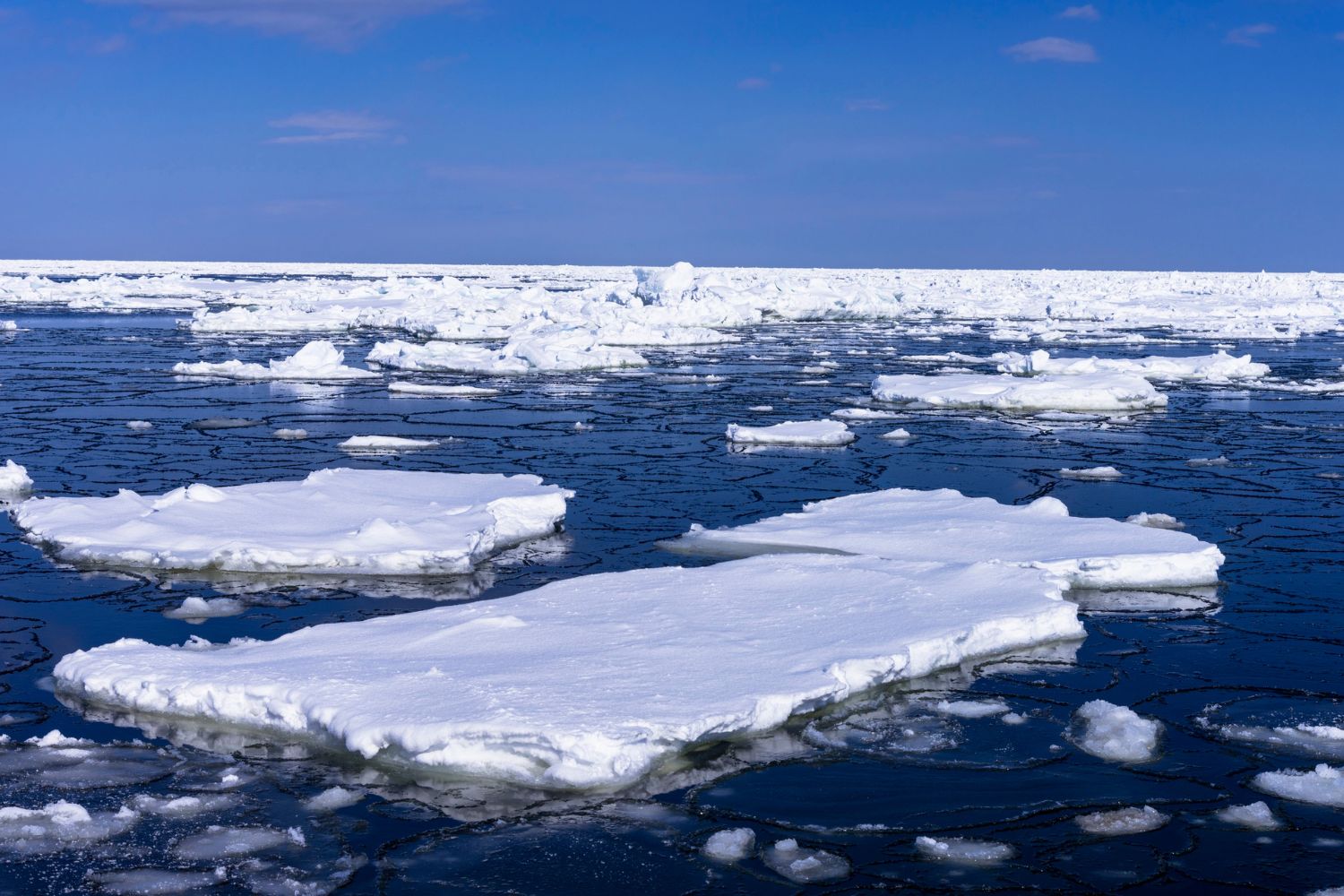
Thwaites Glacier in West Antarctica, also infamously known as the Glacier of the Apocalypse or the Last Judgmentis changing more rapidly than almost any other frozen ocean system in the world. Its future behavior remains one of the most uncertain points in predictions of global sea level rise.
A part of this system, the Thwaites East Ice Shelf (TEIS), floats on the ocean and is partially held in place by an anchor point at its northern edge. But over the past twenty years, this platform has developed increasing fractures around a large shear zone located upstream from that anchor point.
A new study published in Journal of Geophysical Research: Earth Surface offers a detailed account of how this slow collapse unfolded.
The study
The study, based on twenty years of satellite imagery (2002 to 2022), ice flow velocity measurements and in situ GPS data, traced the evolution of fractures within the shear zone of the eastern ice shelf of Thwaites (TEIS) and demonstrated how the progressive development of fractures led to the detachment of the ice shelf from its anchoring point, accelerating the upward flow of ice and causing a loss of mechanical stability.
A sequence of events that has highlighted how once-stable floating ice shelves are undergoing a process of disintegration that could have serious consequences on Antarctica’s future contribution to global sea level rise.
The four phases of the weakening process
The research team identified four distinct phases in the glacier weakening process:
- propagation of initial fractures: the first fractures develop parallel to the flow of the ice, progressively lengthening
- transverse fractures: subsequently, shorter fractures form, oriented perpendicular to the direction of ice flow
- positive feedback: the damage caused by fractures fuels an acceleration cycle of the ice, which amplifies the disintegration process
- detachment from the anchoring point: the progressive breaking from the support point accelerates the flow of ice and compromises the structural stability of the platform
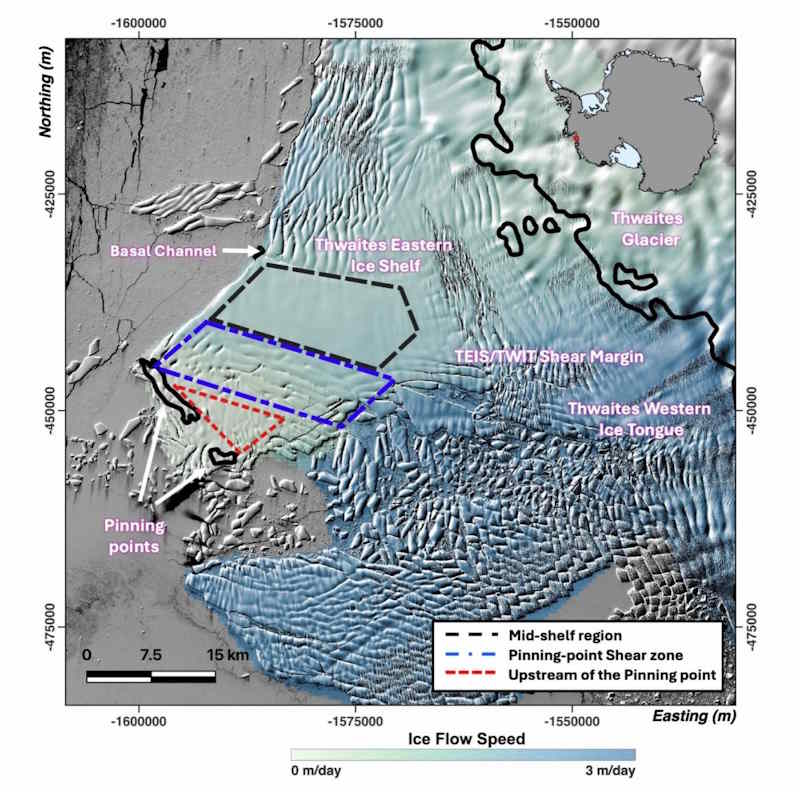
One of the most worrying aspects highlighted by the research is the discovery of a positive feedback mechanism between the damage caused by fractures and the acceleration of the ice. In other words, the damage caused by the fractures led to an acceleration of the ice flow, which, in turn, caused further damage, creating a self-amplifying cycle that has accelerated the process of disintegration of the ice shelf in recent years.
The future of the Thwaites Glacier is a real warning light for all ice shelves in Antarctica. If the destabilization process continues at this rate, Antarctica could significantly contribute to sea level rise, with devastating repercussions for coastlines around the world. Once stable ice shelves are losing their solidity, and this accelerates the flow of ice to the ocean, fueling a vicious cycle that undermines global climate balance.
This research therefore confronts us with a reality that we cannot ignore: the urgent need to monitor and understand these changes.
