
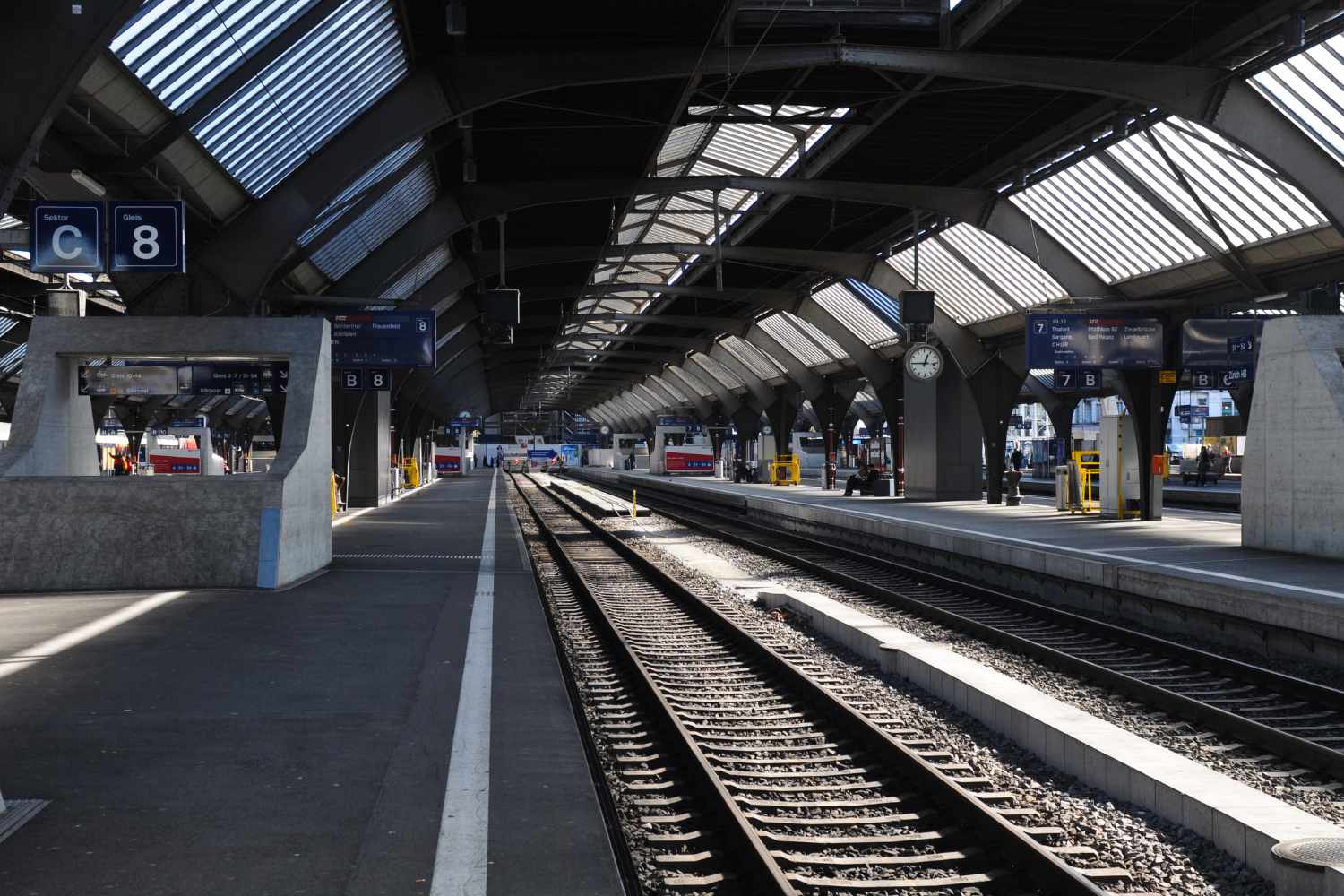
Train stations are no longer just places of passage. In many cities around the world they are transforming into multifunctional spaces where architecture, premium services, quality dining and shopping help to redefine the travel experience. This is confirmed by a study published by AllClear Travel Insurancewhich analyzed 40 large international rail hubs to identify the most “premium” stations on the planet.
The research took into consideration several parameters related to the comfort and services offered to travellers: presence of first-class lounges, quality of catering, number of shops nearby, positive online reviews and availability of high-end hotels within walking distance. The result is a ranking that explains well how the concept of the railway station has changed in recent years, becoming increasingly closer to that of a large integrated urban centre.
Zurich takes first place
Dominating the ranking is the Zürich Hauptbahnhof, Zurich’s main railway station, which obtains 83 points out of 100. According to the study, the large Swiss hub manages to stand out thanks to an almost perfect combination of efficiency, services and quality of the overall experience.
In addition to the organization of the train connections, the number of shops, the lounges dedicated to premium passengers and the wide gastronomic offer are striking. In the surrounding area there are highly regarded restaurants such as Hiltl Sihlpost, specializing in refined vegetarian cuisine, or Yooji’s for sushi and Hummer & Austerbar for fish dishes.
Japan dominates the world rankings
Japan comes immediately behind, gaining three of the top four positions. In second place we find Osaka Station, awarded above all for its vast commercial and gastronomic offer. The Osaka Station City area is in fact considered one of the liveliest urban centers in the country, with high-level restaurants and numerous spaces dedicated to shopping.
The study highlights in particular the presence of places specializing in wagyu and Kobe beef, as well as gourmet restaurants such as La Baie, awarded a Michelin star.
On the third step of the podium is Kyoto Station, which manages to blend modernity and tradition in one of the most iconic railway complexes in Asia. Designed by architect Hiroshi Hara, the station is famous for its immense glass and steel structures, but also for its services dedicated to high-end travellers.
In addition to VIP lounges with luggage storage, the property features a spectacular suspended observation walkway offering views of the city of Kyoto.
At the foot of the podium appears Tokyo Station, one of the symbols of the Japanese capital. The historic red brick facade, dating back to the early twentieth century, represents one of the most photographed views of Tokyo. Inside, however, a world of luxury hotels, refined restaurants and exclusive lounges develops.
Florence is the best Italian station
However, Italy manages to carve out an important role for itself in the global ranking. The best placed Italian station is Firenze Santa Maria Novella, which takes fifth place on a par with the Canadian Toronto Union Station.
What makes the difference is above all the strategic position: the station is in fact located a few steps from the historic center of Florence and the main cultural attractions of the city, from the Duomo to the Uffizi. According to the study, Santa Maria Novella manages to offer a premium experience thanks to the combination of first-class lounges, efficient services and a good network of shops and food outlets.
The particular “glass waterfall” present in the ticket hall, one of the distinctive architectural elements of the building, is also mentioned.
Roma Termini enters the top 10
Rome Termini also appears in the top ten, ranking in tenth place with 64 points out of 100. The main Italian train station is rewarded above all for the wide availability of premium lounges and for the concentration of luxury hotels reachable within a few minutes on foot.
Its urban centrality also allows quick access to some of the most famous attractions of the capital, from the Colosseum to the Trevi Fountain. In recent years, Rome Termini has invested heavily in the renovation of commercial spaces and in the quality of services, gradually transforming itself into a contemporary hub increasingly oriented towards the traveler’s experience.
Milano Centrale in fifteenth place
Further back, but still present in the ranking, there is also Milano Centrale, which shares fifteenth place together with the Gare du Nord in Paris. Here the added value remains above all the architectural one.
In fact, Milano Centrale continues to be considered one of the most monumental stations in Europe, thanks to the fusion of Liberty, Art Déco elements and neoclassical references which often earn it the nickname of “travel cathedral”.
The complete ranking
- Zürich Hauptbahnhof — 83/100
- Osaka Station — 77/100
- Kyoto Station — 74/100
- Tokyo Station — 73/100
- Toronto Union Station — 68/100
=5. Florence Santa Maria Novella — 68/100 - Amsterdam Centraal — 66/100
=7. Grand Central Terminal — 66/100 - Paddington Station — 65/100
- Rome Termini — 64/100
The stations of the future will be increasingly sustainable
Other award-winning stations also include Amsterdam Centraal, famous for its neo-Gothic architecture, Grand Central Terminal, an absolute icon of New York and American cinema, and Paddington Station, the historic railway gateway to London.
The AllClear study clearly shows how large international stations are increasingly becoming experiential places. Not simple infrastructures dedicated to transport, but real urban spaces in which waiting time is transformed into an integral part of the journey.
A trend that is also linked to the growth of railway tourism, considered increasingly sustainable compared to air transport, especially over medium distances. In this scenario, Europe and Japan appear to be leading the transformation of stations into premium hubs capable of combining mobility, hospitality and high-end services. And Italy, with Florence, Rome and Milan, demonstrates that it can compete with some of the most advanced railway companies in the world.
