
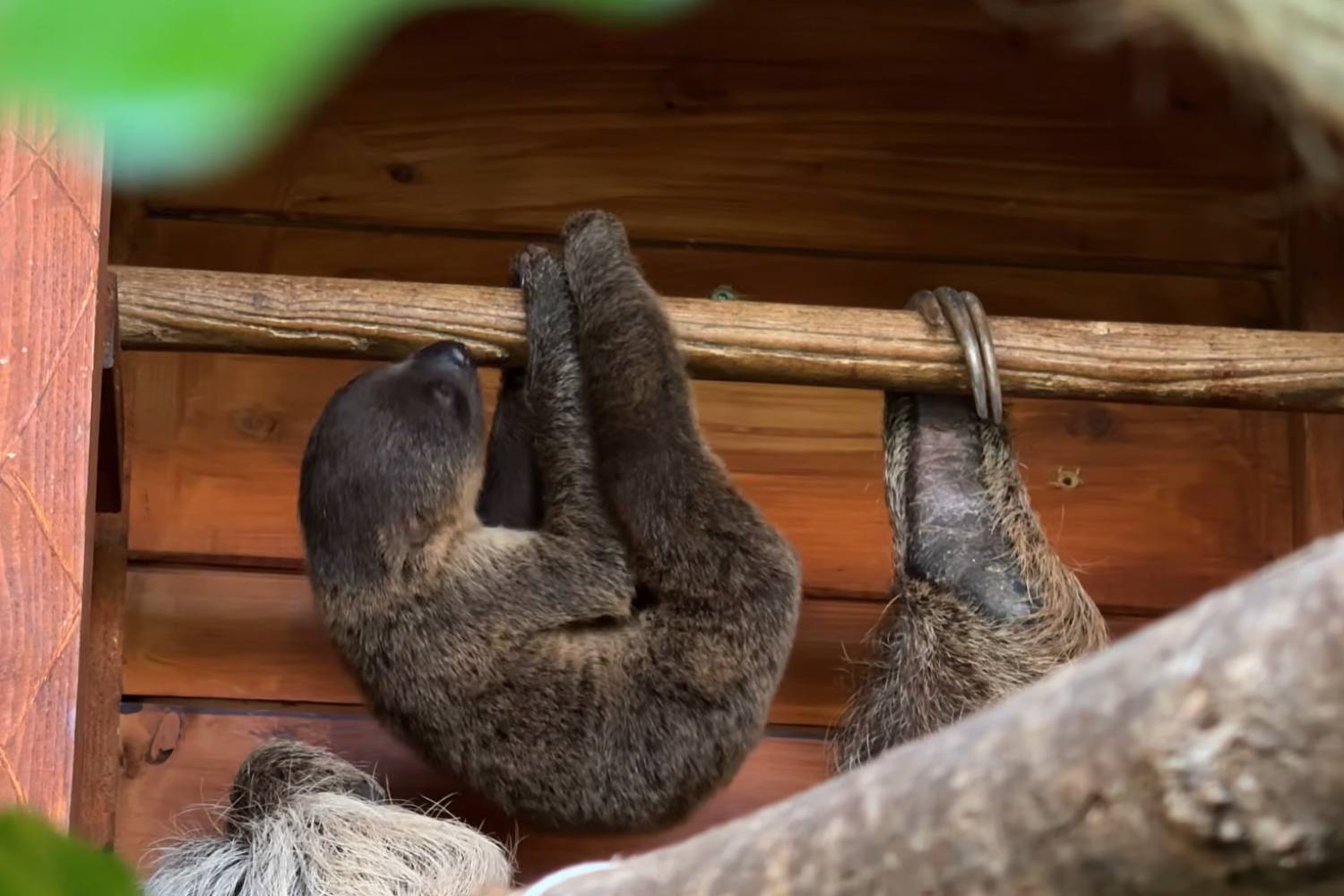
At the Zoom biopark in Cumiana, in the province of Turin, the only teaching sloth puppy born on Italian territory since the beginning of the year was born. The little one is just thirty days old and is currently inside the Butterfly Oasis, a controlled environment where it coexists with its parents, five specimens of Gould’s diamonds and several species of tropical insects.
While communication channels celebrate the event as a scientific success, the animal has already entered the media circuit as a real star to be photographed. Unfortunately, however, the animal will spend its entire existence far from the dense tropical forests between Brazil and Venezuela, its real territories of origin. The little one is making his first awkward attempts to hang himself upside down, a motor coordination that in nature would guarantee his survival from predators and which here becomes the fulcrum of the digital snapshots of the paying public.
Eaza’s scientific management and biological development in the spotlight
The biological dynamics of the new arrival are constantly monitored by the technical staff of the Piedmontese facility. The curator of the Zoom Torino biopark, Irene Carnovale, explained that determining the sex of the mammal will remain a mystery until the animal has achieved greater biological independence, thus allowing the first invasive veterinary check to be carried out. In the meantime, the specimen is protected by its mother, Brooke, an experienced female in her second pregnancy who demonstrates strong tolerance in weaning her child from the mother’s womb.
The inclusion of the sloth in the European management program coordinated by the European Association of Zoos and Aquaria highlights the dramatic nature of the global situation of rainforests. The International Union for Conservation of Nature certifies that deforestation and intensive cultivation have destroyed 9% of the natural habitat of this species in Brazilian territory alone. The paradox lies in the fact that, to save the declining genetic heritage from extinction, science is forced to birth and raise these mammals in a state of permanent captivity, deprived of the unlimited space of freedom.
The future of a zoological attraction between the edge of a branch and the human gaze
The little sloth’s growth path will take about nine months before finally detaching from mother Brooke’s belly. Until then, the animal will continue to feed mainly on milk, showing a progressive curiosity towards the solid foods consumed by adults. As the months pass, the puppy will consolidate the muscles to remain upside down for 90% of its biological time, using it to sleep for up to 18 hours, feed itself and carry out primary vital functions on artificial branches.
The specimen joins the other eight sloths already present within the zoological structures of the Italian peninsula. If on the one hand its presence protects the theoretical survival of the species from the destructive action of anthropogenic deforestation, on the other hand it condemns it to a routine marked by the gazes of visitors and photographic lenses. His world will remain circumscribed by the walls of the Cumiana biosphere, a perfect but artificial microcosm, where time passes slowly in the shadow of an audience looking for naturalistic entertainment.
You might also be interested in:
