
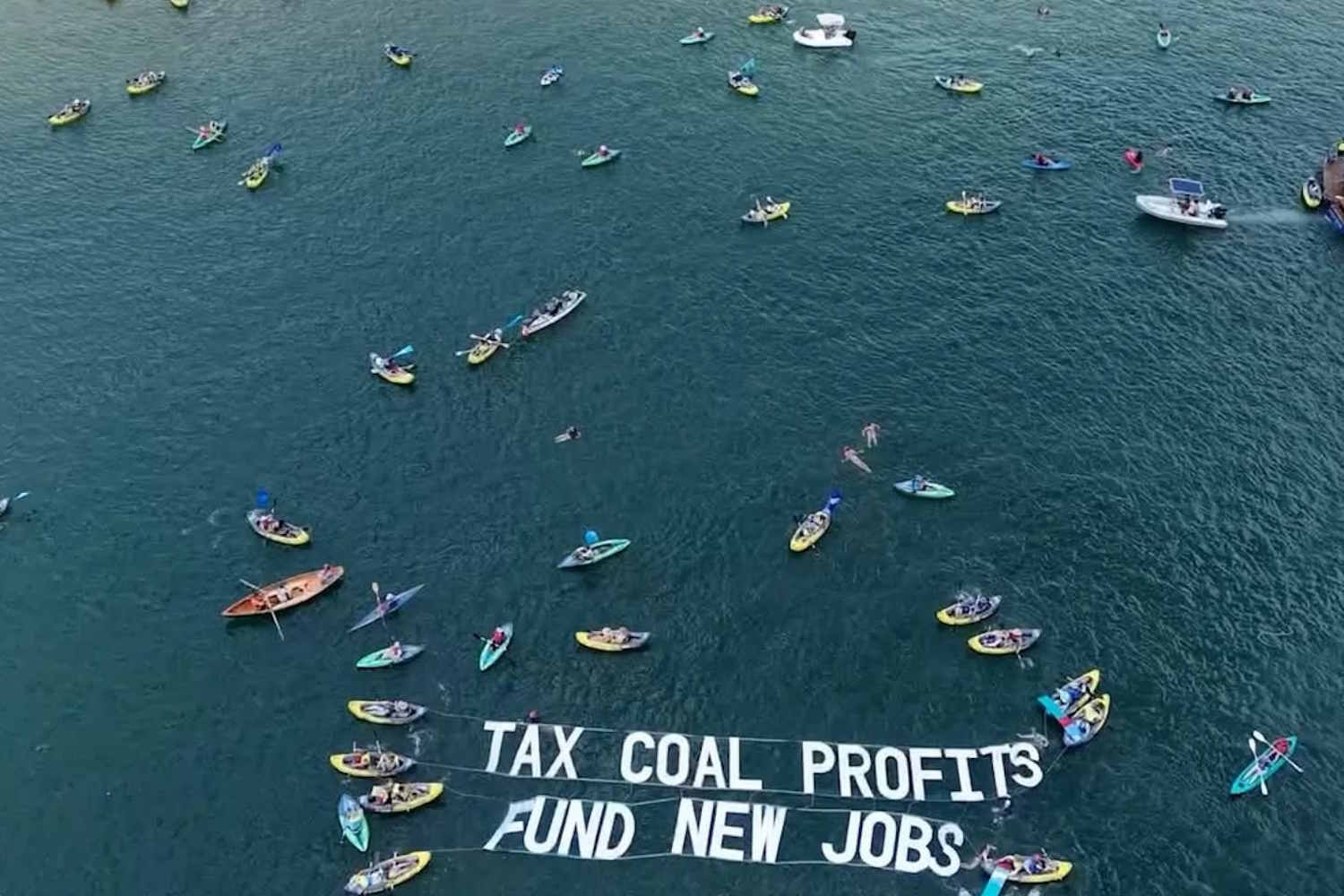
Over the past weekend, hundreds of climate activists invaded the access channel to the port of Newcastle in New South Wales with kayaks and small boats, blocking naval traffic and forcing the authorities to suspend all ship operations for around three hours.
According to NSW Police, 141 people were arrested as part of the operation – 121 adults have been charged with various offenses under the Crimes Act and the Marine Safety Act, while 18 juveniles will be handled under the Young Offenders Act.
The protest, organized by the climate movement Rising Tidefalls within the so-called People’s Blockadean annual action of non-violent civil disobedience which this year saw the participation of thousands of people, in the water and on the beach. At the same time, Greenpeace activists climbed onto a coal cargo ship, hanging a banner with the words “Phase out coal & gas” and remaining on board for over three hours before being arrested.
View this post on Instagram
Port authorities announced that operations will return to normal from Monday, downplaying the overall impact on coal exports, while admitting the temporary suspension of activities.
Why Newcastle?
The Port of Newcastle is considered the largest coal export port in the world. Tens of millions of tons of thermal coal pass through here every year, mostly destined for coal-fired power plants in Asia and Europe.
Blocking this port, even “just” for a few hours, therefore has enormous symbolic value: it means hitting a key node in the global fossil economy, remembering that Australia is still one of the largest coal exporters on the planet and that the country has formally committed to net-zero by 2050, but continues to support and authorize new fossil projects,
This is the paradox that activists want to highlight: a government that talks about climate transition, but which keeps coal as the cornerstone of its exports.
Inside the protest there were not only students and historic activists, but also coal workers who ask for concrete alternatives, not just slogans about the green transition.
The CEO of the NSW Minerals Council has called for a permanent ban on the annual blockade organized by Rising Tide, accusing activists of only seeking media visibility and overshadowing the interest of the local community.
But in the meantime, the images of hundreds of kayaks blocking coal ships have gone around the world and come at a time when the scientific community continues to reiterate that we cannot open new fossil deposits if we want to stay within 1.5–2°C of global warming
On the one hand, institutions and industry insist on the role of coal for employment and the local economy; on the other hand, climate movements argue that maintaining the status quo means passing on the costs of a crisis that worsens year after year onto young people and the most vulnerable countries.
The choice to target the “largest coal port in the world” is not a coincidence: it is a way of saying that the transition cannot be just conference rhetoric, but must pass through concrete decisions on infrastructure, taxes, authorizations and deadlines.
