
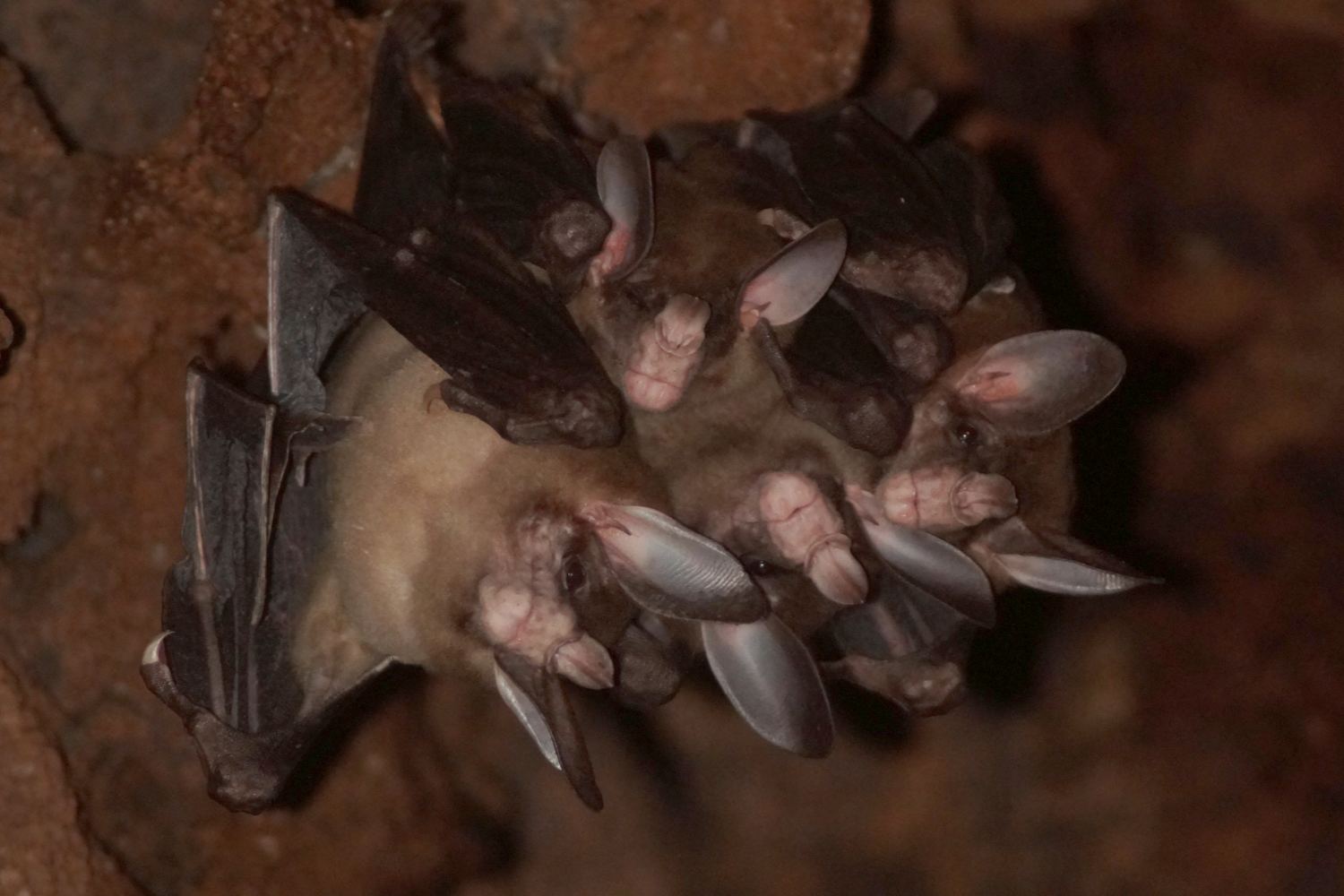
In the collective imagination they have always been considered dark and disturbing creatures, inextricably linked to horror legends and spooky scenarios. However, now scientific research has been published in the magazine PLOS One is ready to dismantle centuries of prejudices, showing the world a completely new and surprisingly affectionate face of bats.
At the center of the study is the American false vampire (Vampyrum spectrum), the largest bat in the Western Hemisphere with a wingspan that can exceed one meter in length. Despite its imposing appearance and reputation as a fearsome carnivorous predator, this animal hides an extraordinary social sensitivity: it cuddles each other, shares meals and embraces in real family hugs.
@Marisa Tietge, Eduardo Artavia Durán, Mirjam Knörnschild
The secrets of the hollow tree in Guanacaste revealed by cameras
The details of this fascinating domestic life were brought to light by a team of scientists led by biologist Marisa Tietge, a researcher at the Natural History Museum in Berlin. Scientists managed to monitor a small family of bats – made up of a pair and their two pups – for several months inside a monumental hollow tree located in the Guanacaste region of Costa Rica.
Thanks to the installation of special cameras equipped with motion sensors, the team collected over 500 previously unpublished videos. The images showed that every time a specimen returned to the dormitory after the night hunt, it was welcomed by the rest of the group with a quick hug with its wings, a real gesture of greeting to celebrate the return home.
Parental care and caring fathers in the heart of the forest
The videos documented dynamics of family cooperation that experts would never have imagined observing in a predator previously thought to be solitary. During resting sessions, the entire bat family united in a compact sphere of intertwined bodies and wing membranes, grooming each other’s fur and communicating through a series of soft, close-range vocalizations.
The study also highlighted the fundamental role of the male in parental care: the father regularly brought small rodents and birds to his mate who remained in the nest to breastfeed, also sharing the food with his eldest son to gradually train him to handle prey.
Play and the ecological importance of the species
The scientists’ cameras even captured unexpected playful behavior: the bats enjoyed chasing cockroaches and small insects without the aim of feeding on them, but with the sole aim of playing together. As explained by Marisa Tietge herself, these discoveries are not just curious anecdotes, but represent fundamental biological indicators. Being a shy species that depends on ancient trees, the complexity of their social fabric directly reflects the state of health and balance of tropical forests. If these animals were to stop displaying such affectionate behaviors, it would mean that their habitat is in grave danger.
