
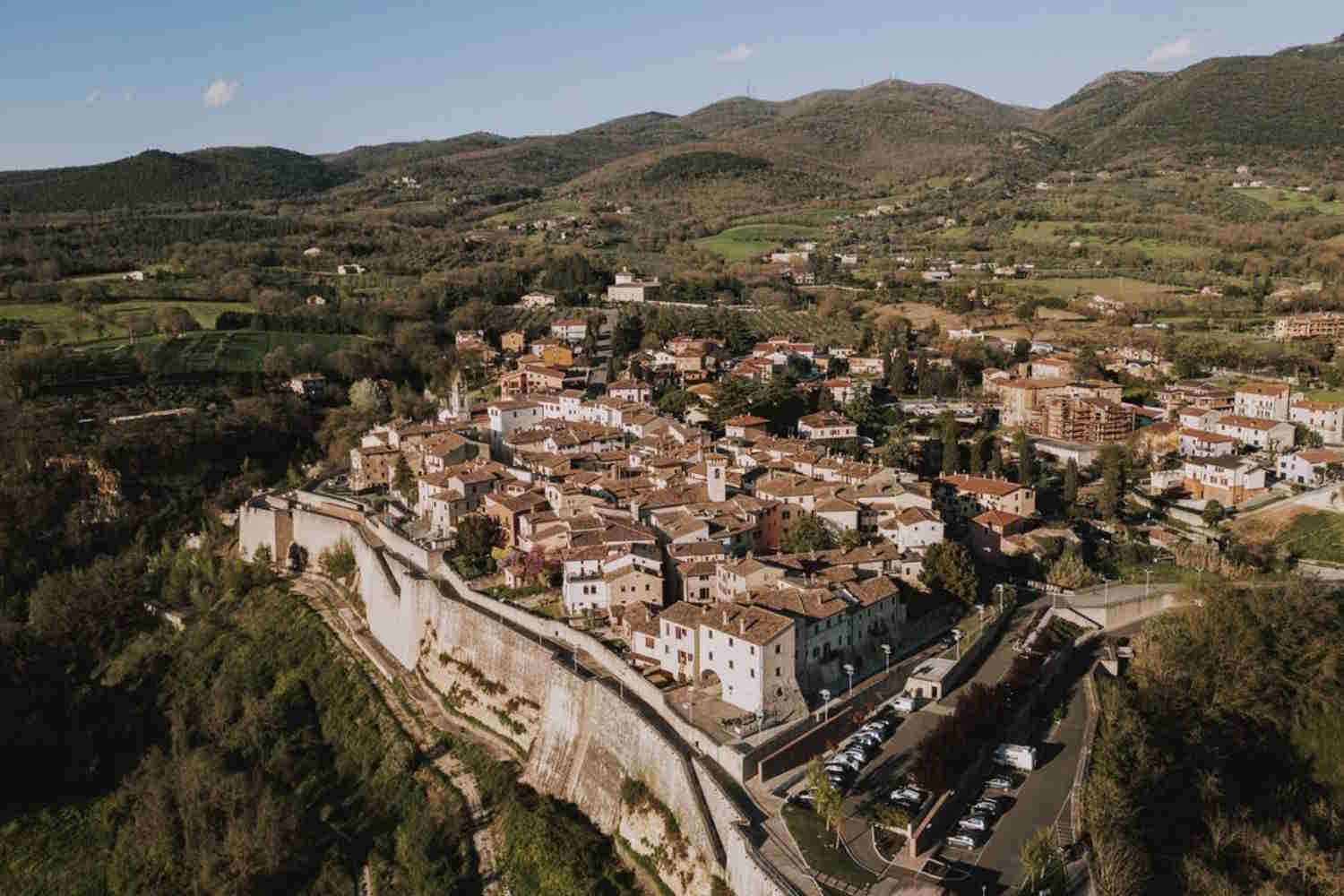
There is a circular structure of stones, on a hill in the Martani Mountains, which someone has renamed the Stonehenge of Umbria. The Castelliere di Monte Cerchio does not have the fame of its English cousin nor its size, but it brings with it the same enigma: who built it and when. Nobody knows for sure. And this alone, in an era in which every corner of the world seems cataloged and explained, is worth the trip.
Yet the Castelliere is only one of the layers of a territory that slowly reveals itself, as if to select who deserves to know it. Underfoot, early Christian catacombs dug over the centuries by the first Christian communities. On the surface, a still intact Roman bridge: the Fonnaia Bridge, woods that are home to roe deer and birds of prey, a medieval village where the stones of the walls have seen travelers pass by for centuries. Massa Martana doesn’t show up, it turns out.
Those who have time would do well to move away from the main streets to reach the hamlets of Castelrinaldi, Colpetrazzo, Mezzanelli, Montignano, Viepri and Villa San Faustino, which are well worth a visit. They are small towns rich in history, born around castles, parish churches and ancient settlements, where the architectural heritage still dialogues with the surrounding rural landscape. Walking through their streets means discovering a lesser-known face of Massa Martana, made up of traditions handed down over time, artistic testimonies and atmospheres that preserve the most identifying character of Umbria.
Massa Martana
The municipality of Massa Martana is located on the western slopes of the Martani Mountains, in that part of Umbria that the brochures call the green heart of Italy and which in this case, for once, is not just a slogan. The village, medieval in layout and included among the most beautiful villages in Italy, is one of those places where the clock seems to go at another speed. The stones of the walls have seen wayfarers and pilgrims pass through centuries of transit, and the paths that climb the mountains continue to offer the same invitation as always, that of slowing down.
The Martani Mountains: forty kilometers of woods and paths
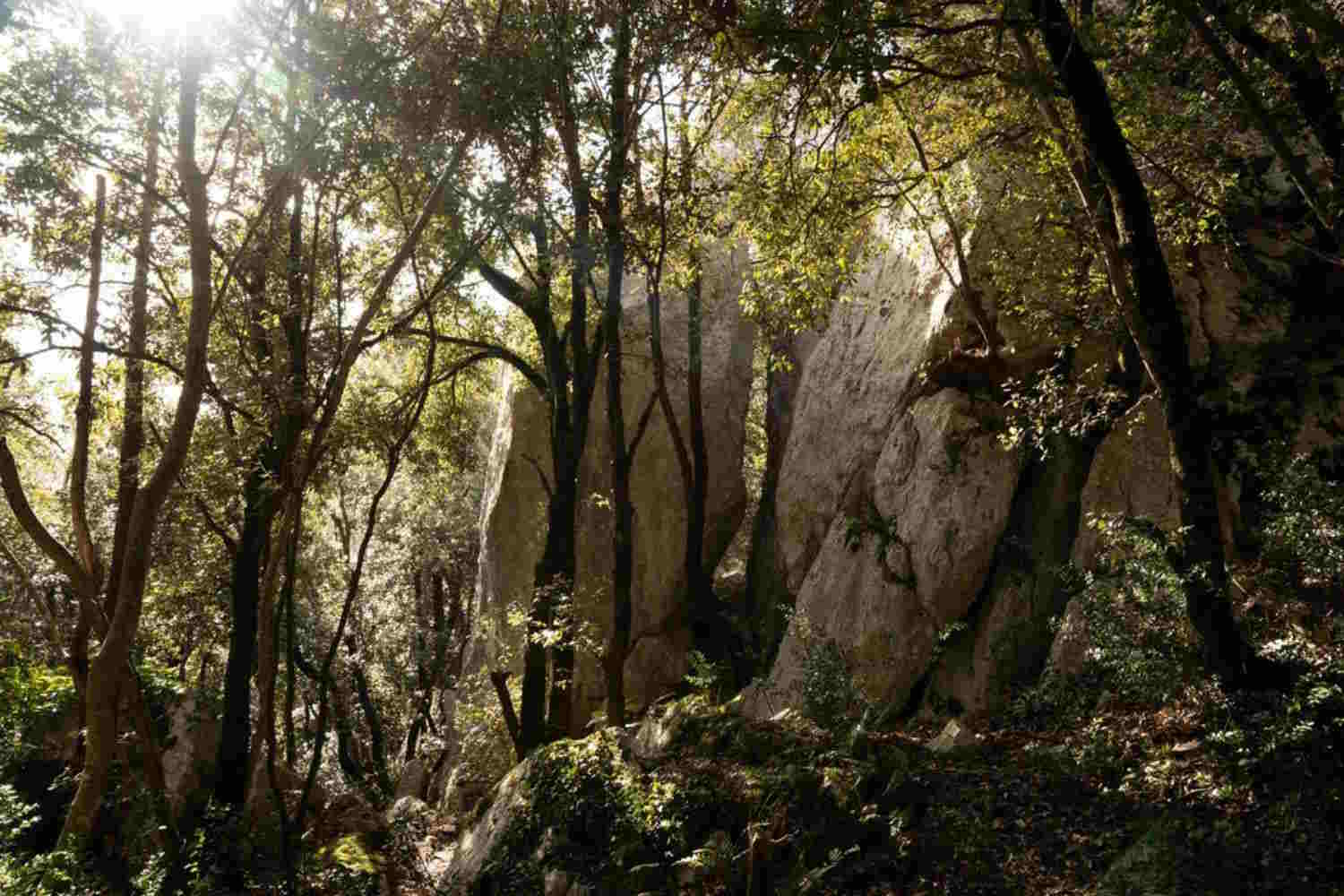
The Martani Mountains are the backbone of the place, the chain runs for about forty kilometres, from Massa Martana to the Spoleto area, and even without touching Alpine heights it represents one of the most significant naturalistic heritages of central Umbria. On the slopes there are forests of holm oaks, oaks, chestnuts and beeches, a plant mosaic that is home to roe deer, foxes, wild boars and various species of birds of prey. Biodiversity, here, is not a brochure label, it is the reason why those who practice outdoor tourism have begun to mark the village on the map.
The network of paths lends itself to different uses depending on who travels it. Trekking is the most obvious, but the same tracks welcome mountain biking, horseback riding and Nordic walking. From the ridges, when the sky is clear, the view reaches the Umbrian Valley and beyond, up to the peaks of the central Apennines. And then there are those who come up here to practice the so-called “forest bathing”, the practice of immersing themselves in the woods breathing its air and silence, finding an ideal terrain among these trees.
Before entering the woods, it is worth a stop at the Documentation Center of the Martani Mountains, housed in the La Pace Monumental Complex. The rooms, recently rearranged in an educational and multidisciplinary way, reconstruct the history of the area by going back to a dizzying past: the so-called Deep Time begins over two hundred million years ago, long before man appeared on these hills to leave his traces.
Tourism councilor Chiara Titani links the identity of the place to its products and its history. «Many of our traditions and the economy of these territories are linked to the Martani Mountains and the products of the woods, such as truffles and mushrooms, which represent a large part of our gastronomic identity», he explains, recalling how the strategic position of the area has made it inhabited since ancient times. The objective is to enhance this heritage with new attractors and new development opportunities, capable of distinguishing the village from the rest of the region: this is the challenge of the PNRR tender “Massa Martana, the village of saying and doing”.
The Roman site on the Via Flaminia
That Massa Martana was a crossroads is demonstrated by its archaeological heritage, intertwined with the Via Flaminia, the artery that the Romans traced to sew the peninsula together. The most important site is the Vicus Martis Tudertium, the settlement that stood near Santa Maria in Pantano. The excavations have revealed structures and finds that speak of a commercial center and a rest station along the Flaminia, active from the Republican to the Imperial age. The area itself cannot be visited, although the materials found have found a home in the Antiquarium, set up inside the ancient Church of San Sebastiano, in the historic centre.
The Catacomb of Villa San Faustino
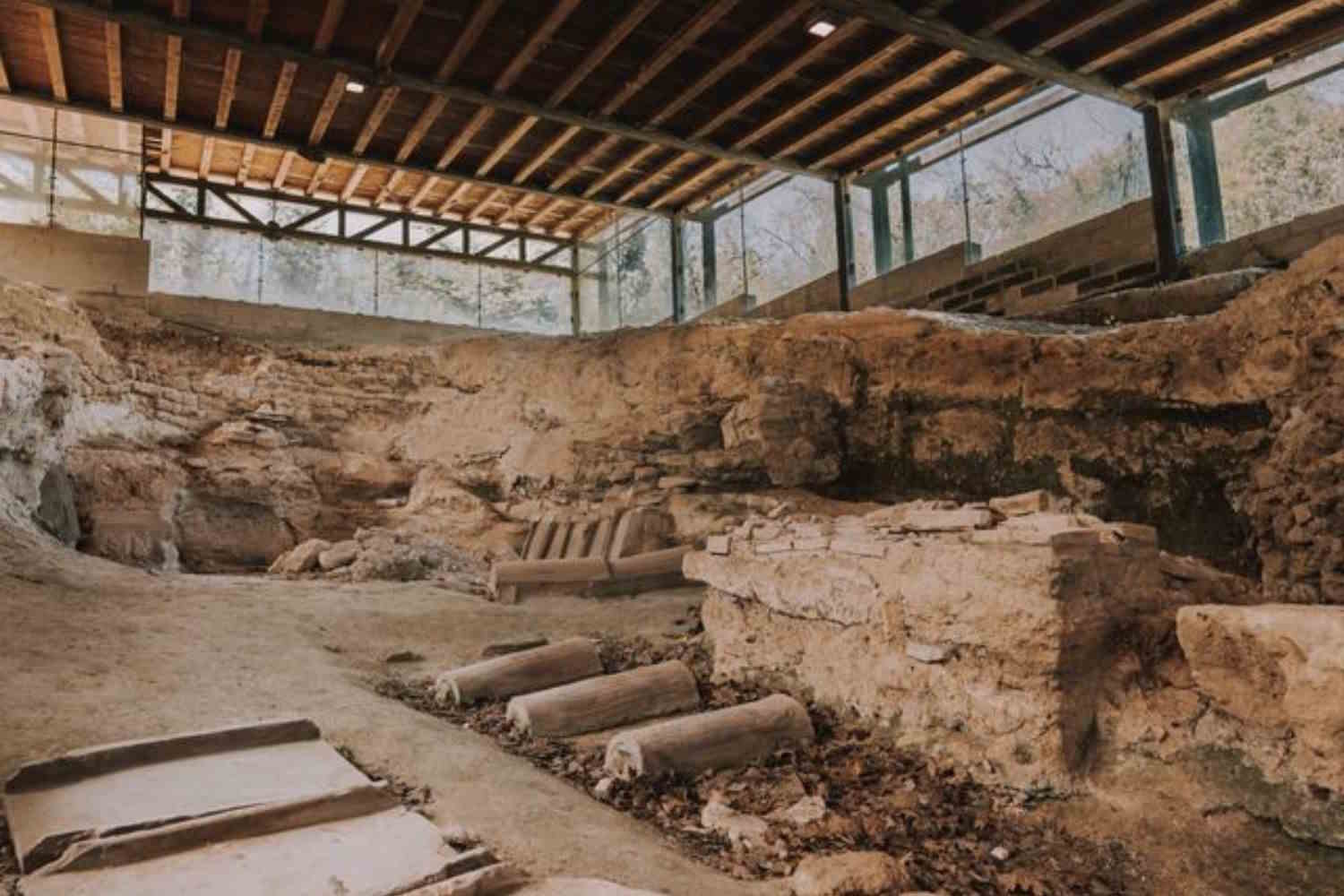
Not far away you go underground. The Catacomb of Villa San Faustino is the only early Christian catacomb in Umbria, and the galleries preserve a funerary basilica of rare beauty, capable of offering us a window on the first Christian communities of the region, when Christianity was in its infancy.
Ponte Fonnaia: the Roman bridge still intact
Roman engineering, however, re-emerges to the surface with the Ponte Fonnaia, a bridge which remained intact and which belonged to the original route of the Flaminia and which alone is enough to remind us of the role this corner of Umbria played in the communications of ancient Italy.
The Castelliere di Monte Cerchio: the Stonehenge of Umbria
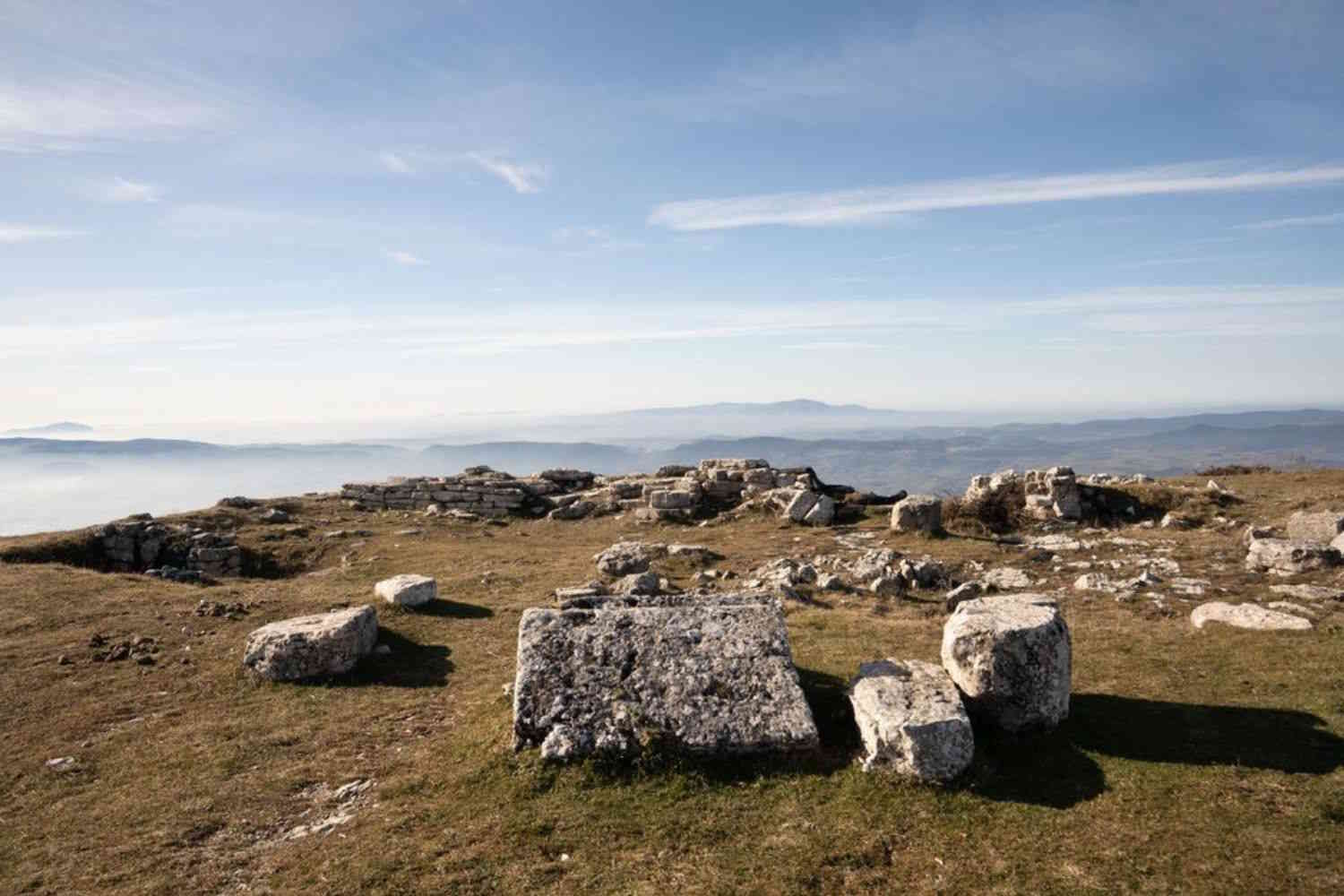
In the background, enigmatic, there is the Castelliere di Monte Cerchio from which we started. A hillfort is a fortified settlement from the Bronze and Iron Ages, surrounded by dry stone walls, sometimes on several concentric circles, and built in a dominant position for the defense and control of the territory. We are talking about pre-Roman structures, the work of proto-historic populations, and it is precisely this archaism, together with the circular stone shape, that causes specimens such as that of Monte Cerchio to be compared, with a certain license, to Stonehenge.
Churches, frescoes and convents: the sacred art of Massa Martana
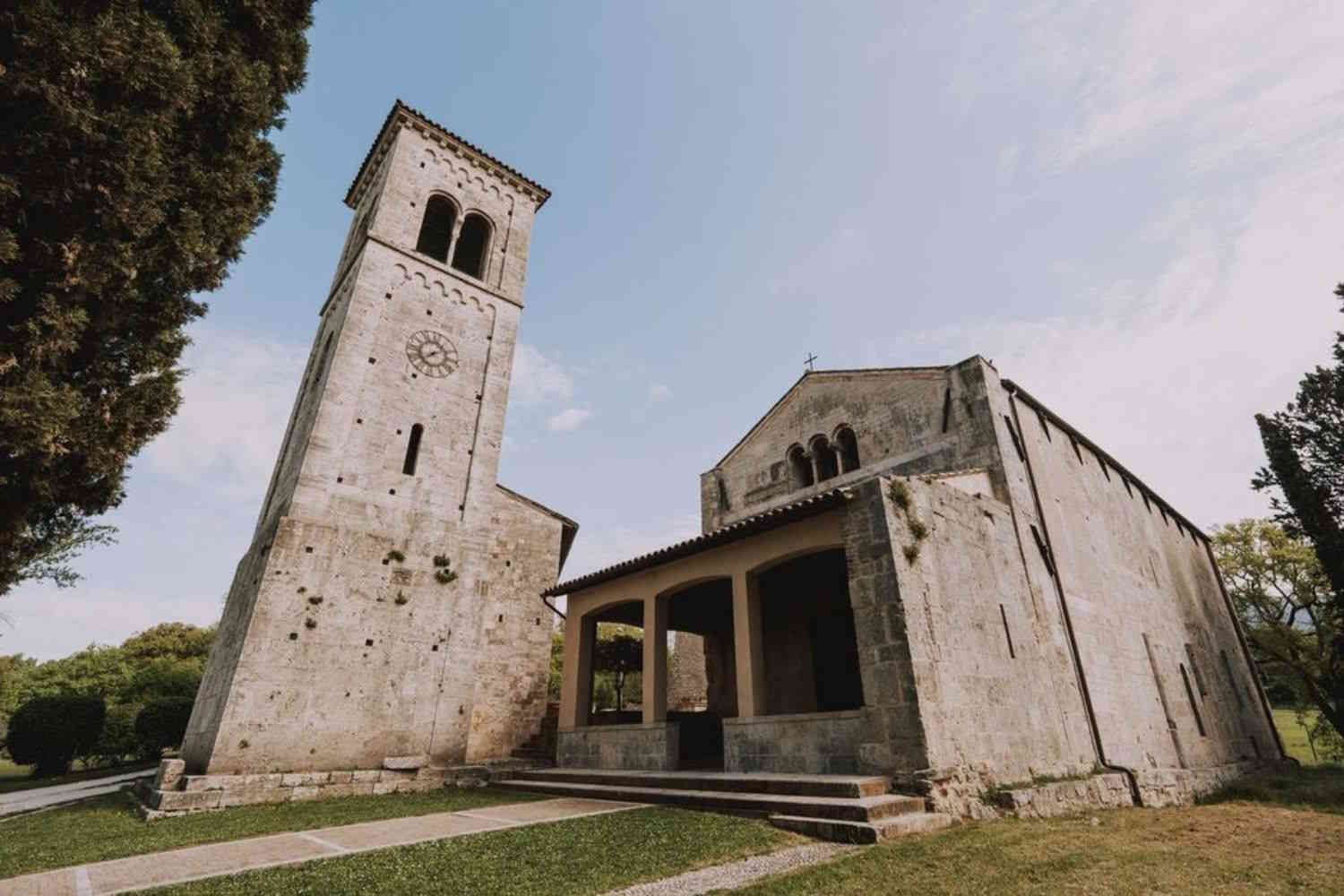
The spiritual side of Massa Martana is not an accessory detail, but a stratification of centuries of faith and art scattered between the village and the countryside. In the heart of the town stands the Church of San Felice, dedicated to the patron saint: the building bears the signs of different construction phases and houses canvases and frescoes in which the evolution of the Umbrian painting schools can be read.
Just outside the center you come across the Monumental Complex of Santa Maria della Pace, the fulcrum of local devotion. The church, flanked by a Franciscan convent, owes its fame to the octagonal dome that Giovanni Antonio Polinori frescoed between 1647 and 1649. The complex does not end here, given that next to the church and the convent there is the Documentation Center of the Martani Mountains, the Italian Museum of Art Nativity Scenes, the Library and the municipal historical archive, while the Peace Park opens up as an inclusive and sensorial oasis designed so that anyone can cross it. More secluded, but no less intense, is the Church of Santa Maria in Pantano, close to the former Roman Vicus Martis: the architectural simplicity acts as a hinge between the pagan and Christian memories, as if the two worlds had never stopped talking to each other here. Among the symbolic places of the area also include the Abbey of San Faustino, built on the remains of an ancient Roman settlement and rebuilt by the Benedictines around the year 1000 by reusing materials from the pre-existing Roman villa, and the Abbey of Saints Fidenzio and Terenzio, founded in the 9th century and linked to the cult of the two martyrs to whom it is dedicated. Both represent important testimonies of the religious and monastic history of the Martani Mountains and preserve precious architectural elements from the medieval era.
Truffle, DOP oil and Nociata: what to eat in Massa Martana
A trip to Massa Martana ends, almost inevitably, at the table. We can find the woods that we pass through during the day on the table, starting with the truffle, without forgetting the meat, enhanced by the DOP Colli Martani oil and accompanied by the white and red wines of the DOC of the same name. Then there is a dessert that bears the name of the village stitched onto it, the Nociata, a Christmas specialty. Sigismondo Ranucci invented it at the end of the 19th century, returning from Copenhagen, putting together just three ingredients: walnuts, honey and egg white. It is still produced today with the machinery that his son Mario designed in the seventies and according to the family recipe, with the note that, at Christmas, every house in Massa Martana claims its own version.
Todi, Spoleto, Assisi and Orvieto are not far away, which makes the village a very convenient base camp for anyone who wants to explore Umbria without the frenzy of the more beaten circuits. Those who prefer to stay have tools designed to move around independently, from a multilingual audio guide to a digital assistant that collects accommodation, events and points of interest. All the information to organize your stay is collected on the official Massa Martana website https://www.visitmassamartana.it/it.
The initiative is part of PNRR M1C3 – Investment 2.1 “Attractiveness of historic villages” – financed by the European Union – Next Generation EU “Massa Martana, the village of saying and doing” Action line 7 – Creation of actions to support communication and dissemination of information on the area’s offerings
