
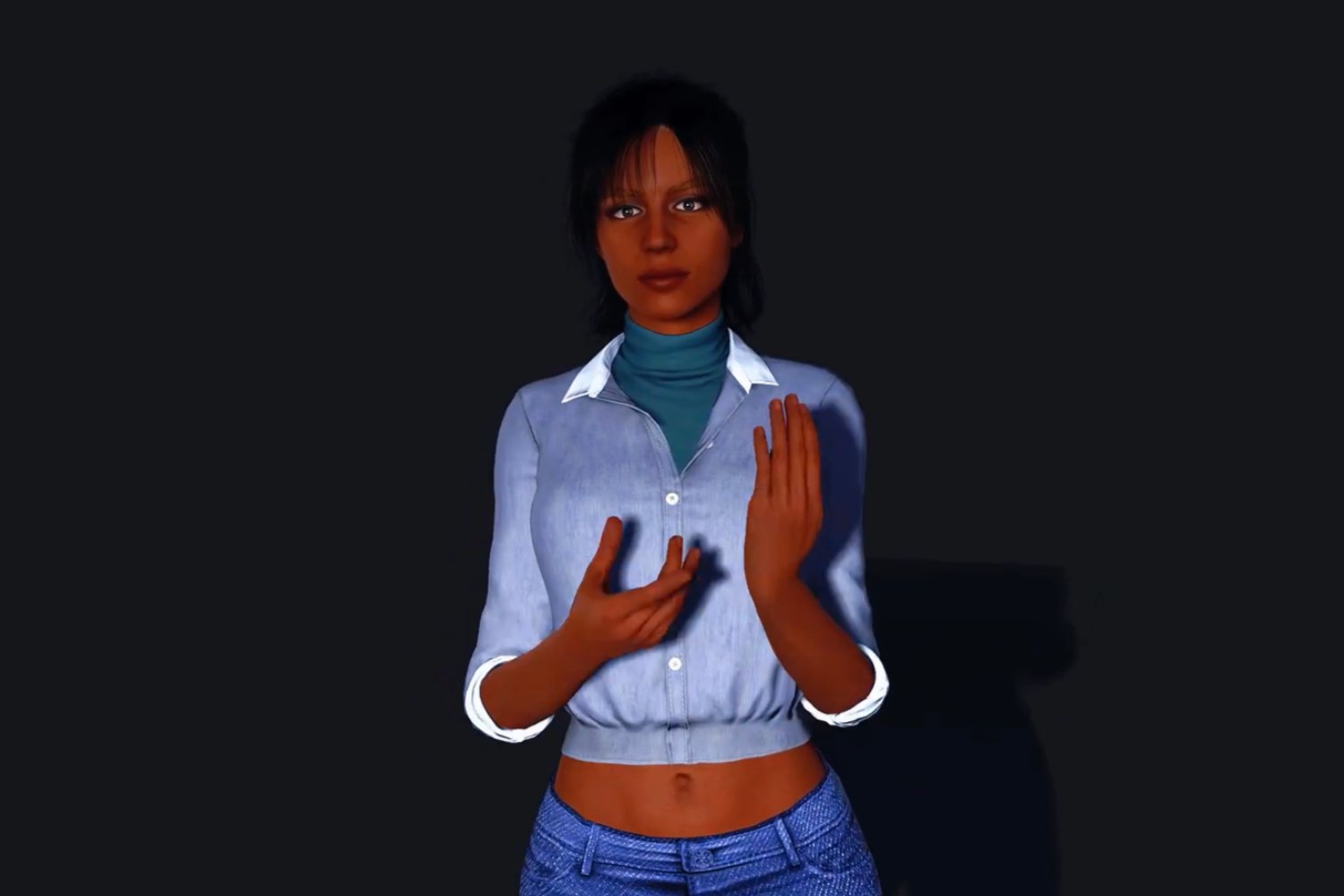
In the world, over 70 million people use a sign language as their mother tongue, but qualified interpreters remain very few, especially in some geographical and social contexts. It is from this evident fracture that Terp 360 was born, an application developed by the young Kenyan engineer Elly Savatia together with the Signvrse team. The goal is ambitious but clear: to use artificial intelligence and 3D avatars to translate voice and text into sign language, making communication more accessible in everyday life.
The project has its roots in a concrete experience: school classrooms with hundreds of deaf students and only one interpreter available. A situation that is not an exception, but the norm in many parts of the world. Savatia understood that technology could become a mediation, not to replace people, but to reduce structural inequality. The first versions of Terp 360 were essential, almost experimental, but the continuous comparison with the deaf community allowed the app to evolve rapidly, integrating over 2300 signs.
How Terp 360 works today
The app is based on three main elements: a speech recognition engine, an automatic sign language translation system and three-dimensional avatars designed to make movements more natural and legible. Unlike many previous solutions, Terp 360 focuses heavily on gestural fluidity and expressive accuracy, avoiding rigid or unrealistic movements. Tests conducted on around 2000 users gave encouraging results, paving the way for future expansion in countries such as Rwanda and Uganda, with applications expected in schools, hospitals, public offices and companies.
Sign language should be taught in school
The potential of Terp 360 is unquestionable: it can reduce barriers, promote autonomy and make sign language more visible in public spaces. These tools are precious, but it would be equally fundamental for sign language to be taught in educational contexts, starting in schools. Inclusion should not just depend on an app, but on a shared culture, in which communicating with a deaf person is not an AI-mediated exception, but a widespread competence. Technology can help, but true inclusion also comes through education.
Thank you @UNICEFKenya https://t.co/cuHcOxwHAM
— Signvrse (@signvrse) December 18, 2023
You might also be interested in:
