
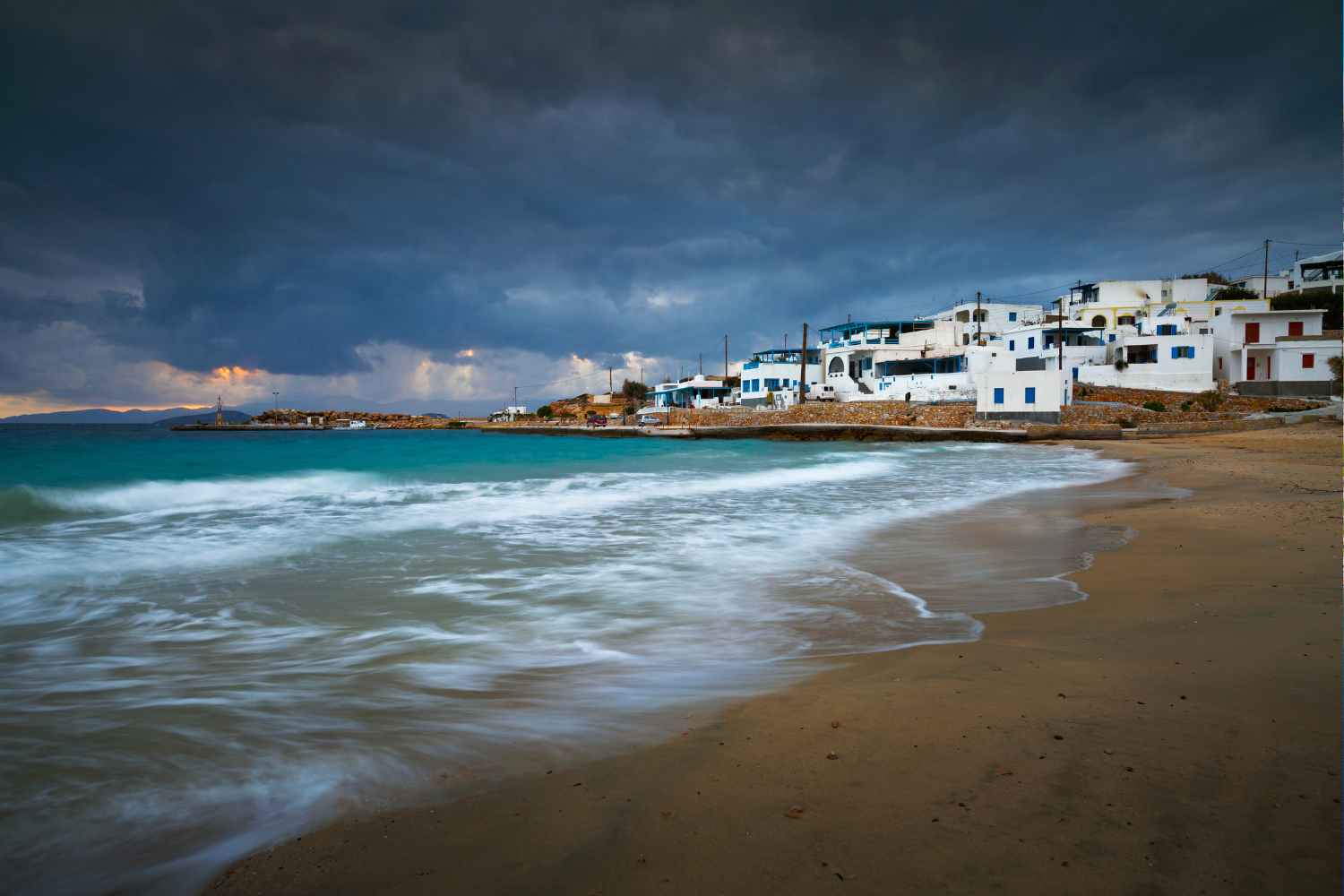
Cars are not needed in Donoussa, because the island can be crossed on foot in less than two hours, there are four villages and the main road is a path between wild thyme and Mediterranean scrub. Thirteen square kilometers in the extreme north-east of the Small Cyclades, between Naxos and Amorgos, just over two hundred inhabitants according to the 2021 census, destined to decrease during the winter season.
There is no airport, no traffic and since 2011 it has not even had its own municipality, because it is an administrative unit of the Municipality of Naxos and the Small Cyclades.
Stavros
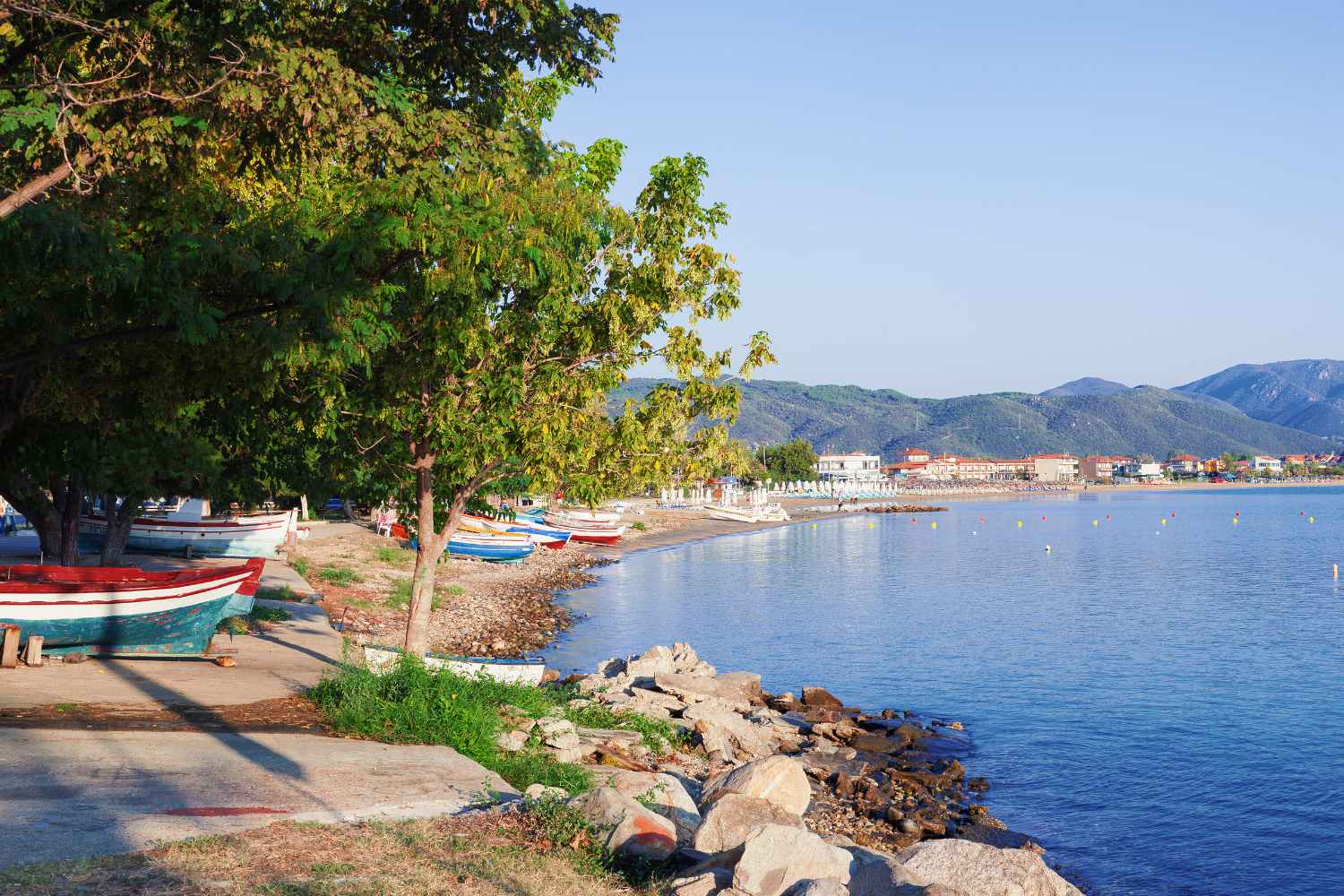
Stavros is the main town and port of the island, where everything that exists is concentrated, which isn’t much. White amphitheater houses on the bay, the church of Timios Stavros, taverns and some accommodation. The beach is a few steps away, characterized by fine sand and transparent waters. In the waters in front of the beach lies the wreck of a German destroyer sunk during the Second World War, which in calm seas can be glimpsed from the surface of the water without having to dive.
The other villages
Mersini, on the south-eastern side, is the exception of the Cycladic landscape, among plane trees, reeds and a natural spring which is the only source of drinking water on the island. Green is unexpected. Nearby is the church of Agia Sofia, the destination of a celebration every September. Messaria is little more than a few stone houses among the vegetable gardens. Kalotaritissa, at the northern end, is the most remote village — in winter it can be inhabited by very few people.
The beaches
Kedros is the widest golden sand, clear seabed, the German wreck reachable by swimming. Livadi is longer and more secluded, without services. Kalotaritissa Beach is the wildest, among pebbles, coves, a seasonal tavern as the only organized presence. Stavros Beach is the one in the town: convenient, a few steps from the port.
There are two sea caves, reachable by boat starting from Stavros. We are talking about Fokospilia, on the east side of the island, under the cliffs of Cape Moschona, which owes its name to the monk seals that lived there, a now very rare presence, and Tihos, on the north-west side in the bay of Ksilobati, characterized by a series of stalactites which filter the light at the entrance.
The paths
Donoussa has a network of marked trails connecting all the villages. The main route goes from Stavros to Kalotaritissa passing through vineyards, olive groves and old copper and calamine mines, with the sea almost always in sight. On path no. 4, from Kedros towards Messaria, we can come across the abandoned mill of Kato Mylos, used for centuries to grind the island’s grain, today without blades.
How to get there
From Piraeus, in the low season, there are approximately three trips a week, which will increase in the summer. Alternatively, you stop in Naxos, or Paros. The crossing lasts on average between seven and nine hours. In winter some connections are canceled due to bad weather and the best period is certainly between late spring and early summer, before the meltemi (the typical wind that blows on the Aegean Sea) makes the crossings more agitated. The month of August brings a few more visitors, mostly Greek, even if the numbers are limited and far from those of mass tourism.
