
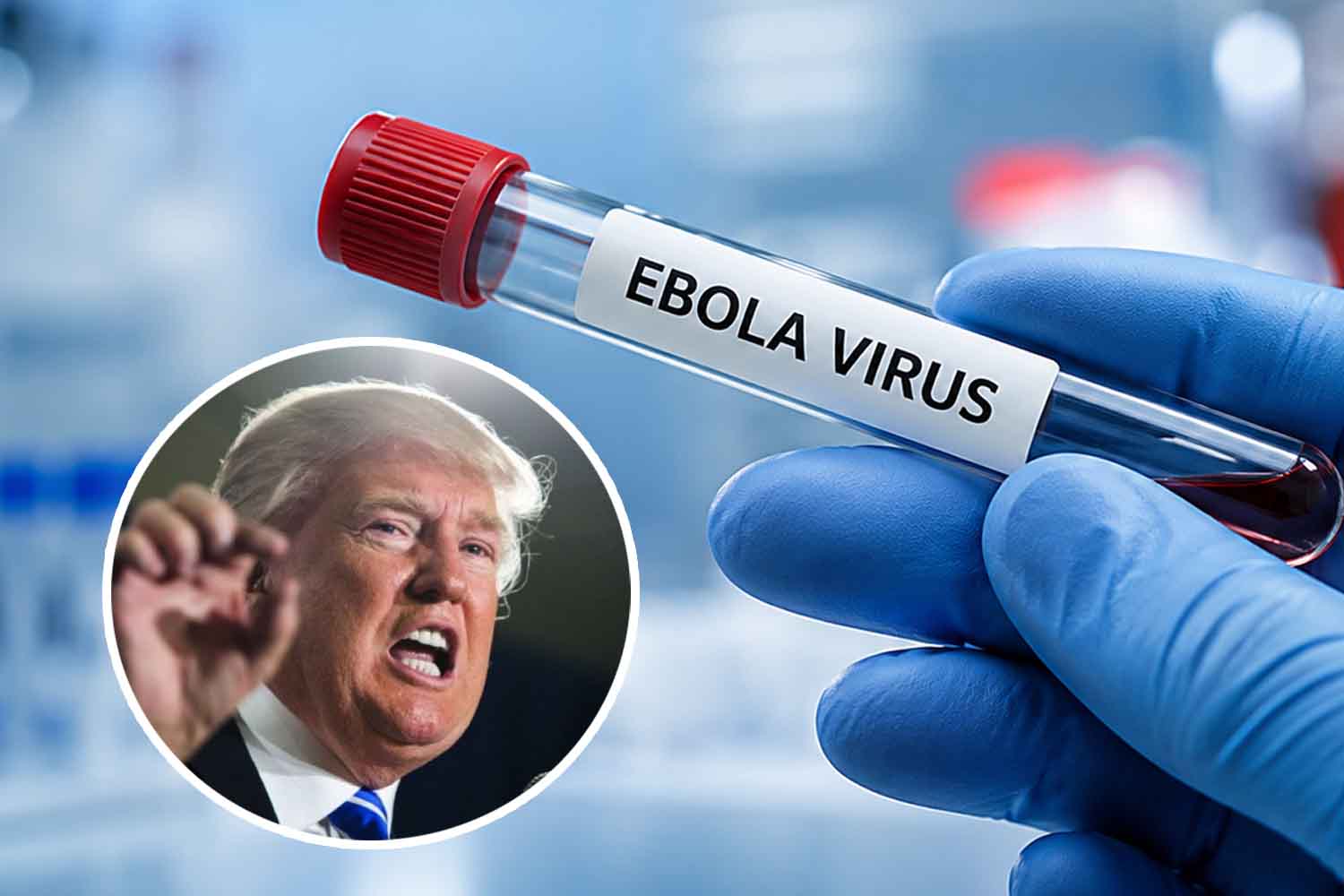
A missing mask says more than many press conferences. A bottle of finished gel, a motorbike that doesn’t arrive, a test that proceeds too slowly: international politics, when it comes down from the podium, often takes this form here. Small, banal objects, almost offensive in their simplicity. Yet, in the face of an Ebola outbreak, it is precisely these objects that separate a chain of infections from a response that is still possible.
In the Democratic Republic of Congo, the epidemic caused by the Ebola Bundibugyo virus was declared an international health emergency by the World Health Organization on 16 May 2026. The first official data spoke of 8 laboratory-confirmed cases, 246 suspected cases and 80 suspected deaths in the province of Ituri, with two cases also confirmed in Kampala, Uganda, among people arriving from Congo. The WHO was already reporting heavy uncertainties about the real extent of the infection, deaths among healthcare workers and risks of transmission in healthcare facilities. For this strain, unlike Zaire, there are no specific vaccines or therapies already approved.
A few days later, the picture had already expanded: around 600 suspected cases, 139 suspected deaths, 51 confirmed cases in Congo and two in Uganda, according to updates reported by health authorities and the WHO. Experts suspect that the virus circulated for weeks, perhaps months, before it was identified, partly due to delays in testing and a response made more difficult by insecurity in the area, population movements and the fragility of health facilities.
First you cut, then you accuse
This is where American politics comes in. Not because an executive order signed in Washington “creates” a virus in Ituri. It would be a convenient and wrong shortcut. The virus has its paths, its species, its leaps, its biological opportunities. But the ability to contain it depends on people, laboratories, fuel, protective devices, surveillance, tracking, trust. All things that cost money. All things that break down when funding arrives in fits and starts, when programs are stopped, when agencies are emptied and when public health becomes a voice to be realigned to the national interest of the moment.
On January 20, 2025, Donald Trump signed an executive order imposing a 90-day pause on new foreign development assistance from the United States, pending verification of the efficiency and consistency of the programs with the president’s foreign policy. The text stated that American foreign assistance must be fully aligned with the President of the United States. Translated into facts: every program had to pass through the America First filter.
Within a few weeks the shock hit the concrete programs. As of February 2025, US-funded projects in various countries, including life-saving interventions in Sudan and South Africa, received closure notices. According to a reconstruction based on court documents, the Trump administration had decided to terminate more than 90% of USAID programs, including some initially covered by waivers for essential services, including HIV interventions and other health programs.
Now, faced with Ebola, the same machine tries to present itself as a rescuer. The State Department announced funding for up to 50 rapidly deployable clinics in affected areas of Congo and Uganda. A useful commitment, certainly. But it arrives in an already damaged landscape: field workers report shortages of painkillers, masks, protective equipment, motorbikes for contact tracing, limited diagnostic capacity and overwhelmed local structures. Some organizations attribute some of this exposure to foreign aid cuts and the dismantling of USAID.
There is something almost bureaucratically cruel about the scene: first the net is weakened, then one is surprised if the hole in the net lets something through.
Zambia was already a warning
The previous Zambian just needs to be mentioned, because it already tells a lot. A few months ago, Washington harshly rejected accusations of wanting to tie health aid to access to the country’s critical minerals, speaking of “false” and “disgusting” reconstructions. Then Lusaka said exactly what the problem was: the health agreement needed to be separated from the critical minerals dossier. More than closing the case, that denial made it even more visible.
That case also involved funds for HIV, malaria, maternal health and epidemic preparedness programs. Here the connection with Ebola becomes broader, and more disturbing: when health aid is cut, conditioned or used as negotiating leverage, the invisible infrastructures are the first to fail. Tests, drugs, staff, tracing, protective equipment. All that really works only when disaster is yet to come.
The virus doesn’t wait
Marco Rubio criticized the WHO, claiming it was “a little late” in identifying the epidemic. A convenient phrase, because it shifts the scene to Geneva and takes the gaze away from Washington. However, in the same context, the United States had already completed its exit from the WHO, with consequences on its operational capacity, and continued to move within a framework of cuts to public health and global assistance. Public health experts responded that placing blame on the WHO ignores limited resources, insecurity on the ground and weakening health infrastructure.
It’s the old political art of the fireman with the can in his hand. It is cut, dismantled, reduced, then when the fire is seen from satellite, the person who arrived with the punctured tanker is blamed. In the meantime, the WHO is sending tons of medical supplies, local operators are asking for protective equipment, laboratories are struggling with tests not designed for that strain, NGOs are bringing out emergency supplies. The virus, with its crude biological indifference, does not wait for the right statement.
Trump’s global health aid policy has turned prevention into permanent bargaining. The 2025 executive order placed foreign assistance under the criterion of presidential alignment. Bilateral agreements with African countries have brought conditions on data, co-financing, trade access, surveillance and, in the Zambian case, critical minerals. The cuts to USAID have weakened one of the structures that historically also served to quickly react to health emergencies.
We can discuss for hours about efficiency, waste, corruption, the responsibility of local governments, dependence on foreign aid: no state should forever build its public health on the political continuity of Washington. However, using this fragility as a lever to obtain minerals, data and geopolitical advantages takes the discussion to another level. There the cooperation stops seeming like one and takes on the metallic smell of the contract signed with a hand on the drip.
Ebola in Congo and Uganda is not the “fault” of just one president. It would be a fragile and useless phrase. However, this epidemic is showing what happens when the very tools needed to see earlier, isolate earlier, protect earlier are weakened.
The language of America First promises order: Americans first, American interests first, the American taxpayer first. In the world of viruses, this grammar quickly falls apart. An ignored outbreak in a fragile province can cross borders, reach a capital, block travel, consume resources, create fear. Global health works before the disaster becomes visible. After that, it costs more. Afterwards, emergency clinics, cargo flights, press conferences, apologies disguised as accusations are needed.
In Africa, this policy has already left a trace: negotiated drugs, frozen programs, demanded data, minerals in the background, operators without quick enough protections. The word “help” remains on the documents. In the field, often, an empty box remains. Ebola doesn’t sign memos.
You might also be interested in:
