
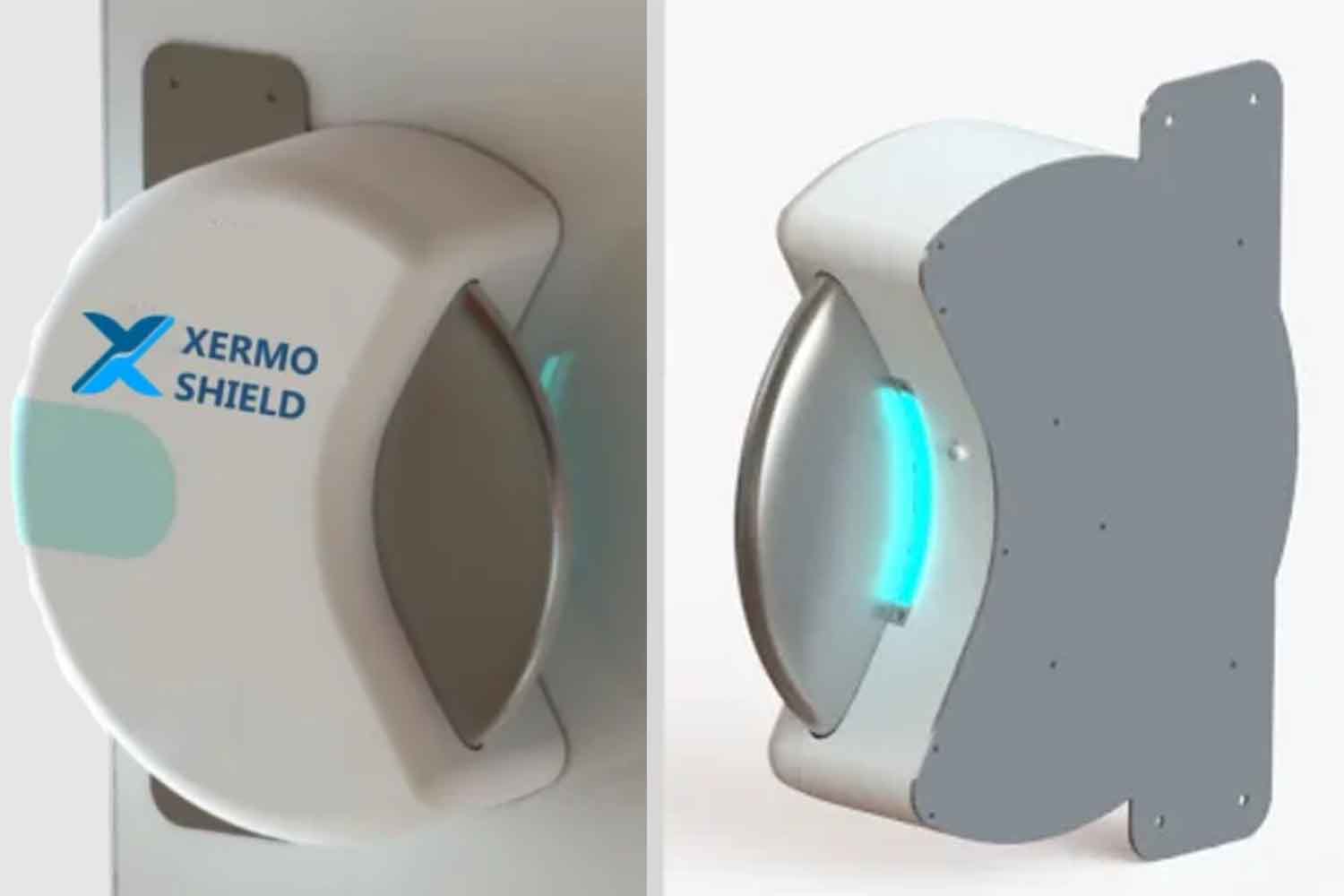
A simple, concrete idea, born in a difficult context and transformed into a device that could really change the way we enter public places. In Jamaica, a university student created one self -cleaning handle capable of Eliminate almost all bacteria in just 30 secondsthanks to the ultraviolet lightin order to improve hygiene in public structures, where the passage of hands can easily transform into a vehicle of contagion.
Rayvon Stewartthe young creator of the project, thought of everything: from safety for humans and animals, to sanitizing effectiveness even in the most humid and warm climates, where bacteria multiply quickly. A useful and replicable invention, especially in places where health resources are limited.
How it works
The name is Xermosol And the form reminiscent of that of Pac-man. Two thirds of the handle body contain the electronic components, protected by a gray shell. The part to be grasped, on the other hand, is illuminated by a series of UV lights which are activated automatically when someone touches the device. The entire disinfection process requires just 30 seconds.
It works without the need for detergents or chemicals, does not emit smells and. It is designed to be easily installed in schools, hospitals, public offices, health facilities and any other place where the bacterial transmission through the surfaces represent a daily risk.
What surprises is not only the effectiveness of technology, but also the simplicity of the ideaperfectly adapted to the reality of the Caribbean, where the heat and humidity make the theme of sanitization even more urgent.
From the Jamaican campaign to innovation
Rayvon Stewart grew up a Mount prospecta rural area of Jamaica. Nobody in his family had ever attended university before him and his cousin. Despite the difficulties, he says he has never lost sight of the goal:
We knew we had a mission, even if the means were few.
At the University of Technology is passionate about innovation. He starts working on a software to try clothes virtually, but it will be a volunteer experience in the hospital to give him the right idea. There he understands how important it is to intervene on the hygiene of contact surfaceslike doors handles, often neglected but potentially dangerous.
Today, with his invention, he has already received The National Prime Minister for Youth Prime Minister and the Commonwealth Health Innovations Awardsand is working to get the international patent. To believe in the project there is also the scientific community: The Camille-Ann Thoms-Rodriguez microbiologistconsultant at the University of Western Indies, defines it “a reason for pride” and underlines how innovative and concrete solutions can also be born from the countries with less resources.
