
Stress is no longer an exception, but a widespread condition. In Italy, according to the latest findings, at least six out of ten people experience episodes of anxiety, irritability or insecurity during the year. Effects that don’t just remain in the mind: they affect sleep, skin and can transform into physical symptoms such as headaches or hair loss.
In the world of work the situation is even more marked. 64% of Italian workers declare high levels of stress, a percentage that places the country at the top in Europe. The problem, however, is not only the spread of the phenomenon, but its measurement: today there is no simple, continuous and non-invasive method to detect it, especially in young children or non-communicative people.
The “intelligent patch” that reads the body
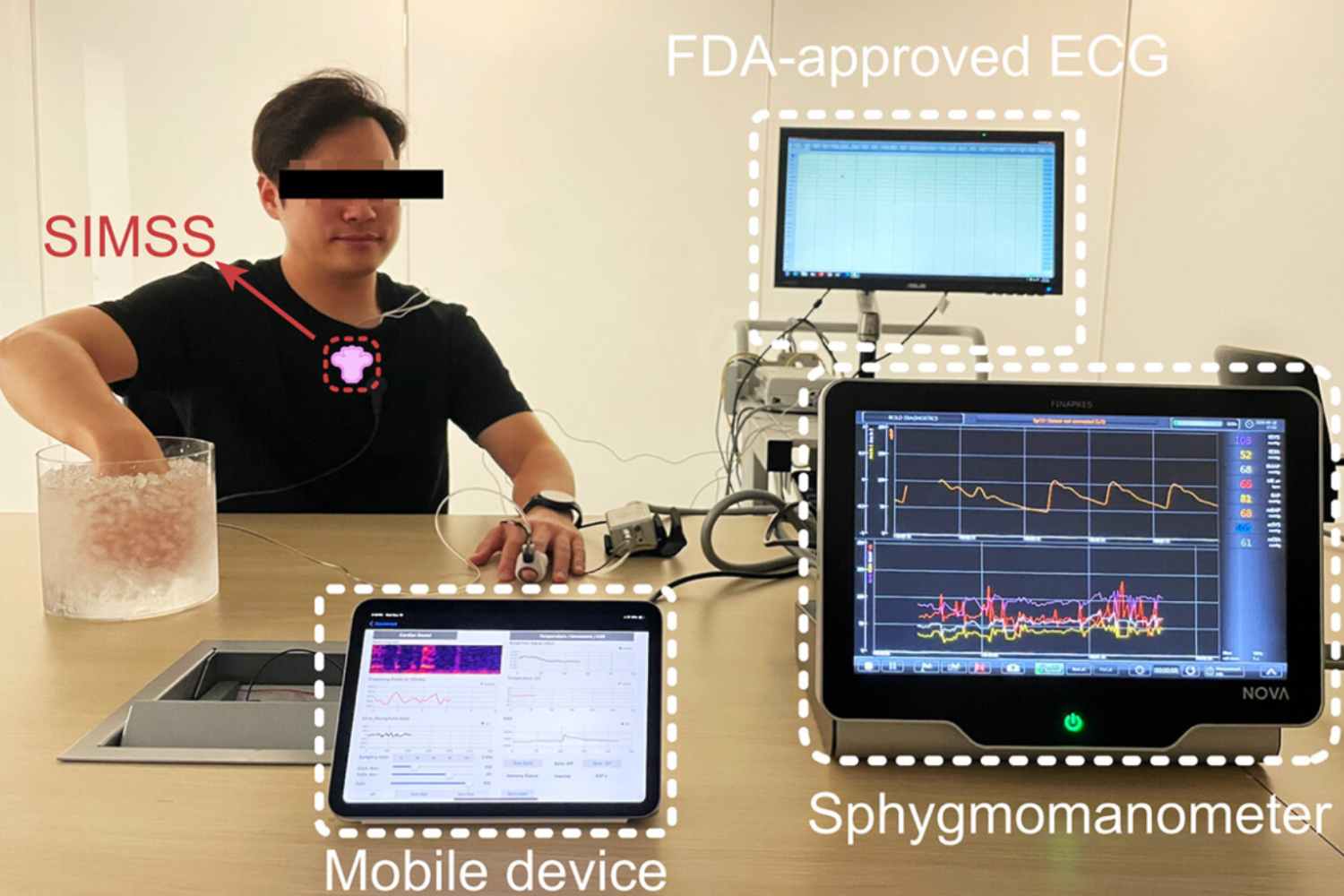
The answer comes from Northwestern University, where a team of engineers and doctors has developed a device that seems to have come out of a laboratory of the future: a small wearable sensor, the size of a plaster, capable of monitoring physiological stress in real time. The project, published in the magazine Science Advancestransforms the concept of the polygraph, the so-called “lie detector”, into a modern key.
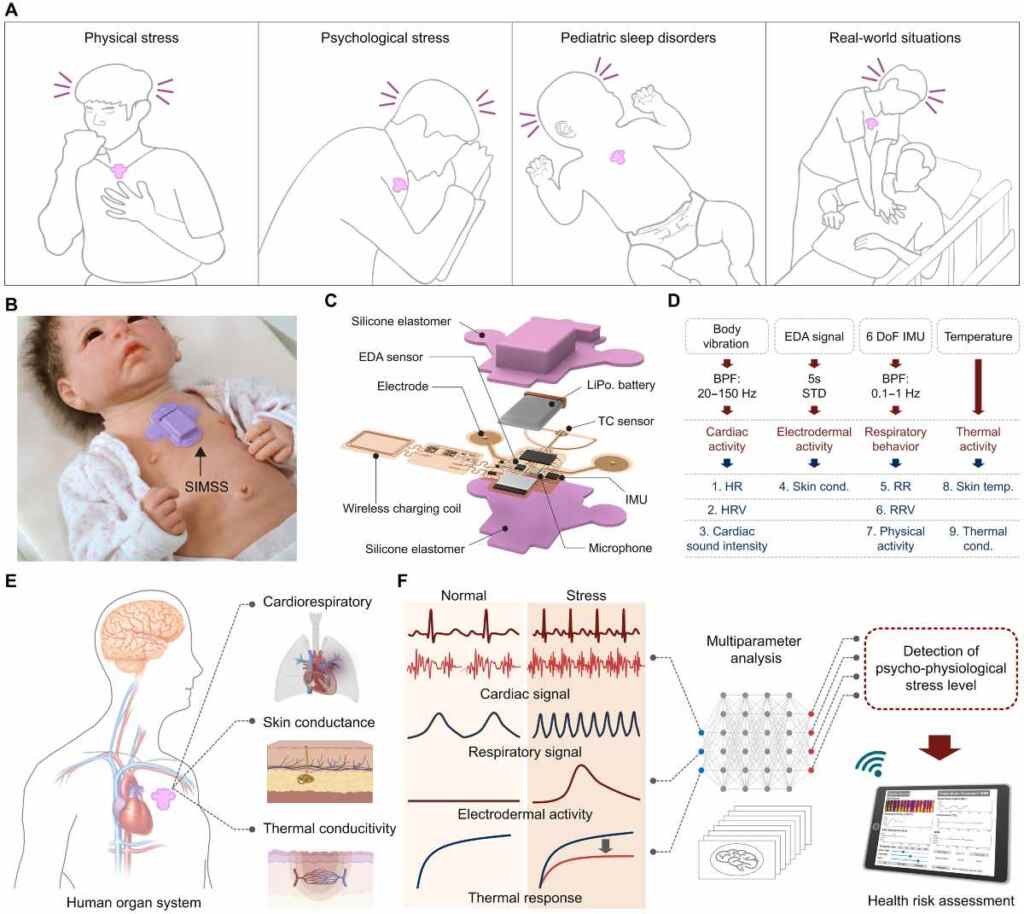
But here we are not looking for lies: we analyze the body’s reactions. The device, developed by the group led by John A. Rogers, weighs less than 8 grams and is applied to the chest. Inside it integrates sensors for heart rate, breathing, skin temperature, sweating, as well as a microphone and accelerometer to record acoustic and mechanical signals from the heart and lungs.
Real-time data and artificial intelligence
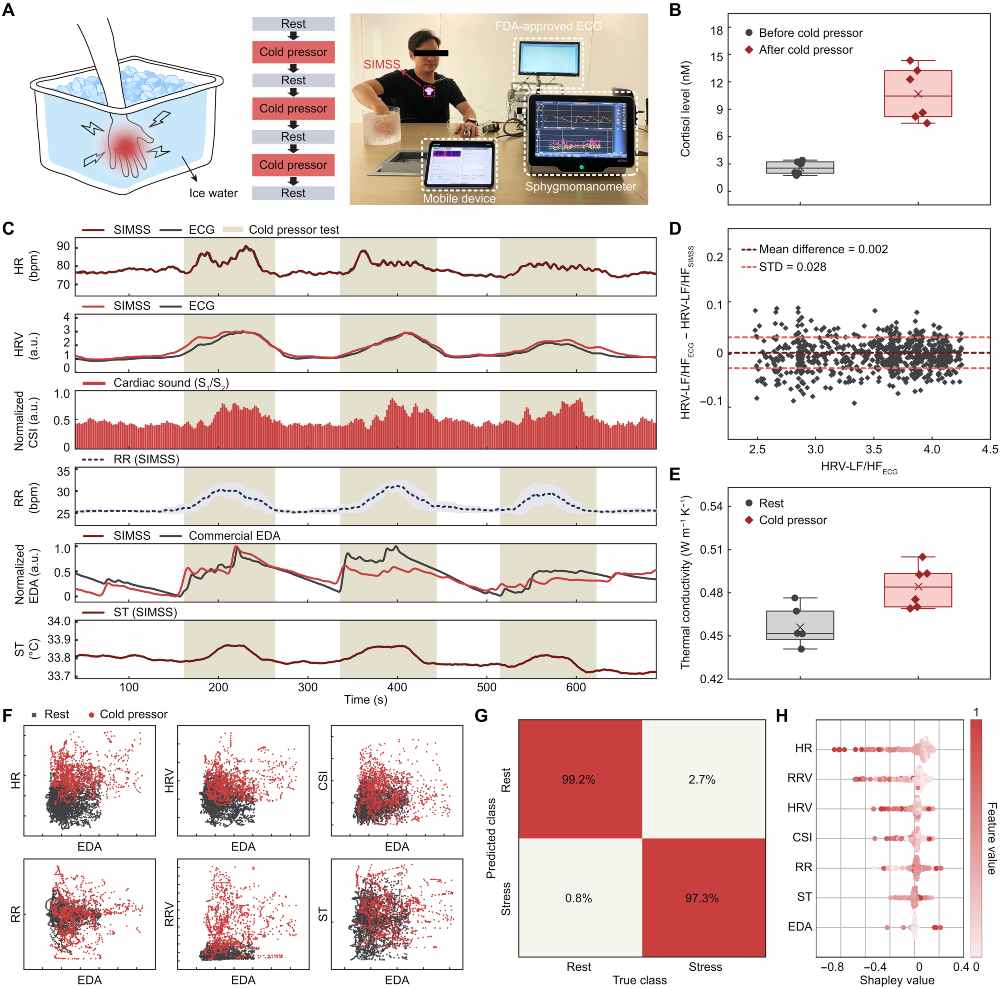
All the information collected is sent to smartphones or smartwatches, where machine learning algorithms interpret physiological patterns. The system is able to operate for over 24 consecutive hours, creating continuous monitoring of the body’s activation state.
The idea was born from a concrete need of the doctors at the Ann & Robert H. Lurie Children’s Hospital: to be able to understand when newborns and children are under stress without resorting to blood tests or invasive procedures. In young patients, in fact, crying or expressions are not enough to provide a reliable picture.
A technology designed for those who cannot speak
The intelligent patch opens up much broader scenarios than just pediatric medicine. It could also be used for the elderly, intensive care patients or people with communication difficulties, offering a “biological voice” to those who cannot express their state. According to researchers, the system can even help those who do not perceive their own stress level, intercepting signals that precede the worsening of psychophysical conditions.
From useful stress to chronic stress
Experts point out that stress is not always bad: it is a natural response of the body. But when it becomes chronic, it can permanently alter the functioning of the body, modifying neurological circuits and increasing vulnerability to physical and psychological disorders. For this reason, the objective of the new device is clear: to identify the moment in which stress exceeds a critical threshold, allowing timely interventions before it becomes harmful. A technology that does not limit itself to measuring the body, but which tries to read its fragilities before they turn into illness.
You might also be interested in:
