
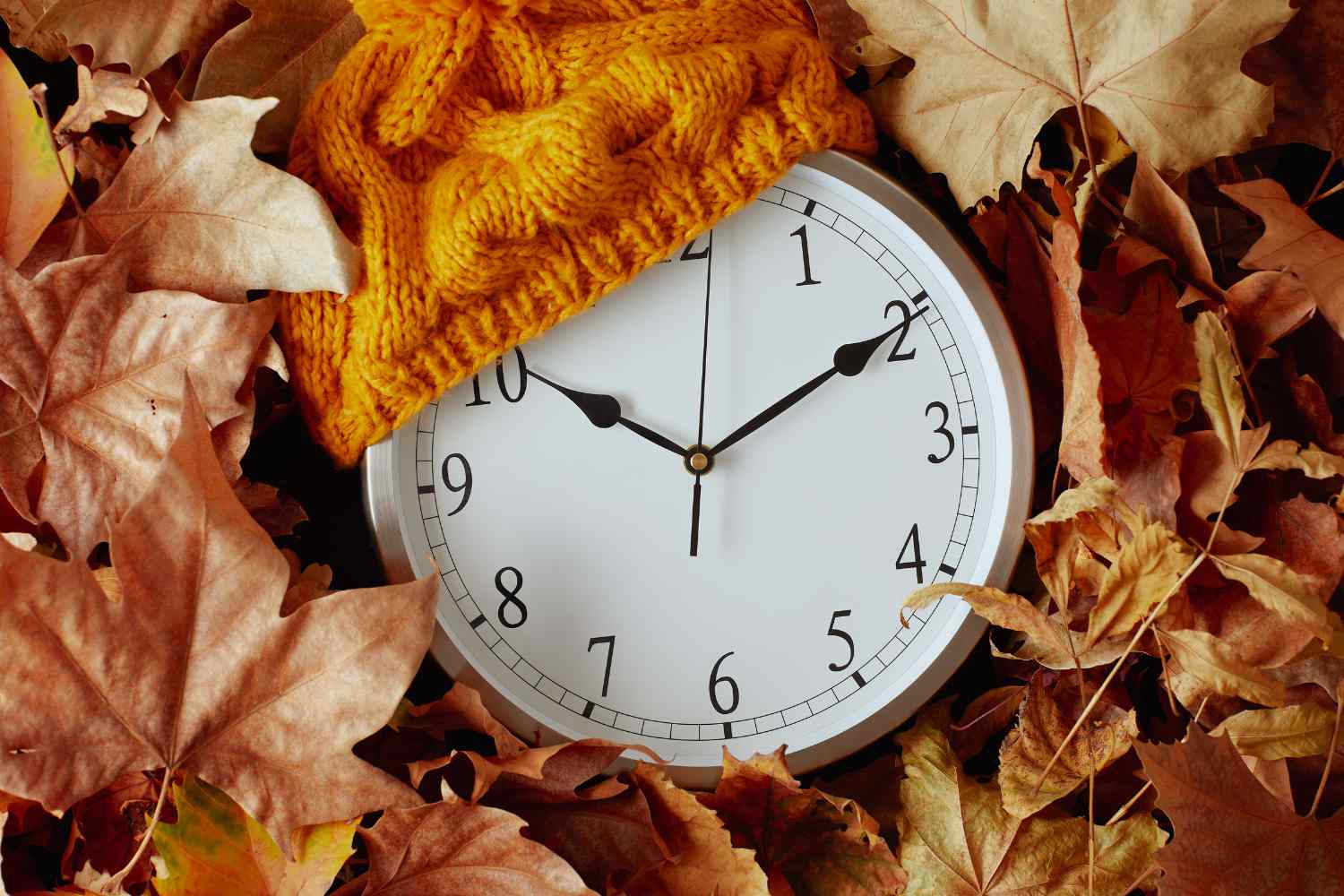
An extra hour of sleep, but also days that will suddenly seem shorter. On the night between Saturday 24 and Sunday 25 October 2026, solar time returns: at 3 in the morning the hands will have to be moved back 60 minutes, thus returning to 2.
An event that is repeated every autumn and which symbolically marks the arrival of the cold season. From Sunday, in fact, it will get dark an hour earlier than the previous days, even if in the morning we will be able to benefit from a little more light.
But the change of time does not only affect our habits and sleep-wake rhythm. There is also an economic and environmental issue: in the seven months of summer time that have just passed, Italy has saved over 90 million euros in electricity consumption, avoiding the emission of thousands of tons of CO₂.
Because you sleep an extra hour
The transition to standard time will officially take place at 3:00 on Sunday 25 October, when the clocks will return to 2:00. This means we will be able to sleep an hour more, at least on paper. Smartphones, computers and devices connected to the Internet will generally update the time automatically, while analogue clocks and household appliances not equipped with automatic updating will require manual intervention.
The most noticeable change will be in natural light: the sun will rise and set about an hour earlier according to the clock. The mornings will therefore initially be brighter, while darkness will arrive earlier in the afternoon.
Be careful, though: the time change does not reduce the actual hours of sunlight. It is the progressive shortening of the days, due to the approach of winter, that decreases the amount of light available.
How much have we saved thanks to daylight saving time in 2026?
The return to solar time also closes the energy balance of the seven months in which summer time remained in force, from 29 March to 25 October.
According to data released by Terna on 23 October 2026, the company that manages the national electricity grid, this year the movement of the clock has made it possible to save around 300 million kilowatt hours of electricity, an amount equivalent to the average annual requirement of around 115 thousand Italian families.
The economic benefit exceeds 90 million euros, calculated considering an average cost of electricity equal to 31.4 cents per kilowatt hour, including taxes, according to ARERA data used by Terna.
The advantage derives above all from the possibility of using natural light for longer in the afternoon and evening hours, thus reducing the use of artificial lighting. And looking at the long term, the balance becomes even more significant: from 2004 to 2026, summer time allowed Italy to save over 12.3 billion kWh, for an overall economic benefit estimated at around 2.4 billion euros. However, an important aspect must be clarified: these savings are attributed to summer time and not to the return to solar time. Furthermore, the 90 million euros represent an estimated economic benefit for the entire country, not a direct and identical discount on each family’s bills.
Why do we keep changing the time twice a year?
The current system is regulated by the European Directive 2000/84/EC, which establishes common dates for the transition between summer time and standard time in all member states of the European Union. The goal is to coordinate timetables between countries and make better use of natural light during the warmer months, with possible energy benefits. Yet, for years the possibility of definitively eliminating this double appointment has been discussed.
In 2018, the European Commission organized a public consultation in which approximately 4.6 million citizens participated. The majority declared itself in favor of abolishing the time change. The following year the European Parliament approved a proposal to put an end to seasonal clock movements, but the measure never reached final approval.
The main problem concerns the choice of time to maintain: some countries would prefer to permanently adopt summer time, others solar time. An uncoordinated decision would risk creating impractical time differences between neighboring states. For the moment, therefore, there is no official date for the abolition of the time change in Europe and the current system remains in force.
Curiosities about solar time that perhaps you don’t know
The idea of adapting daily habits to sunlight has a much longer history than you might imagine. Already in 1784 Benjamin Franklin suggested, ironically, that getting up earlier would save on candles. However, he did not propose the change of hands as we know it today. Daylight saving time was introduced in several countries during the First World War, when saving energy and fuel had become a necessity. It arrived in Italy in 1916, was subsequently abolished and reinstated several times, until its permanent adoption in 1966.
Not all countries, however, follow this system. Japan, Iceland and much of Africa keep the same time year-round. Even in other areas of the world, such as the United States and Australia, there are territories that do not adopt the seasonal change. And then there’s the question that comes back every October: will we really sleep an extra hour? Technically yes, because the night between Saturday and Sunday will last 25 hours. However, this does not mean that everyone will rest better: our body follows a biological rhythm that can take a few days to adapt to even a shift of just 60 minutes.
In any case, the next appointment with the hands is set for Sunday 28 March 2027, when summer time returns and we will have to move the clocks forward one hour. This time, however, we will lose an hour of sleep, gaining more light in the evening.
