
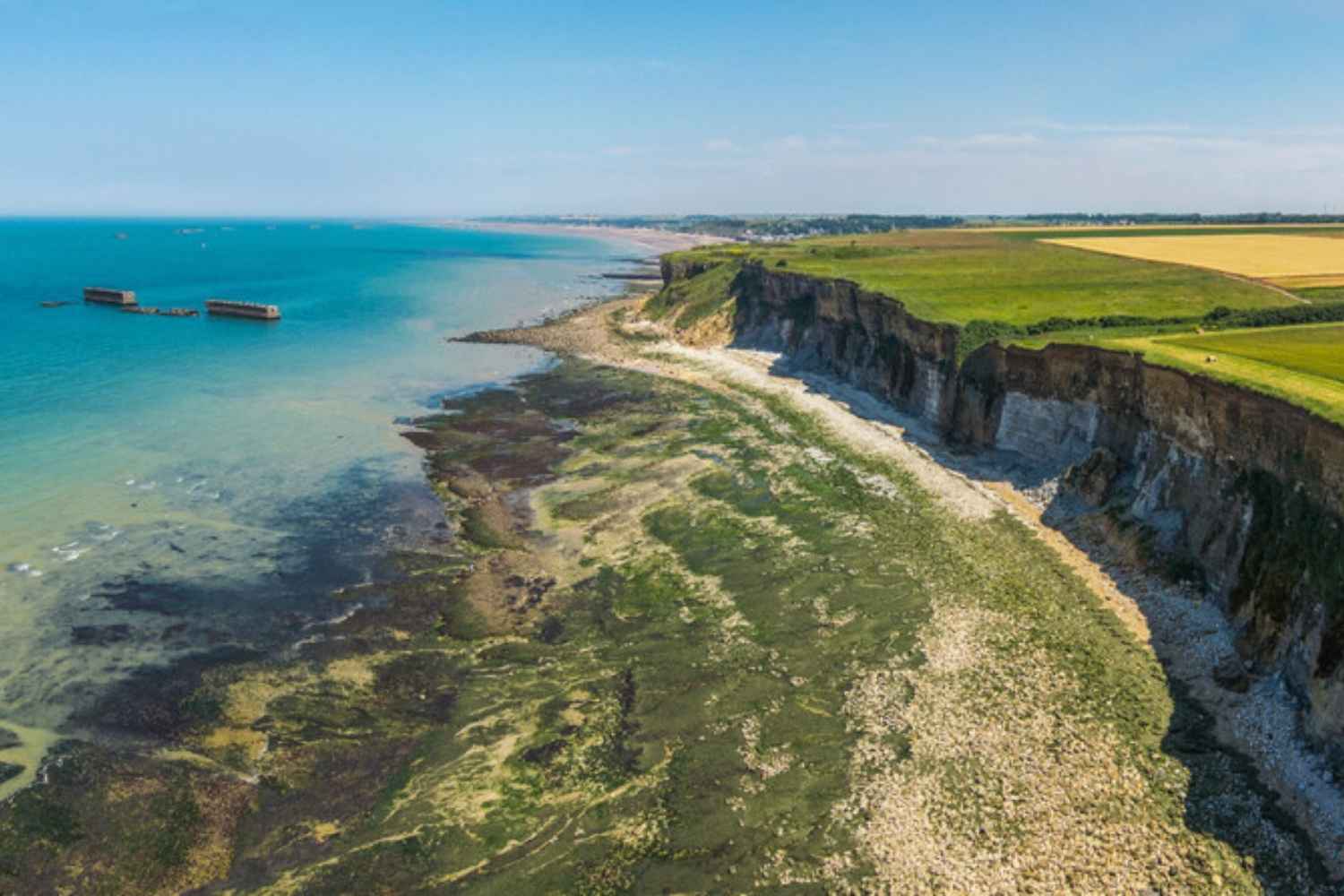
The candidacy had been at a standstill since 2018 and the idea had been circulating since 2006. On Sunday 26 July, in the session in Busan, the World Heritage Committee closed the matter and established that the beaches of the Allied landing on 6 June 1944 are part of the UNESCO List. The official page of the site n. 1581 describes a serial asset composed of six elements along approximately 80 kilometers of the Norman coast, the five beaches of which are known by the code names Utah, Omaha, Gold, Juno and Sword, plus the Pointe du Hoc. The protected area is 4,228.68 hectares, with a buffer zone of 294,749.
@Gold Beach – whc.unesco.org
Because there is only one criterion
Registration passes only through criterion (vi), that reserved for places linked to events and traditions of universal significance. This is not a simple technical detail, given that for years UNESCO has held back on the idea of recognizing places that were theaters of war, and the French dossier had to be rewritten to shift the emphasis from the military event to memory. The perimeter includes what remains of the German Atlantic Wall, including casemates, artillery batteries, fire direction posts and resistance nests, along with traces of the battlefield, original war equipment and commemorative landscapes, including the American cemetery of Colleville-sur-Mer.
What happened that day
On June 6, 1944, over 150,000 American, British and Canadian soldiers landed on the Normandy coast in Operation Overlord, the largest amphibious invasion in history. The heaviest losses were recorded in Omaha, as American Rangers scaled the cliffs of Pointe du Hoc to neutralize a German battery.
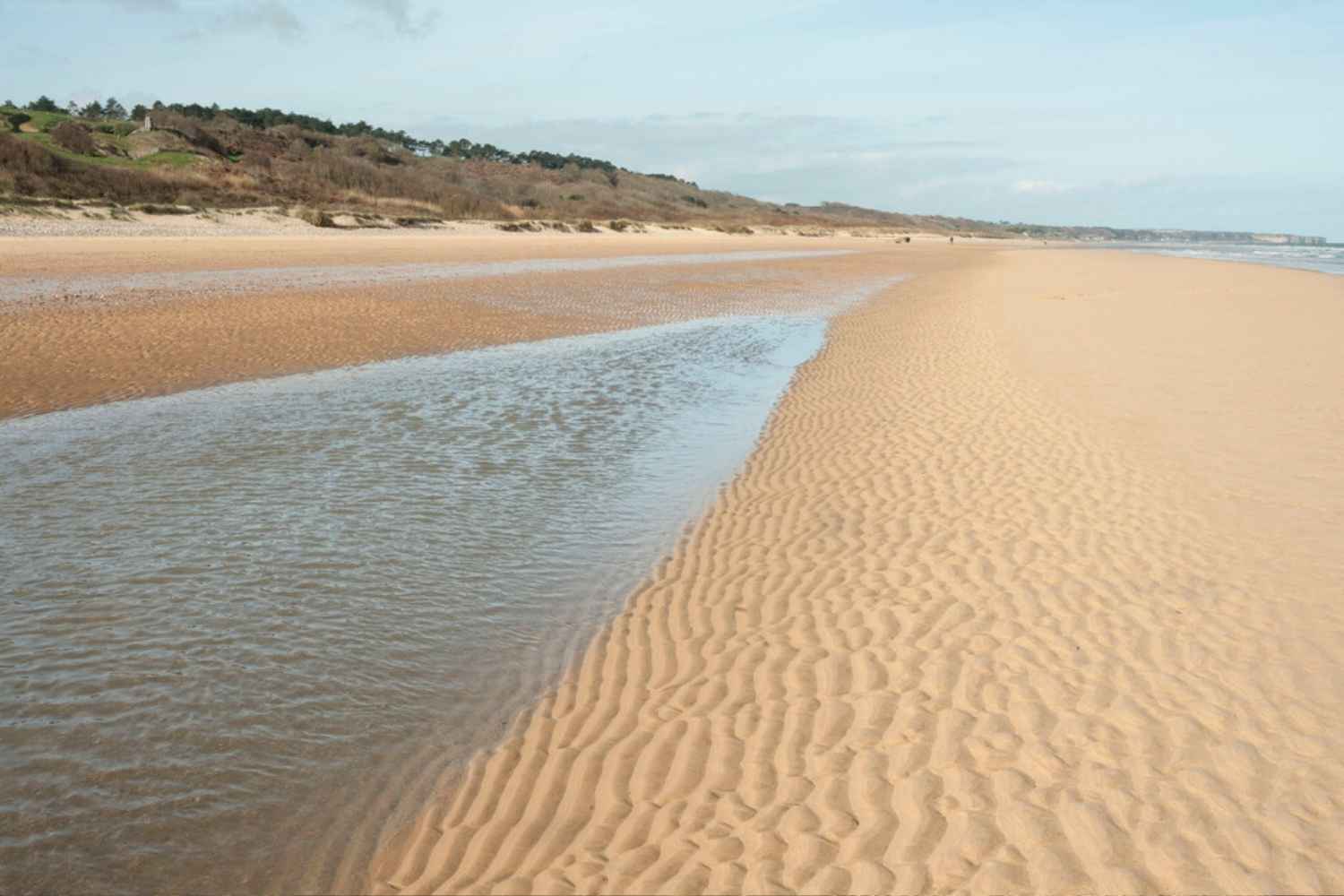
@Omaha Beach – whc.unesco.org
The Atlantic Wall built by Rommel held for a few hours, and the liberation of Western Europe began from that bridgehead.
