
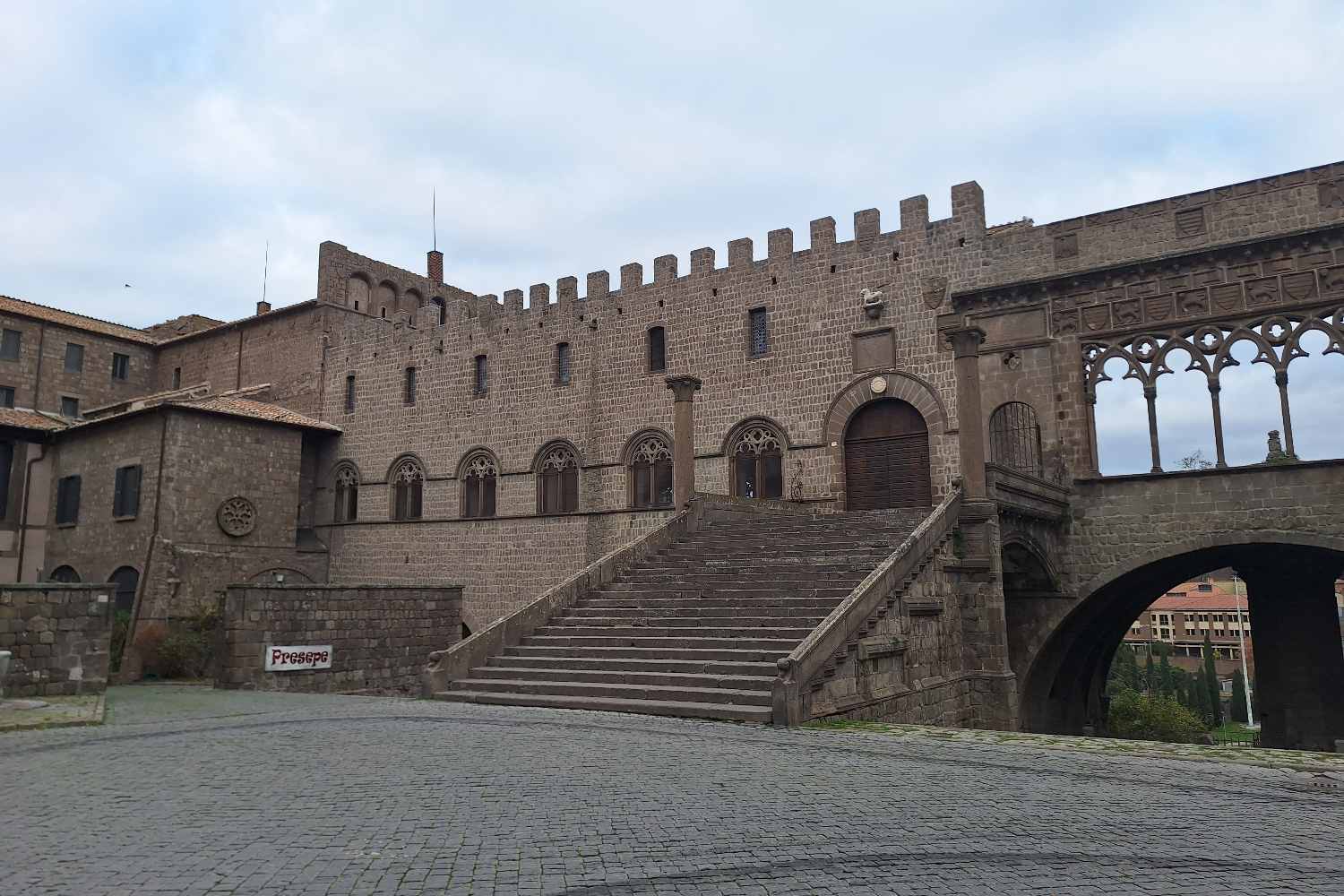
There are places in Italy capable of projecting the traveler directly into another era, far from the most crowded tourist circuits. During our last trip to Tuscia we discovered Viterbo, a city that houses the largest medieval historic center in Europe. Walking among its walls of tuff and peperino, you can breathe the atmosphere of a village suspended in time, which in the thirteenth century became the real thorn in the side of Rome, transforming itself into a safe refuge for the popes fleeing from the Roman revolts.
@RebeccaManzi/GreenMe
The stone heart of San Pellegrino and Pianoscarano
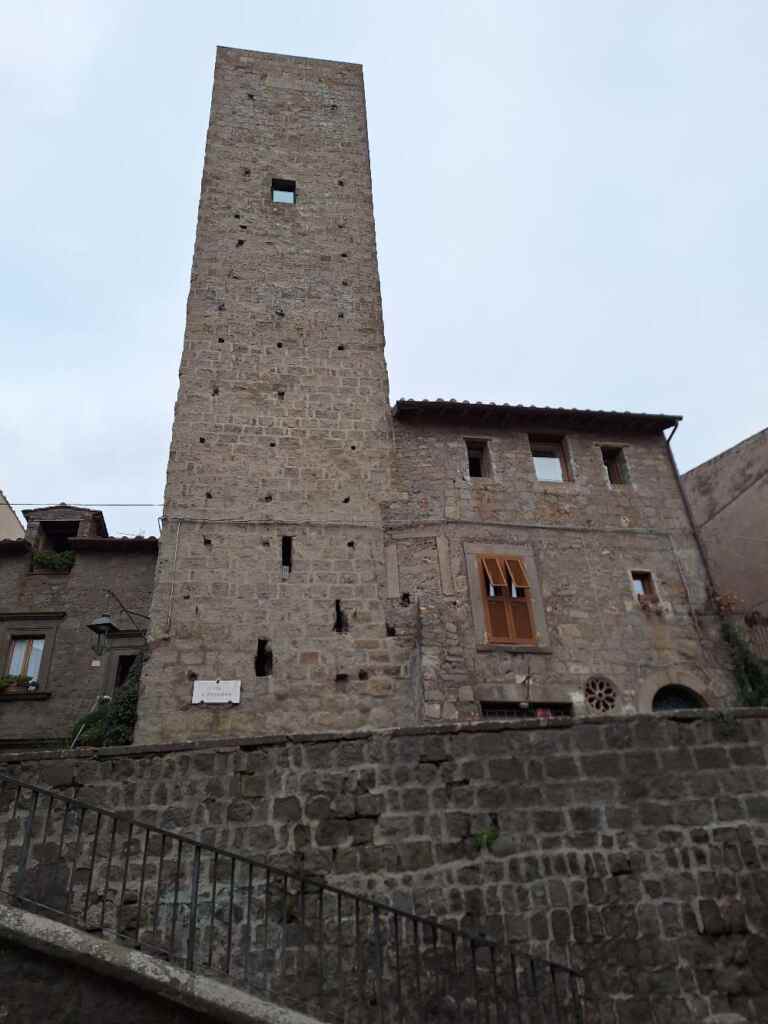
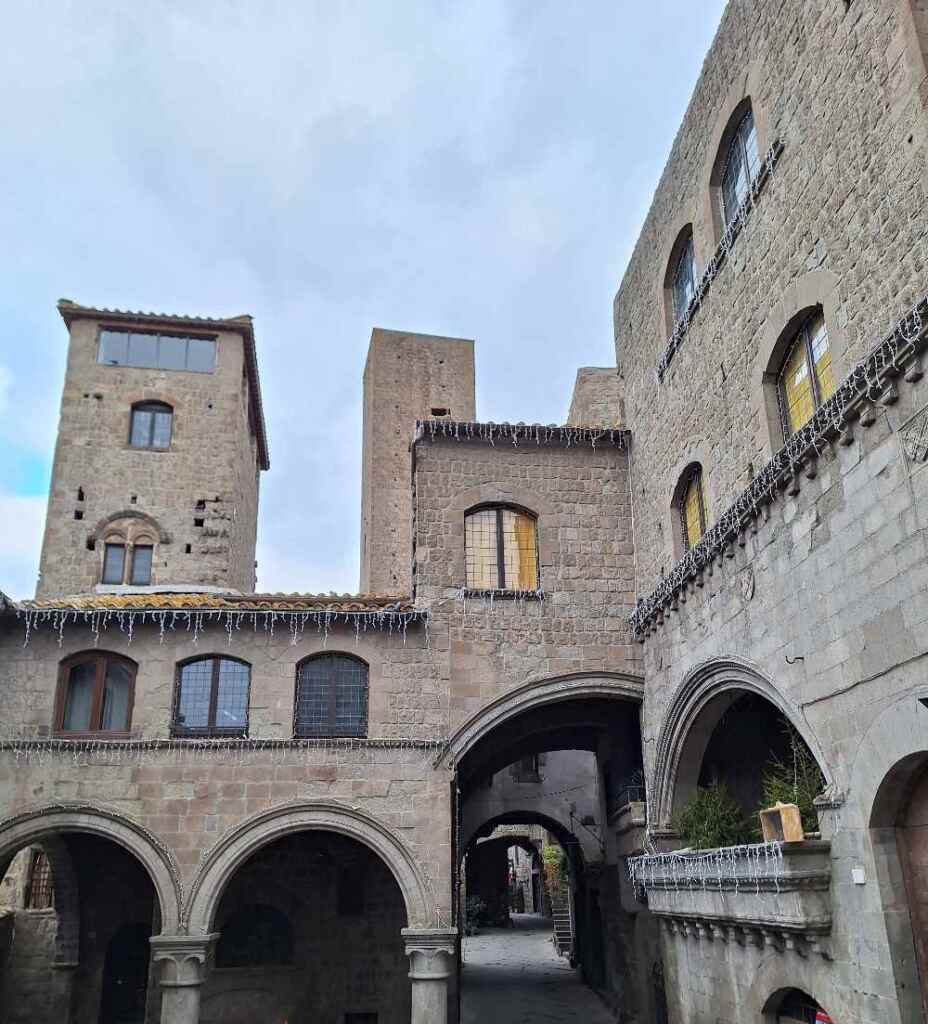
Our walking itinerary started from Piazza San Carluccio, the gateway to the charming medieval neighborhood of San Pellegrino. Walking here means getting lost in a labyrinth of gray stone where the architecture tells stories of aristocratic families and daily life in the 1200s. We admired the characteristic bridge houses, aerial structures that connect the buildings by climbing over the alleys, and the famous Viterbo profferli, the imposing external stairs that lead to the entrance doors.
@RebeccaManzi/GreenMe
One of the unmissable stops is the Palazzo degli Alessandri, miraculously escaped historical destruction, which hides a proffer right within its perimeter. After crossing the Ponte del Paradosso, we went as far as Pianoscarano, an ancient district mirroring San Pellegrino, famous for the Fontana del Piano. This monument was at the center of a violent popular revolt when a servant of Pope Urban V dared to wash a dog in its drinking water, sparking the fury of the residents and the subsequent papal retaliation.
@RebeccaManzi/GreenMe
The Palace of the Popes and the incredible birth of the Conclave
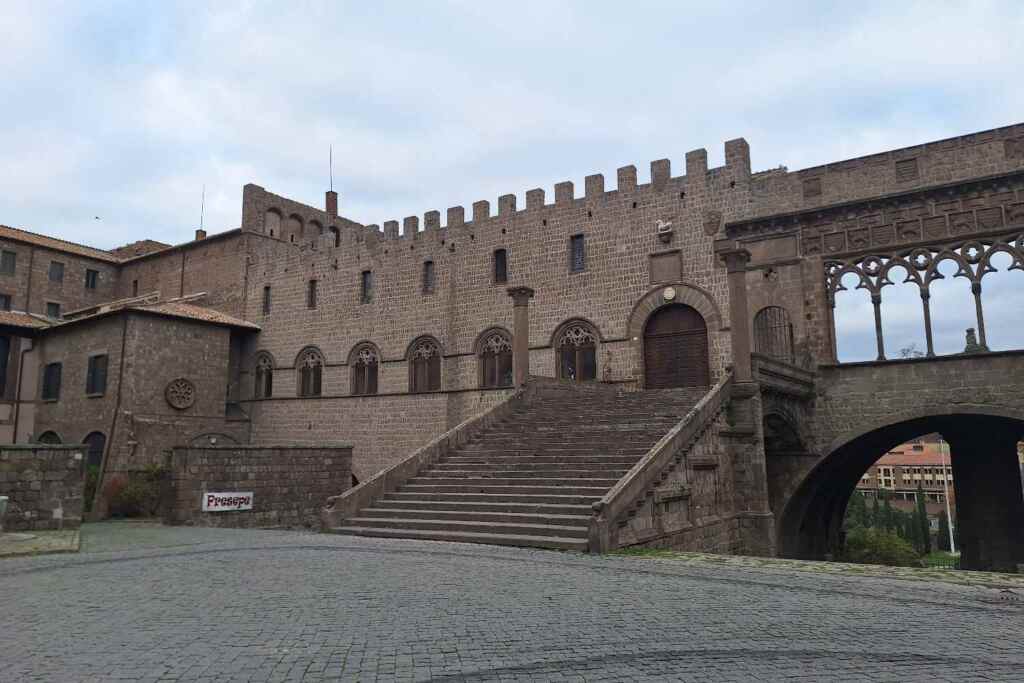
Reaching Piazza San Lorenzo, we found ourselves in front of the majestic Palazzo dei Papi, built between 1255 and 1266 by the Captain of the People Raniero Gatti. The facade is famous for the splendid Loggia delle Benedizioni, an embroidery of seven intertwined Gothic arches that overlooks the Faul Valley.
But the real historical treasure is found inside: the Conclave Hall. Here, between 1268 and 1271, the longest papal election in history was held, lasting 1006 days. Exasperated by the cardinals’ stalemate, the citizens of Viterbo decided to lock them up (cum clubhence the modern term), uncovering the roof of the hall to expose them to the elements and rationing their food to bread and water to force them to nominate Gregory
@RebeccaManzi/GreenMe
The Cathedral of San Lorenzo and the sacred treasures of the Hill
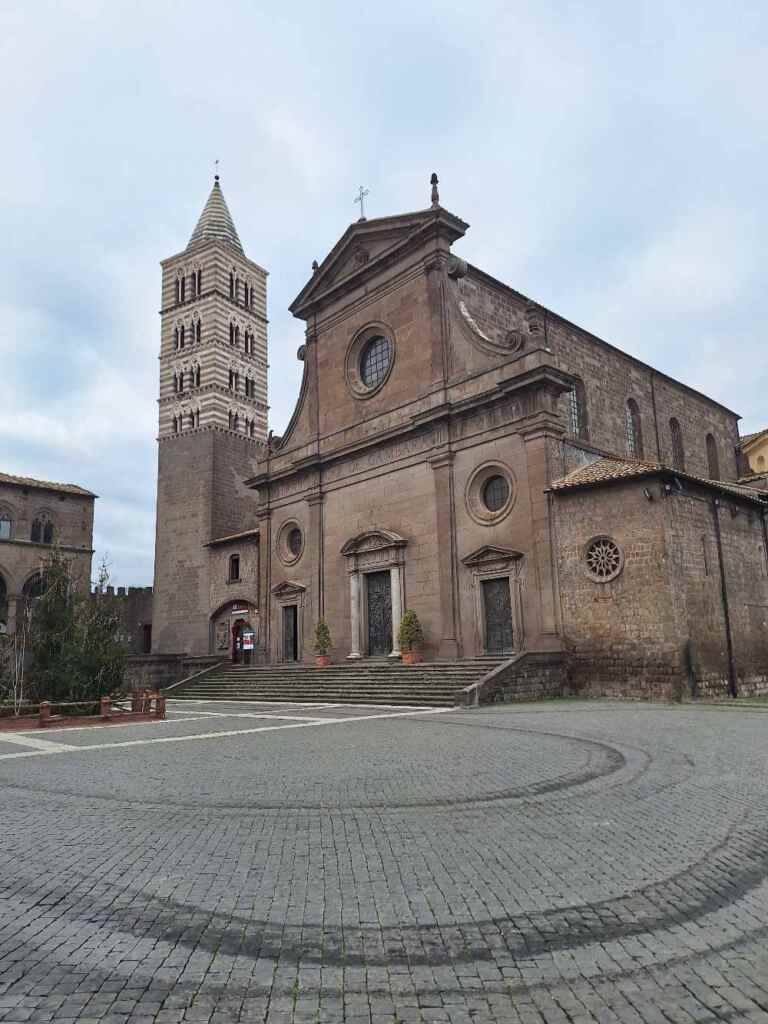
Next to the palace stands the Cathedral of San Lorenzo, a building that deceives the eye: the façade is clearly Renaissance (dating back to 1570), but the interior reveals a severe and fascinating Romanesque structure with three naves, with a magnificent Cosmatesque floor. Behind the central apse, partially separated after the bombings of the Second World War, we discovered a surprising frescoed baroque choir.
The cathedral also houses the tomb of Pope John XXI, the only Portuguese pontiff in history. To complete the visit, the Colle del Duomo Museum houses Etruscan finds and pictorial masterpieces such as the Madonna della Carbonara of the Byzantine school and a Crucifixion attributed to Michelangelo.
@RebeccaManzi/GreenMe
The relaxation of the ancient Romans: our experience at the Piscine Carletti
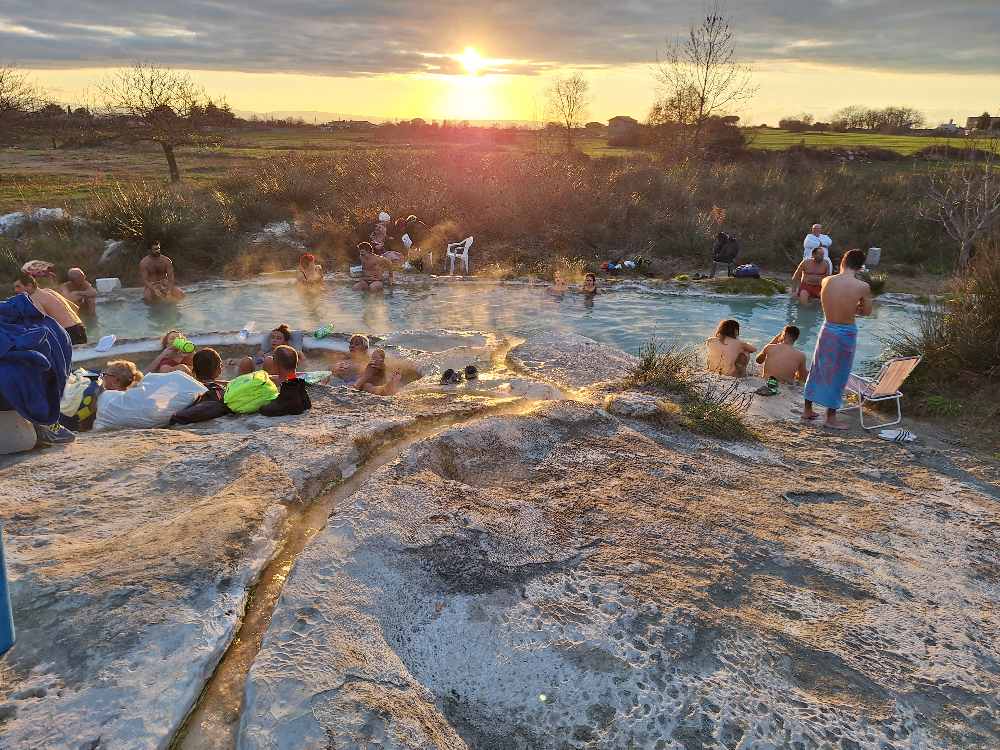
After so much art, we decided to treat ourselves to a regenerating break outside the walls, immersing ourselves in the immense hydrothermal basin of Tuscia. Our choice fell on the Carletti Pools, an extraordinary, completely natural and free spa area. The peculiarity of this site lies in the thermal spring which flows at a very hot temperature of around 60°C.
@RebeccaManzi/GreenMe
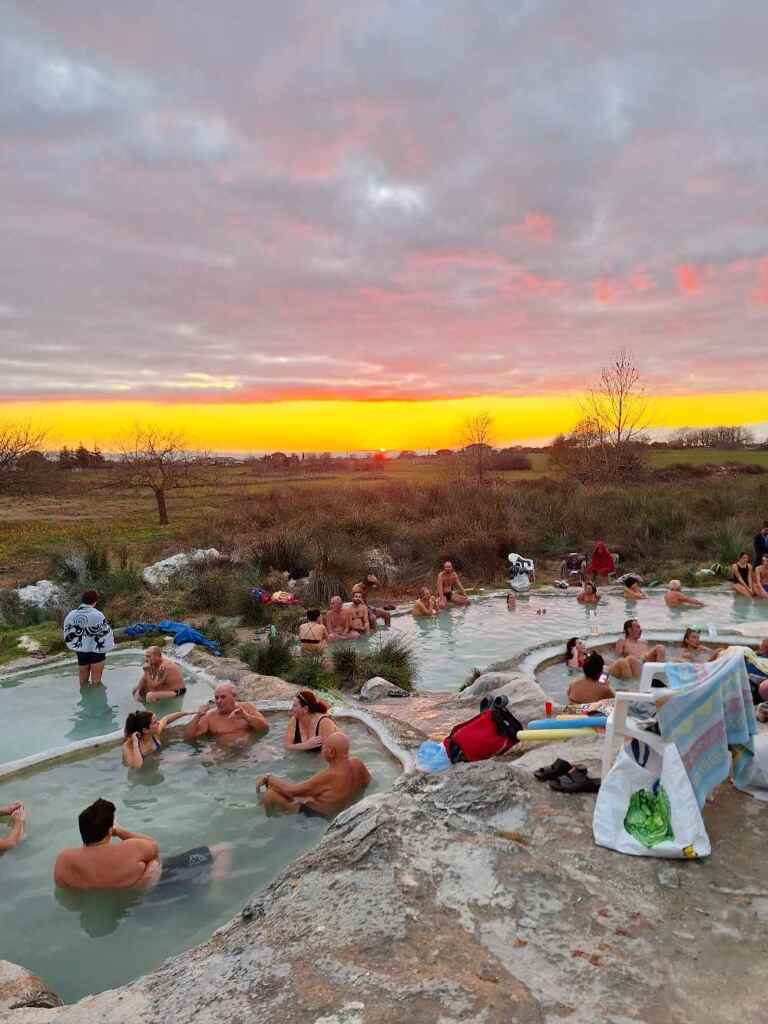
The water, rich in mineral salts and trace elements, flows continuously through a series of consecutive pools, gradually cooling until it reaches 30°C in the most distant pools. This unique conformation allowed us to experience a real Roman spa journey, passing through the intense heat of the calidarium to the pleasant warmth of tepidarium. Thanks to the constant water exchange, the Carletti Pools keep the water clean and boiling even in the middle of winter, offering a moment of pure relaxation immersed in the nature of Viterbo.
@RebeccaManzi/GreenMe
Viterbo stays with you: the charm of a timeless journey
Leaving Viterbo means taking with you the scent of peperino soaked in the rain, the hot steam of the springs that dissolves in the air of Tuscia and the echo of medieval stories that seem to have been written yesterday. This city does not simply show itself to the traveler, but envelops him, offering an authentic and multi-sensory experience that combines the monumentality of great history with the quiet of the wildest nature.
