
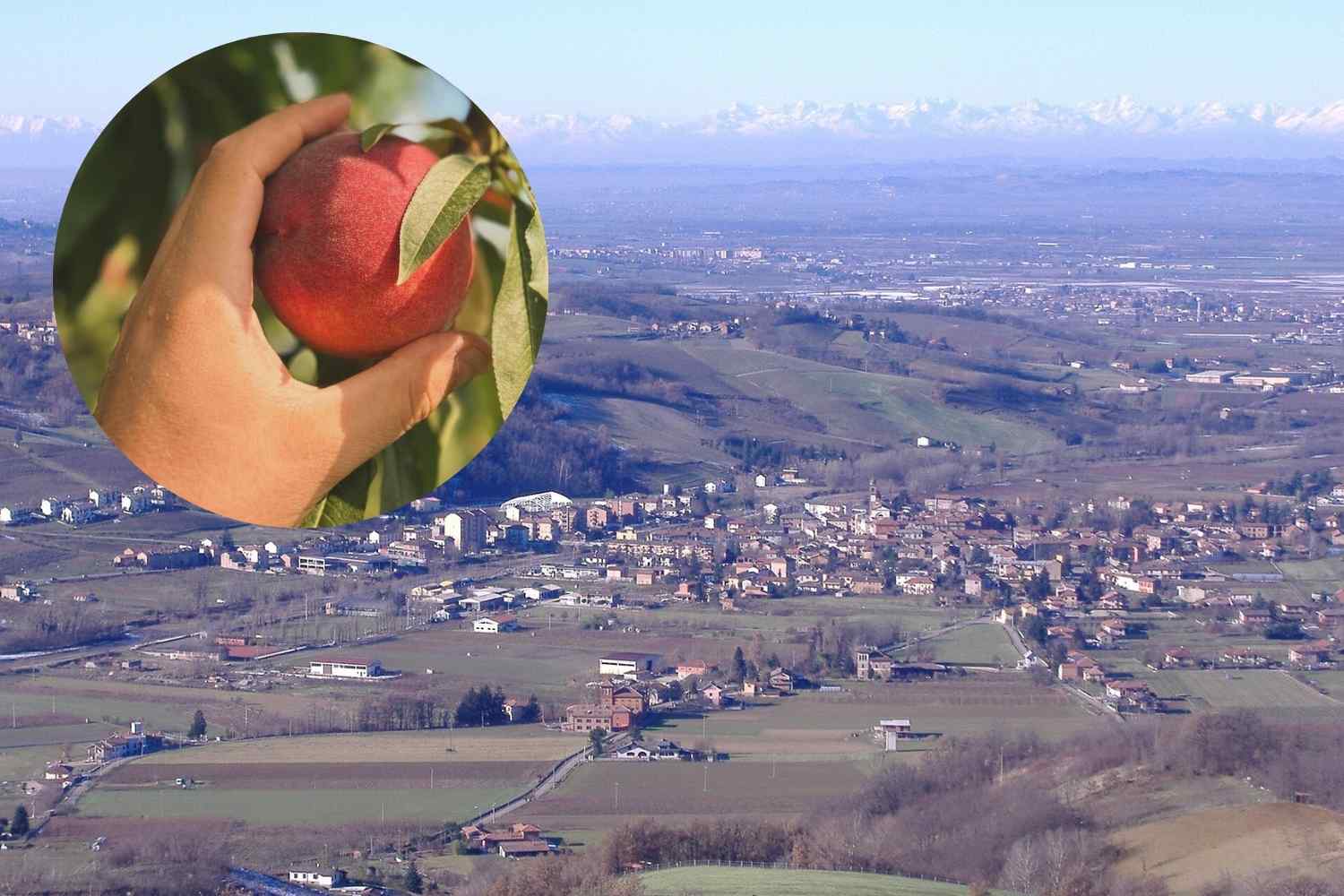
Among the Alessandrino hills, nestled between the Curone and Grue valleys, stands a small village that bears the name of a great painter but houses a completely different treasure. Volpedo is known to most for being the birthplace of the author of Fourth Statebut those who really know this corner of lower Piedmont know that one of Italy’s least celebrated fruit excellences is also hidden here: a very sweet and fragrant peach, which over time has become the true identity symbol of the community.
View this post on Instagram
A tradition born from a misfortune
As often happens in the most beautiful agricultural stories, it all started with a crisis. At the beginning of the twentieth century, a parasite brought the area’s vineyards to their knees, forcing local farmers to reinvent their future. Thus it was that, between the mid-1920s and the early 1930s, the first orchards began to appear, populated by varieties of peaches arriving from the United States.
A far-sighted entrepreneur was the first to realize the potential of that land, and a few years later a local lawyer gave a decisive boost to local trade, promoting the construction of a dedicated market and, in 1937, the first village festival in honor of the fruit. Within a very short time, the cultivation of peaches surpassed in importance even the breeding of silkworms, which until then had been the leading activity in the area.
Even the family of the famous local painter, wealthy farmers, closely followed the fate of the crops and markets, as evidenced by the letters of the time. In the sixties and seventies, Volpedo peaches now traveled as far as the Ligurian Riviera, from Bordighera to Forte dei Marmi, following the same routes as tourism that arrived from Milan, Parma, Piacenza and even Switzerland.
A territory that seems made on purpose
The secret of this fishing does not lie in a single factor, but in the fortunate encounter between soil, climate and peasant wisdom. In this portion of Piedmont you can breathe a particular, almost border-like air: the humidity that rises from Liguria, the wind that comes down from Emilia, the Lombard atmosphere and the Piedmontese land mix together, creating a microclimate that favors not only peaches, but also cherries, strawberries, apples and pears.
The surrounding valleys are located between 114 and 448 meters above sea level, with sandy and clayey soils rich in nutrients and strong temperature variations between day and night: conditions which, combined with historical management of irrigation via traditional canals, have made this area a small fruit paradise, so much so that here the peach tree was even grafted onto the almond tree to better withstand the hillier areas.
View this post on Instagram
The “wave” harvest: patience made technique
Then there is a working method that more than any other tells the story of the philosophy of these producers: manual “wave” harvesting. It is not a question of picking all the fruits in a single day, but of going through the same rows several times throughout the season, picking each time only the peaches that have reached the exact point of ripeness. After a few days we check again, and so on until the plant has given everything it could give.
It is slow, repetitive work, which requires eye and experience to neither anticipate nor delay the right moment. Practiced from mid-June to August, this technique allows you to obtain fruit with the highest sugar content and the most intense color possible. Immediately after harvesting, the peaches are sold fresh or processed on the same day, avoiding as much as possible cold storage and steps that would affect their quality: an attention that over the years has also won over high-level chefs and artisans of taste.
A heritage without labels
Today the production is protected by a consortium that brings together around seventy agricultural companies, for a total of 250 hectares of cultivation, mainly yellow peaches. The varieties are largely of international origin, but some cultivars the older ones are maintained almost out of affection, rather than for productive convenience.
Curiously, this peach does not boast official certifications such as PGI, DOP or the recognition of a Slow Food Presidium: its reputation is based entirely on the value recognized by the producers who grow it and the consumers who choose it. Even artisanal transformation – into preserves, syrups or sweets – follows an unwritten rule shared by all: the processed product must be as good as the freshly picked one.
A small but great local heritage, in short, which joins other local excellences such as some niche cheeses and fruits of the area, and which demonstrates how, sometimes, the most authentic traditions arise precisely from difficulties.
View this post on Instagram
