
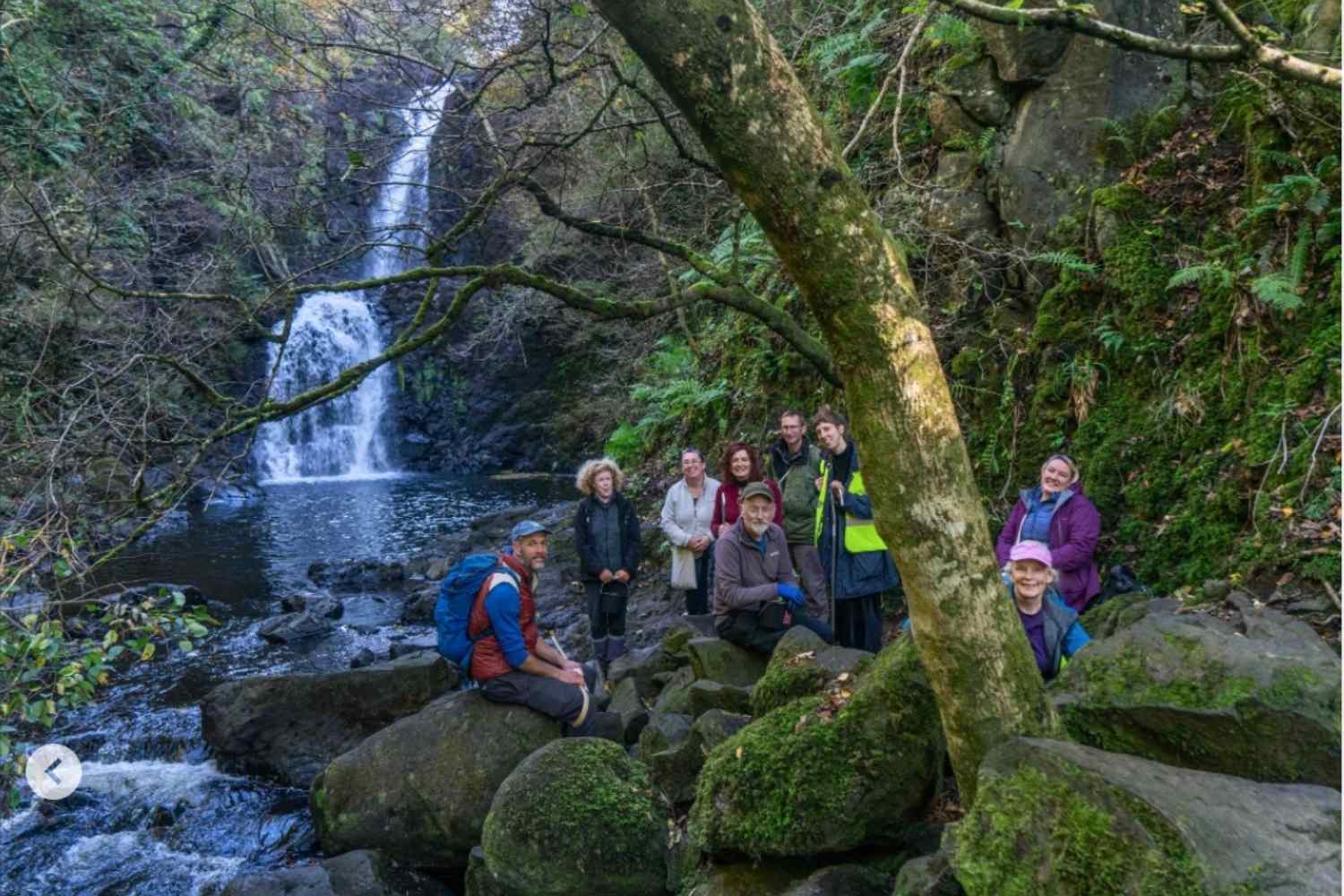
A small group of volunteers have helped grow nearly 8 million native trees in Scotland, a key achievement for Atlantic rainforest restoration efforts, after hand-picking 11 million seeds.
Around 100 volunteers — including retired teachers and doctors, office workers and young families — have dedicated tens of thousands of hours exploring often remote woodlands in the Western Highlands and Islands, searching for seed-bearing trees.
The work is based on detailed maps created by NatureScot and Scottish Forestry, which identify pockets of ancient woodland that remain, often in exposed and hard-to-reach places, forcing volunteers to climb down slopes to find the right specimens.
The species researched belong to a select group of trees that colonized Scotland after the last Ice Age: hazel, sessile oak, dwarf birch, willow, juniper, birch, wild cherry, mountain elm, yew and elder.
View this post on Instagram
The genetic advantage of local trees
According to ecologists involved in the project, these trees have inherited a genetic resilience that allows them to survive in specific microclimates and soil types along Scotland’s Atlantic coast – an advantage that non-native species do not possess, an aspect that is increasingly relevant as the climate changes.
The most recent surveys indicate that only 30,000 hectares of native Atlantic rainforest survive, a rare temperate habitat adapted to the UK’s humid coastal climate. Now the focus of multi-million pound restoration projects, these pockets of woodland have been precisely mapped into distinct ‘seed zones’ defined by forestry experts.
The seeds are collected, sorted and checked by the rewilding organization Trees for Life at their nursery in Dundreggan, near Inverness. The seedlings obtained are then sent back exactly to the areas of origin.
The Woodland Trust has already used the seedlings for several reforestation projects — including Gleann Shìldeag and Assynt in Wester Ross, and Beò Airceig, a 30,000-hectare restoration area around Loch Arkaig, in Lochaber — as well as selling them to dozens of small farmers (so-called crofter) who are planting groves on former grazing land.
View this post on Instagram
The stories of the volunteers
Sheena Macaulay, a biology graduate and resident near Oban, is one of the project’s volunteers. A former IT manager at Scottish Power’s Cruachan hydroelectric power station, he combines seed collecting with butterfly conservation, bending down to look for butterfly larvae marsh fritillary and moths burnet during field trips near Oban.
Macaulay says she also involved neighbors and friends in the project, explaining that it seemed more useful to her to act concretely for the climate rather than simply worrying about it in words.
His group is coordinated by Roz Birch, head of volunteers for Trees for Life, who during the outings holds real impromptu biology lessons, showing branches, leaves and seeds collected by the volunteers. Birch taught volunteers to distinguish the native Scottish sessile oak from the common (or English) oak by observing the distance of the acorns and leaves from the twig. A moss-covered tree then becomes the starting point for a lesson on the ecology of the temperate rainforest, with the bark hosting an entire micro-ecosystem of mosses and lichens typical of humid climates.
Birch highlights how the trees in these forests have adapted over time to very strong winds and frequent storms, and how the uniqueness of this band of rainforest lies precisely in the presence of bryophytes, lichens and entire ecosystems found only on the west coast of Scotland, Wales and the south-west of England.
Rigorous science, threatened by the changing climate
The project is based on rigorous ecological work and constant observation of seasonal cycles, based on inventories of ancient woodlands and Caledonian pine forests. The sites are monitored regularly, and according to Birch the signs of climate warming are already evident: seed maturation is occurring earlier and earlier. A dry spring, for example, can put whitebeam in difficulty but favor hawthorn, forcing teams to change or even cancel scheduled harvest dates.
The project also fills a void left by commercial or government forestry organizations: Many of the sites involved are too remote or too expensive for commercial seed collectors to reach, making the work Birch’s teams do even more valuable. Promoters believe it is the largest voluntary, civic-based reforestation program of its kind.
Starting as a one-year project, it has already secured funding for the fourth consecutive year, thanks to a coalition of supporters including the Postcode Lottery (via Woodland Trust Scotland), Trees for Life fundraisers, the BrITE Foundation and the Clean Planet Foundation.
Among the volunteers there is also Laura Corbe, 47 years old, a marine biologist, who appreciates the time dedicated to searching for seeds because it forces her to slow down and concentrate, without distractions, on the tree branches and the ground. For her, those who have never directly lived this experience struggle to truly understand the value of the rainforest, even among those who have lived in those places all their lives.
