
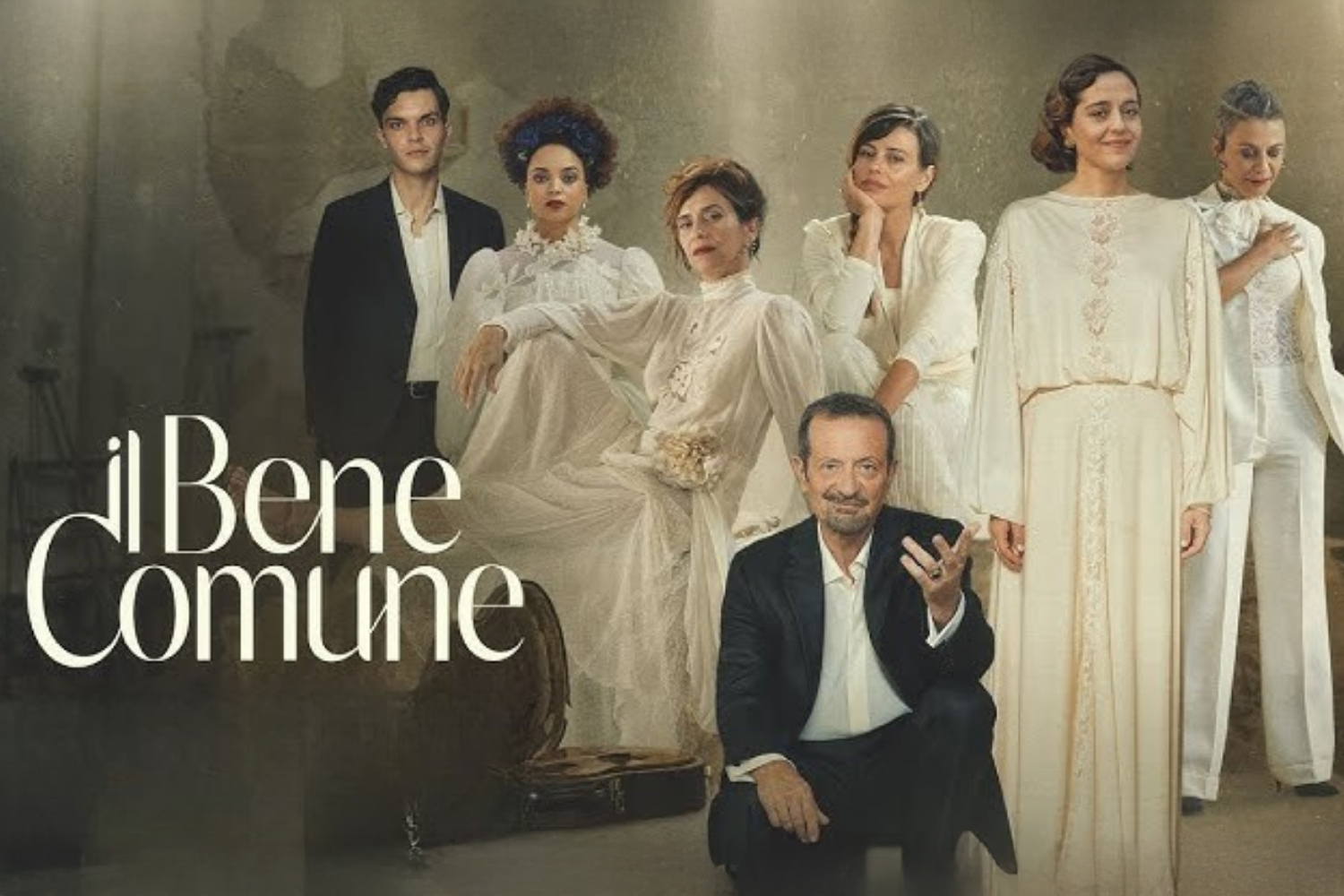
There is a moment, in Rocco Papaleo’s cinema, in which the journey stops being escape or return and becomes something else: a way to be together, even when being together is difficult, uncomfortable, even forced. The common good starts from here. Not from an abstract idea, but from a concrete and almost urgent question: what still keeps us united?
The film, released in March 2026, has its roots in the rough landscapes of the Pollino National Park, but avoids any postcard temptation. Nature is not just a backdrop, it is a living presence, measure and human counter-field. In a South marked by depopulation and social distance, Papaleo constructs a story that seeks relationships, not heroes. And he does it with a rare delicacy: no proclamations, no rhetoric, just people who meet and try, with difficulty, to understand each other.
The plot
The story is only apparently simple. Biagio, a shy and almost marginal hiking guide, accompanies four inmates on a “prize trip” towards the peaks of Pollino. It could be a narrative device, but instead it becomes a human device. Because along the way something breaks: the roles, first of all. Who observes and who is observed, who judges and who is judged, cease to be stable categories. Only exposed fragilities remain, without protections.
And it is here that the film finds its most authentic strength: in the rediscovery of empathy. Not the easy, consolatory one, but the one that comes from being in the same space, from sharing effort, silences, small gestures. The protagonists – played by Vanessa Scalera, Claudia Pandolfi, Teresa Saponangelo and Rosanna Sparapano – are not looking for redemption, and perhaps this is precisely what makes them credible. They don’t ask to be absolved, but to be seen.
Papaleo, for his part, chooses to avoid it. His Biagio speaks little, observes a lot, leaves space. It is a direction that renounces control to open gaps: between the surreal, lopsided dialogues, sudden musical deviations, and an almost documentary dimension, made of light, wind, stone, a fragile but successful balance.
The loricated pine
And then there is the symbol, never intrusive but always present: the loricated pine. An ancient, resistant tree, capable of surviving frost and lightning, it becomes a metaphor that does not need to be explained. Those women, like that tree, carry armor on them, which is not used to defend, but to remember and survive.
This “dinosaur of trees”, symbol of the Pollino National Park, lives where almost nothing can resist: above a thousand metres, on limestone rocks, bent by the wind and frost. Its bark, divided into plates that resemble ancient armor, is not just a botanical detail, but a statement of survival. It is a tree that carries time, holds it in its twisted and almost sculptural forms, and returns it as a living memory. In this sense, in the film it becomes much more than a destination: it is a mirror image of the protagonists, bodies and stories marked, “armored” by necessity, but capable of remaining standing even when everything around them gives way. The loricato pine does not console or beautify: it resists. And it is precisely this resistance, silent and stubborn, that transforms him into the true symbolic heart of the story.
The common good it’s not a perfect film, and fortunately so. It has rough edges, suspended moments, imperfections that make it come alive. But it is precisely in these cracks that its deepest meaning infiltrates: to remind us that empathy is not an idea to be celebrated, it is a practice to be exercised. And that perhaps, today, the true “common good” is still this, the ability to tell our story, to recognize ourselves in others, even when they seem very distant from us.
