
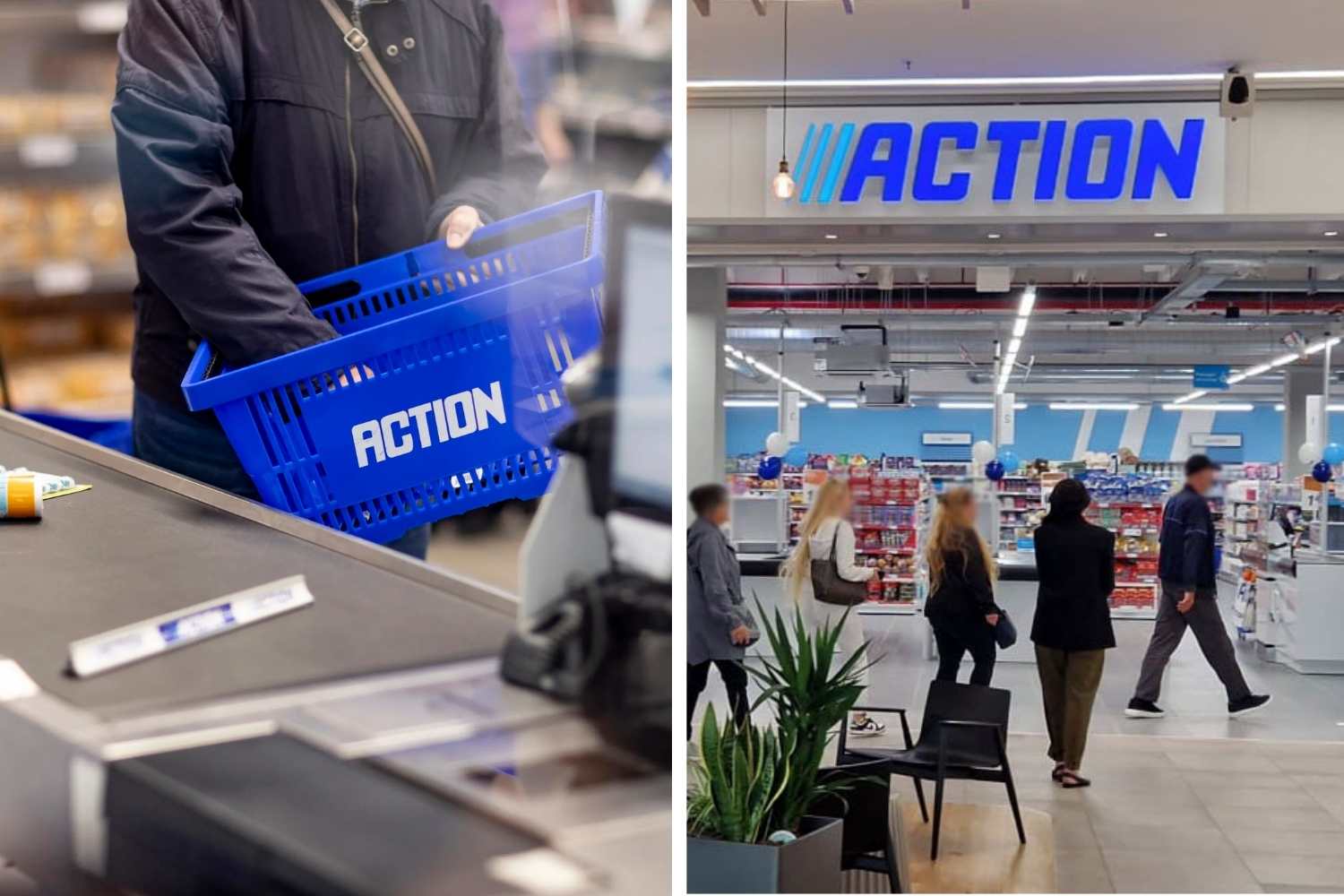
You come in to buy a candle, a kitchen container or a pack of detergent. Then you find yourself browsing the shelves looking for something you didn’t need just a few minutes before.
It is a scene that is repeated more and more often in Action stores, the Dutch chain that has won over millions of customers in Europe in recent years. The reason for the success is not just the low price: the Action model works because it transforms the purchase into a continuous search for bargains.
At Action you often don’t enter with a precise list, you enter to see what’s there.
In the world of retail this mechanism is called “treasure hunt shopping”. The customer does not come to necessarily look for a specific product, but to find out if there is something on the shelves worth buying.
It can be a home accessory, a seasonal product, a craft item or something that seems convenient because it might not be available next time.
A constantly changing assortment
One of the central elements of the Action model is product rotation. Not everything stays on the shelves for months: some of the assortment changes quickly and this keeps many customers coming back.
According to Reuters, around two-thirds of the items sold by Action are priced under 2 euros. The chain works with a very wide assortment, consisting of products for the home, DIY, leisure, stationery, decorations and seasonal items.
The difference compared to a traditional supermarket is precisely this. When you go food shopping, in most cases you already know what you need. At Action the path is less predictable: you pass through different departments and can leave with products that you hadn’t taken into account.
The product you weren’t looking for becomes the one you buy
The underlying mechanism is simple: finding an opportunity gives a feeling of convenience. A cheap object is not only valued for its usefulness, but also for the idea of having obtained a bargain. It’s different from buying online, where you search for a specific product, compare prices and reviews and then proceed with the order. In the physical store a random element comes into play. You don’t know what you’ll find and that’s why you keep looking.
This model has found fertile ground in recent years, as rising prices have pushed many people to look for cheaper alternatives. Spending little has become an important criterion, but it is not the only one: the possibility of treating yourself to something without feeling like you have spent too much also counts.
Because Action also works in the age of online shopping
Action’s growth also speaks to a shift in the way we shop. While many products are now bought online, some physical stores focus on something that e-commerce can hardly replicate: random discovery.
On the internet you normally search for what you need. At Action you can enter without knowing exactly what you are looking for. It’s why many people end up buying an item they hadn’t planned on buying: not because it was necessary, but because it seemed like an opportunity they couldn’t miss.
The problem of cheap objects
However, Action’s success also opens up a broader question about our relationship with consumption. On the one hand, the model responds to a concrete need: finding accessible products at a time when many families are paying attention to their expenses. On the other hand, the continuous availability of cheap objects can encourage more frequent and less reasoned purchases.
The point is not just how much a product costs, but also how much we will use it and how long it will last. Because the real phenomenon described by Action perhaps does not just concern a shop where you can find cheap products. It talks about a different way of buying: less linked to necessity and more to the possibility of finding something new every time.
