
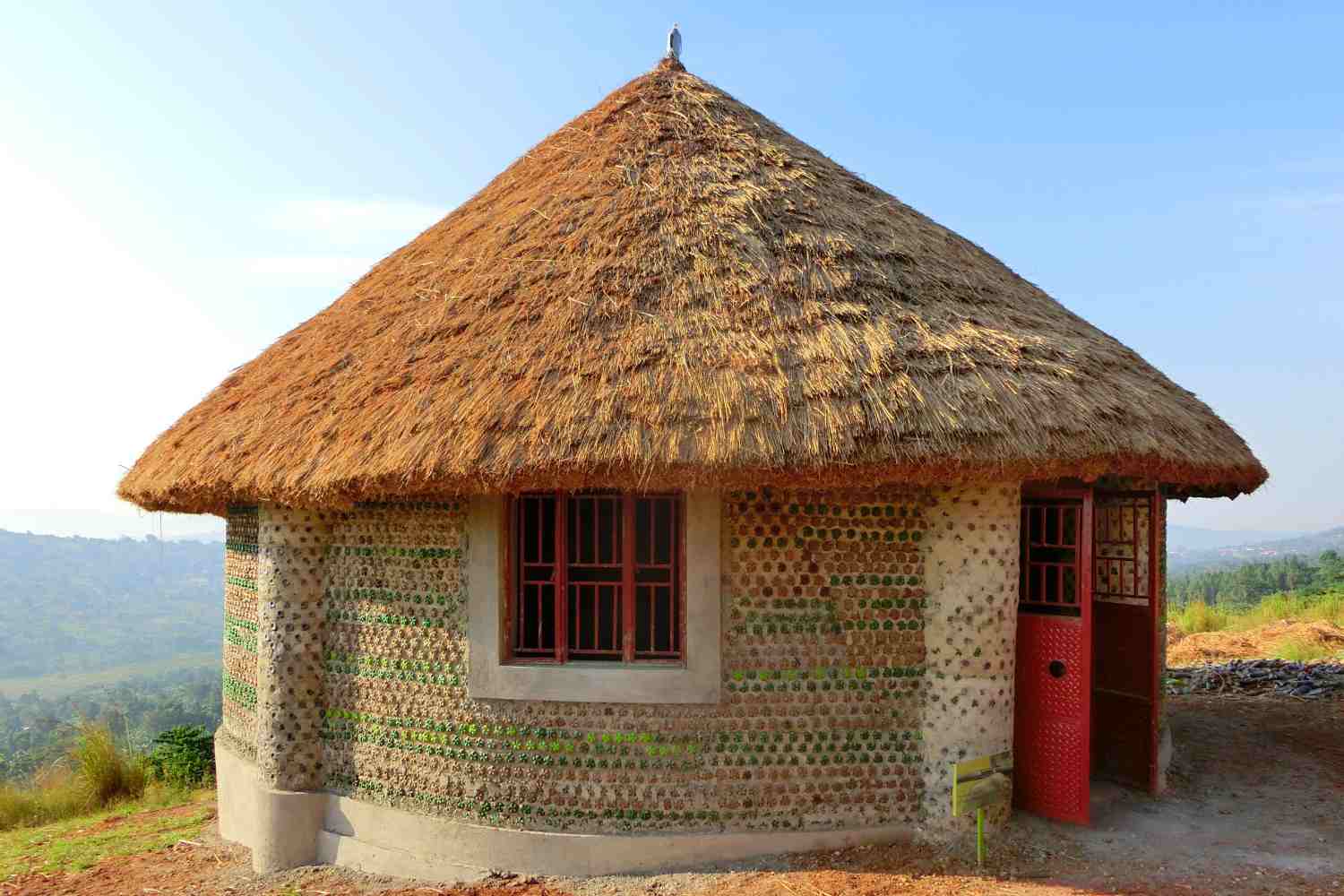
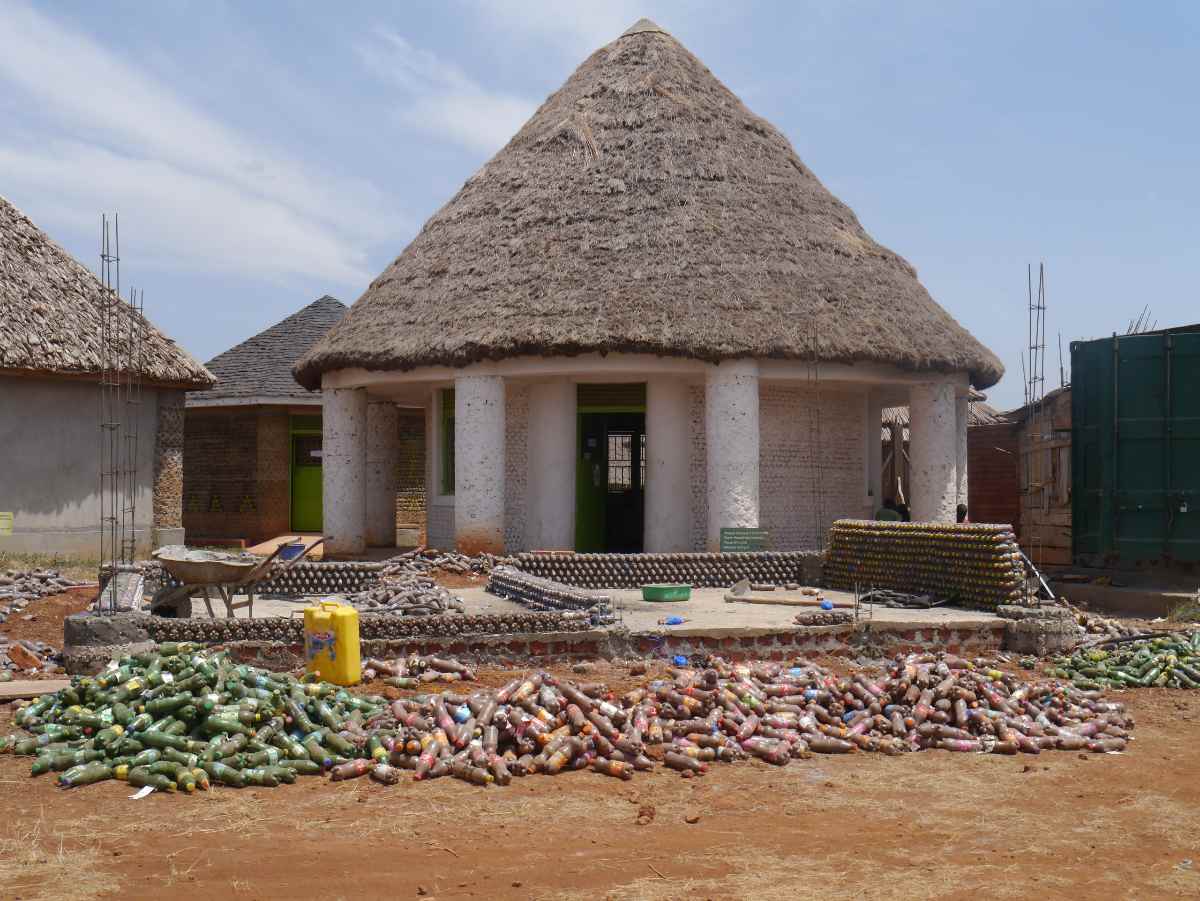
In Uganda, where youth unemployment is high and the management of non -existent waste, an innovative idea is transforming environmental and social problems into opportunities. The Pendeza Shelters organization, founded in 2022 by David Mondoy, builds homes and community spaces using 18,000 recycled plastic bottles for each structure. These Eco-Bricks not only reduce pollution, but offer safe, resistant and thermo-insulating houses.
A project that combines environment and inclusion
Pendeza Shelters’ goal is not limited to construction: the organization forms women and young people in recycling techniques and waste management, offering useful skills to start new activities. Thanks to the collaboration with the Gejja Women Foundation, spaces such as the Empowerment Room have been created, where reusable absorbents are produced, giving work to women with disabilities and solving a health and hygiene problem for many girls.
The structures are not only delivered: often it is the same beneficiaries that collect, order and compact the bottles, becoming the protagonists of the change. To date, over 230 women and young people have found direct employment as collectors, manufacturers and craftsmen of recycled plastic products, such as bags and carbers.
A model that has been replicated
Pendeza Shelters’ success does not stop in Uganda: 40 structures have already been built in different countries of sub-Saharan Africa. Monthly production reaches 20,000 Eco-Bicks, with construction times of about three months to complete a house. Knowledge spreads from community to community, creating a network of trained people ready to replicate the model.
Benefits for the environment and for people
Each recycled bottle prevents plastic and microplastics from finishing in rivers and lakes, protecting biodiversity and public health. At the same time, the houses built improve the quality of life, ensuring safety, comfort and economic independence to those who live them.
Today, the work of Pendeza Shelters and the Gejja Women Foundation shows that a problem like pollution can turn into an opportunity for redemption. With new structures under construction, the mission is clear: free the environment from plastic and give a better future to the most vulnerable communities.
Don’t you want to lose our news?
You may also be interested in:
