
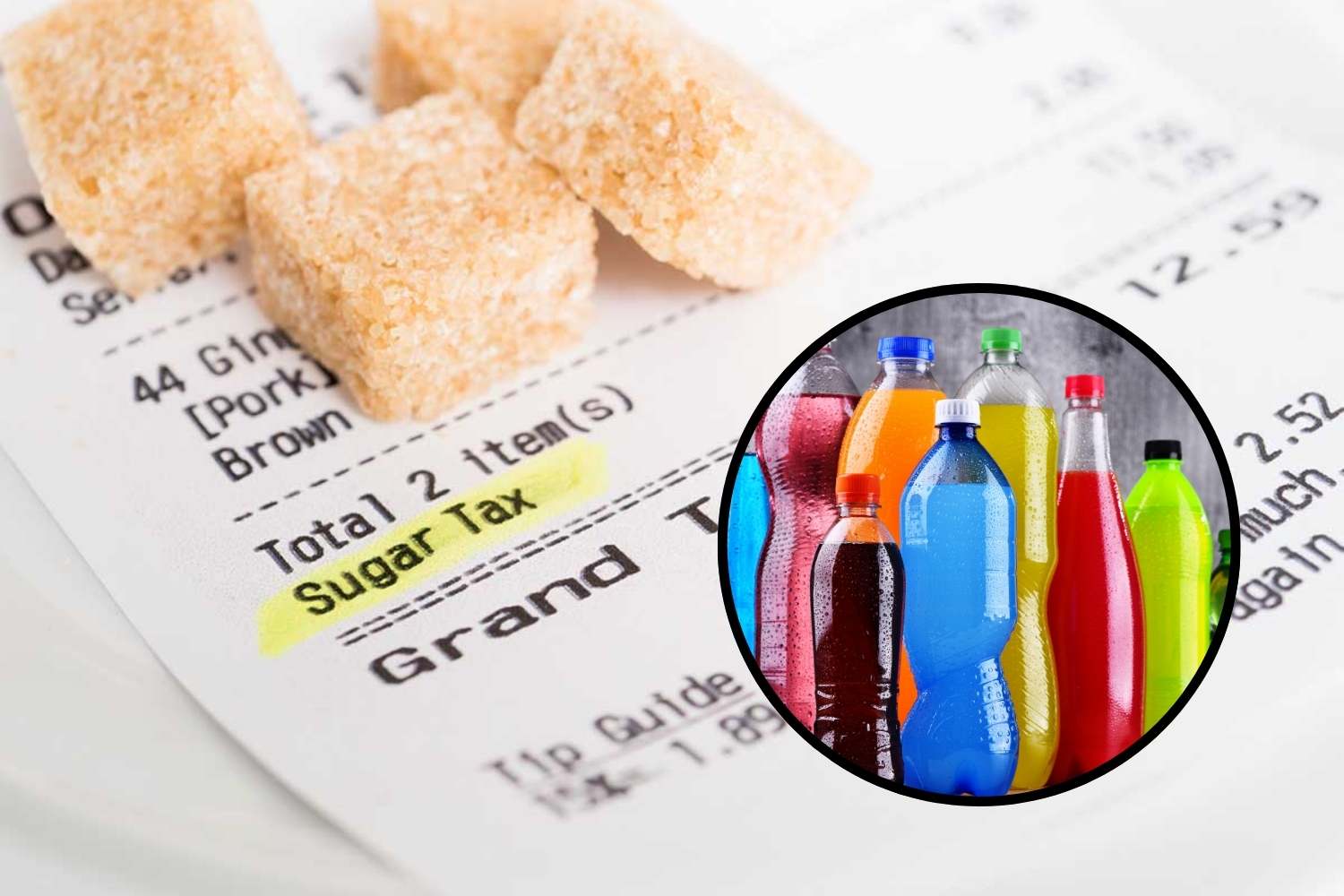
Germany is preparing to get serious about the abuse of sugar in products. The Minister-President of Schleswig-Holstein, Daniel Günther, has brought to the Bundesrat – the German upper house – a proposal to introduce a tax on sugary drinks and ban the sale of energy drinks to children under 16. It’s not the first time this has been talked about, but this time the political front in favor seems to have widened.
The reason is simple: the social costs of excessive sugar consumption are enormous. A Greenpeace study estimated that sugar-related illnesses cost Germany nearly 12 billion euros a year. Another research, conducted by the Technical University of Munich, calculated that a tax modeled on the British one could prevent up to 244 thousand cases of type 2 diabetes over twenty years, with a potential saving of 16 billion euros.
The proposal is not limited to the sugar tax but also aims to ban the sale of energy drinks to children under 16. The reasons? Energy drinks contain high levels of caffeine, taurine and sugar, a combination that can have serious effects on the growing body.
These are not harmless, trendy drinks. – declared Günther – They can become a real problem, especially for young people.
However, there is no shortage of dissenting voices. The German sugar industry argues that the tax creates the false impression that a single ingredient is responsible for obesity and that it could push manufacturers to replace sugar with artificial sweeteners without improving public health.
The British model works
Anyone who thinks the sugar tax is just another tax would do well to look at what has happened in the UK. The British experiment was successful: consumption of soft drinks fell by a third, and the sugar content in many drinks was reduced by the producers themselves, who reformulated their products to avoid paying the tax. Official data from the Office for Health Improvement and Disparities shows that between 2015 and 2024 the percentage of products with sugar equal to or less than 5g per 100ml rose from 67 to 91%, a clear sign that companies have adapted.
A study published in PLOS Medicine found that the UK tax is associated with an 8% reduction in obesity in 10- and 11-year-old girls, equivalent to around 5,200 fewer cases each year. Researchers also documented reductions in hospital admissions for tooth extractions in children and benefits related to reductions in overall sugar consumption.
Not only that, the British government recently decided to update the tax to reflect inflation and to launch a review to evaluate whether to extend its scope to other categories of drinks, a sign that the measure is considered a success to be consolidated, not an experiment to be shelved.
Europe is moving
Germany would not start from scratch. In Europe, at least ten countries have already introduced forms of taxation on sugary drinks, with different approaches: volumetric taxes (a fixed amount per litre, regardless of the sugar content) or graduated taxes based on the amount of sugar present. Among the countries that have adopted them are France, Portugal, Ireland, Belgium, Hungary, Latvia, Lithuania and Norway.
The European Union, however, does not have a common policy on the subject: the European Commission has recently taken a step back from the idea of introducing taxes at EU level on ultra-processed foods, leaving the responsibility to act to individual national governments. A missed opportunity, according to many public health experts.
And Italy?
Our country also has a sugar tax, but only on paper. Introduced by the Conte government in 2019 and included in the 2020 budget, it has been postponed eight times amid pressure from the industry and political resistance. The Italian tax provides for a tax of 10 euros per hectolitre on drinks with more than 25 grams of sugar per litre, applied to producers, sellers and importers. According to simulations, it could lead to an average reduction of 18% in the consumption of sugary drinks. Yet it continues to slide.
If Germany succeeds, it could lead the way for a more decisive push also at the European level. And maybe also convince our country to stop procrastinating.
