
Campo Grande, with the Pantanal remaining there as a reminder of how nature moves through connections and not through borders, hosted the UN summit on migratory species with a significant number: the final statement of the CMS Convention speaks of 40 species, subspecies and populations included or reclassified in Annexes I and II. Inside there are large land mammals, pelagic birds, waders, freshwater fish and sharks that pass from one jurisdiction to another with the same indifference with which they cross a current, a season, a sea.
The meaning of the attachments, here, must be brought back to earth. Appendix I means species in danger of extinction, with much stricter protection obligations. Appendix II instead concerns species that need international cooperation throughout their range: shared monitoring, common plans, coordinated protection of habitats and routes. It’s the type of architecture that’s needed when an animal nests on an island, feeds in international waters, and then passes through the economic zones of multiple countries.
The Brazilian summit touched on animals that were very distant from each other. The final statement cites the Zimbabwean population of the cheetah, the striped hyena, the snowy owl, the giant otter, the Patagonian broad-nosed dogfish, the spotted surubim, three thresher sharks, two hammerhead sharks, the rose-legged shearwater, the Iberá capuchin, the Hudson’s curlew, the Hudson’s godwit and the lesser yellowlegs. Next to these names is the largest block of the vertex, that of the gadfly petrels of the genera Pterodroma And Pseudobulweriawhich ACAP indicates in 26 taxa approved in Campo Grande.
A longer and very concrete list
Here a small crack in the documents opens up which is worth leaving visible. The final summary of the CMS speaks of 40 items in total. The dossier dedicated to petrels, also relaunched by ACAP, however, develops 26 taxa alone; by crossing it with the other names explained in the final press release, a broader and more detailed list of names is reconstructed.
The difference seems to arise from the way the Petrelli bloc was summarized in the post-summit summaries. For this reason, a more extensive nominative reconstruction appears below, especially for the block of gadfly petrels.
- Cheetah, population of Zimbabwe (Acinonyx jubatus)
- Striped hyena (Hyaena hyaena)
- Snowy Owl (Bubo scandiacus)
- Rose-legged Shearwater (Ardenna carneipes)
- Iberá cappuccino (Sporophila iberaensis)
- Hudson’s curlew (Numenius phaeopus hudsonicus)
- Hudson’s Godwit (Limosa haemastica)
- Lesser yellow-legged squid (Tringa flavipes)
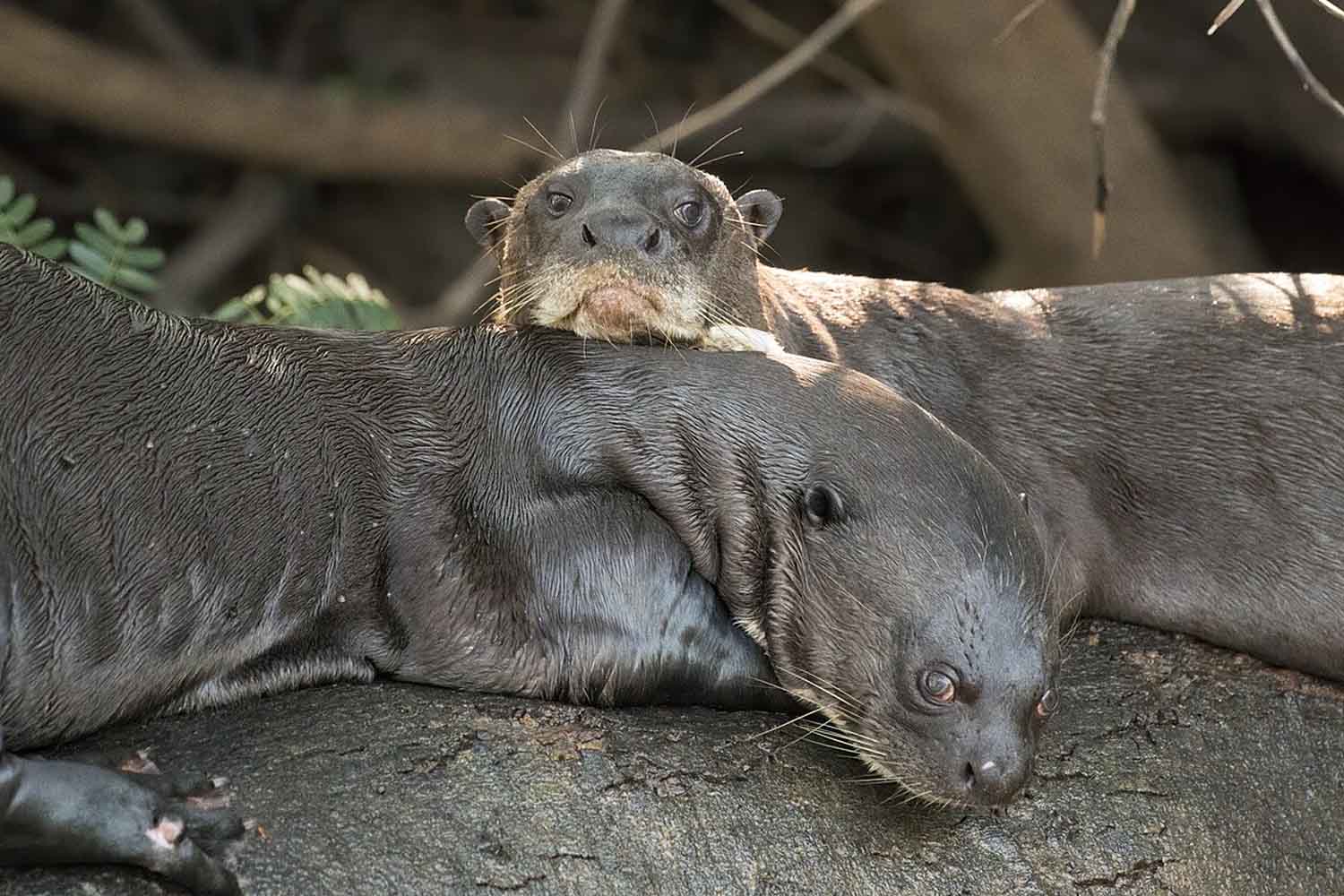
- Giant otter (Pteronura brasiliensis)
- Patagonian long-nosed dogfish (Mustelus schmitti)
- Spotted Surubim (Pseudoplatystoma corruscans)
- Pelagic thresher shark (Alopias pelagicus)
- Bigeye thresher shark (Alopias superciliosus)
- Common thresher shark (Alopias vulpinus)
- Scalloped hammerhead shark (Sphyrna lewini)
- Great hammerhead shark (Sphyrna mokarran)
- Fiji Petrel (Pseudobulweria macgillivrayi)
- Petrel of Réunion (Pseudobulweria aterrima)
- Beck’s Petrello (Pseudobulweria becki)
- Tahitian petrel (Pseudobulweria rostrata)
- White petrel (Pterodroma alba)
- Petrel of Barau (Pterodroma baraui)
- Vanuatu white-necked petrel (Pterodroma cervicalis occulta)
- White-necked petrel (Pterodroma cervicalis cervicalis)
- Petrello by Juan Fernández (Pterodroma externa)
- Antillean petrel (Pterodroma hasitata)
- Petrel of Fea (Pterodroma feae)
- Desert Petrel (Pterodroma deserta)
- Madeira petrel (Pterodroma madeira)
- Magenta petrel / Taiko (Pterodroma magentae)
- Atlantic petrel (Pterodroma incerta)
- Masafuera’s petrel / Stejneger’s petrel (Pterodroma longirostris)
- North Island Cook’s Petrel (Pterodroma cookie cookieii)
- South Island Cook’s Petrel (Pterodroma cookii orientalis)
- Pycroft’s Petrel (Pterodroma pycrofti)
- Chatham Petrel (Pterodroma axillaris)
- Chilean Kermadec petrel (Pterodroma neglecta juana)
- Petrel of Trindade (Pterodroma arminjoniana)
- White-winged petrel, Australian population (Pterodroma leucoptera leucoptera)
- White-winged petrel, population of New Caledonia (Pterodroma leucoptera caledonica)
- Petrel collar (Pterodroma brevipes)
- Petrello by De Filippi / Masatierra (Pterodroma defilippiana)
Forty entries in the official summary, a few more in the reconstruction from the technical documents. The animals remain the same: they continue to follow routes, rivers, currents, nesting islands. The agreement doesn’t change their journey: it changes what humans are required to do as they travel through them. It’s not little, and it’s not enough.
You might also be interested in:
