
On June 21st the sun reaches the peak of its annual path and gives the northern hemisphere the longest day of the year. Today the summer solstice represents above all a symbolic date, an appointment that marks the beginning of the summer, thousands of years ago, however, it had a much more tangible meaning, because the cyclical return of the stars regulated the life of agricultural communities, indicated the time of sowing and harvesting, accompanied rites and celebrations that have been lost over time. After all, when we talk about the solstice and ancient monuments, our thoughts almost inevitably turn to Stonehenge, the famous English megalithic complex which every year attracts thousands of people to witness the sunrise on June 21st. Much less known is the fact that Italy also preserves prehistoric sites linked, to varying degrees, to the observation of the sky and its cycles. Menhirs, dolmens and stone sanctuaries scattered from the Aosta Valley to Sicily tell different stories and, in some cases, show documented links with the movements of the sun and moon. Other interpretations remain the subject of debate, and it is precisely this gray area, suspended between scientific research and the fascination of mystery, that makes these places particularly interesting.
Sacred Well of Santa Cristina
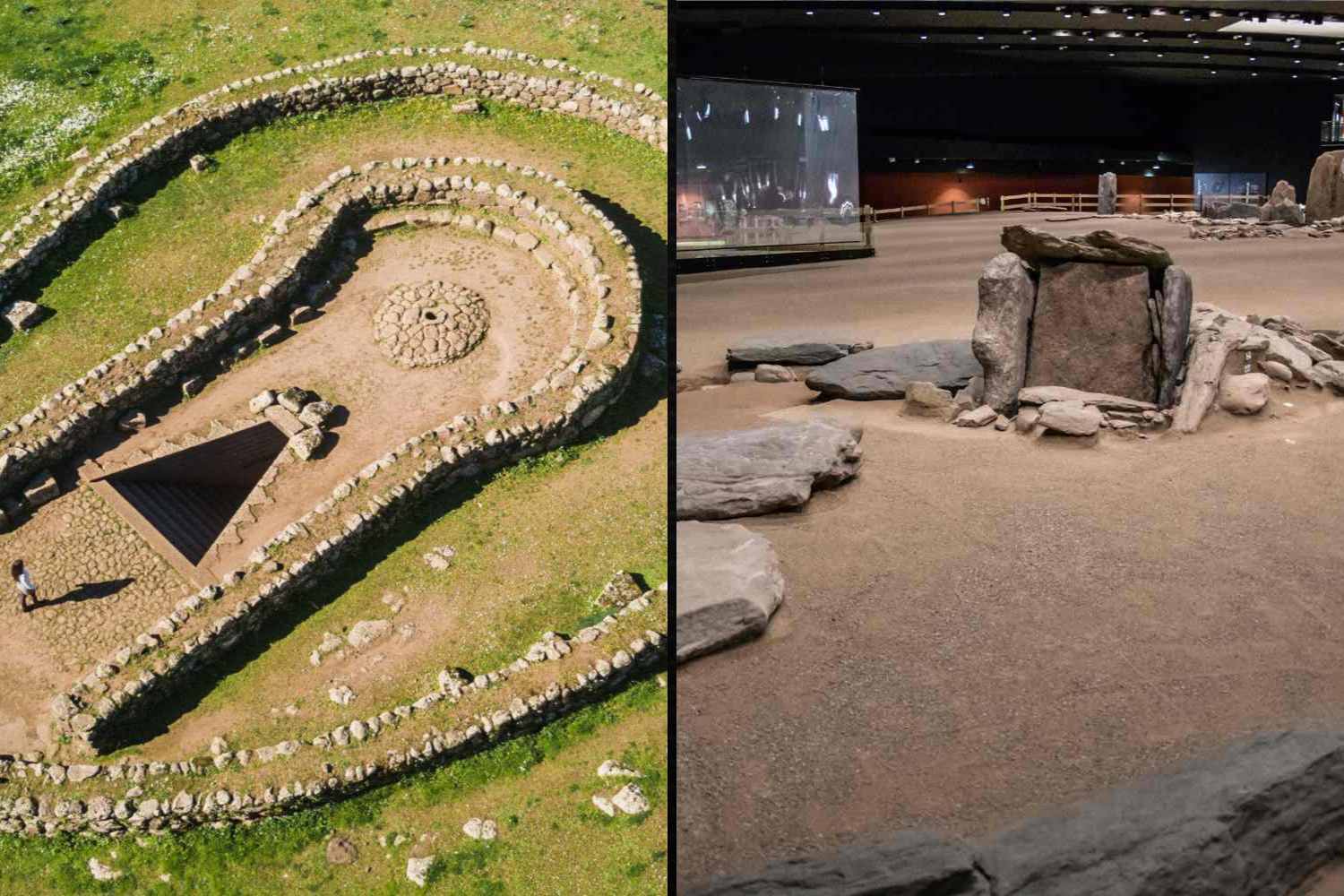
The Sacred Well of Santa Cristina, in the territory of Paulilatino, is one of the most refined masterpieces left by the Nuragic civilisation. In the Seventies, researchers Carlo Maxia and Lello Fadda, assisted by the astronomer Edoardo Proverbio, identified possible astronomical references. Over time the site has often been associated with the summer solstice, even if the reality appears more complex, and the center of scholarly attention is not so much the sun as the moon. According to the best known interpretations, the monument was designed to welcome sunlight during the equinoxes and lunar light on the occasion of the major lunistice, a phenomenon that repeats every 18.61 years. At that particular moment the moon reaches its maximum declination and its light is able to reflect on the water kept at the bottom of the well.
@pozzosantacristina.com
The scholar Arnold Lebeuf went so far as to define it as one of the most extraordinary astronomical observatories of antiquity. The debate, however, was never completely over. Some archaeologists believe that certain structures, now disappeared, could have limited or prevented the direct passage of light rays, technical issues that do not detract from the charm of the place. Even without particular astronomical effects, Santa Cristina remains one of the most evocative archaeological destinations in Sardinia.
Pranu Muttedu
Among the Sarcidano hills, in the municipality of Goni, we find one of the most extraordinary megalithic landscapes in the Mediterranean. Menhirs, mound tombs and sandstone outcrops are distributed in a natural context that still retains something primordial. There are approximately sixty monoliths registered, a number which alone is enough to explain the importance of the site. For years, archaeologists and scholars have been trying to understand whether the arrangement meets astronomical criteria or not. During the VI International Archaeoastronomy Conference, Michele Forteleoni of the Turritana Astronomical Society presented a study that connects some alignments not only to the sun but also to the movements of the moon.
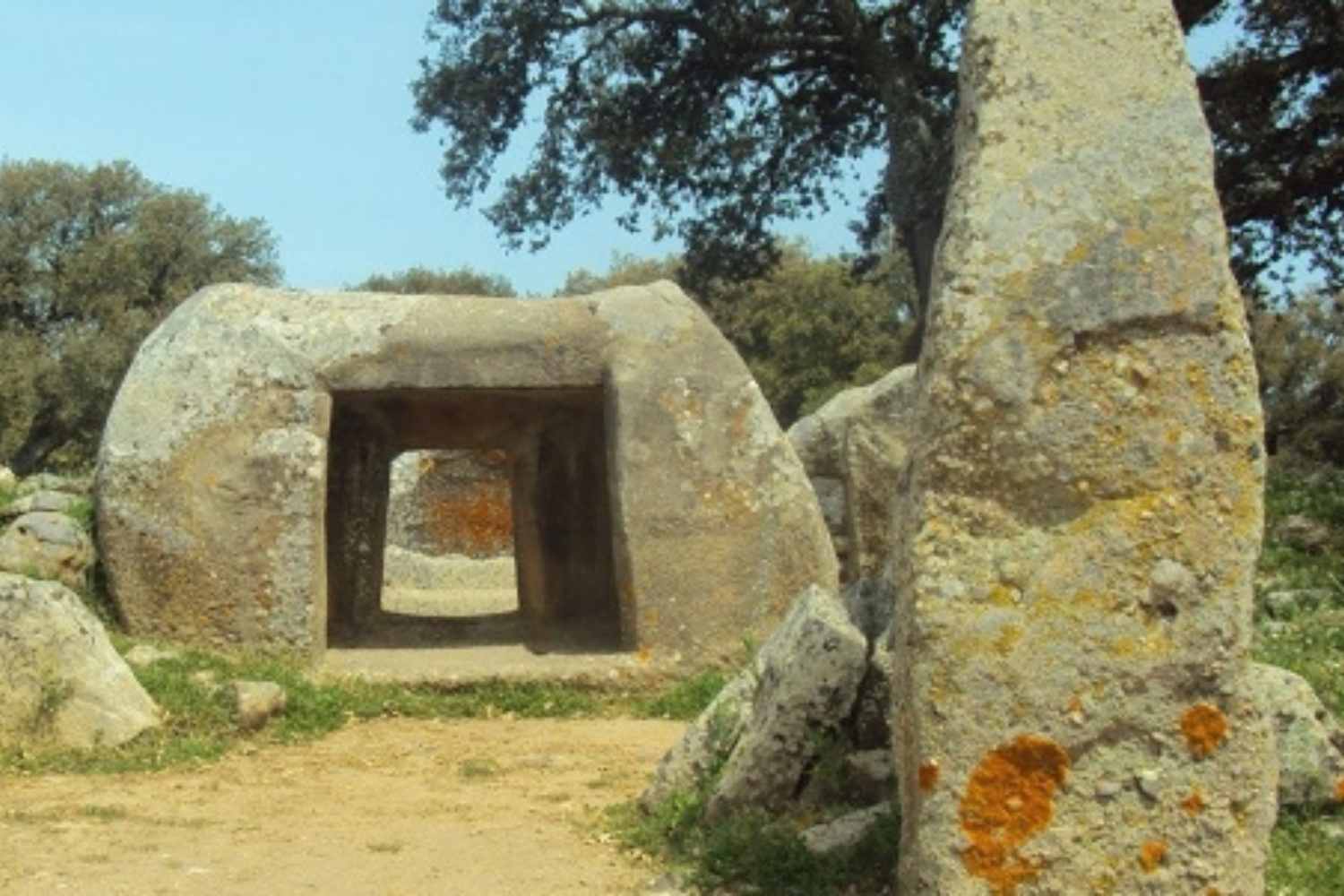
The most evident element consists of a series of eighteen menhirs placed along a line compatible with the east-west equinoctial axis, and it is precisely here that one of the most frequent limits of archaeoastronomical interpretations emerges. When the site was studied in modern times, many of the monoliths lay on the ground. They were raised later and there is no absolute certainty that they occupy their original position today. It is a detail that may seem marginal, but which changes things a lot when trying to verify the precision of astronomical alignments. At Pranu Mutteddu, therefore, both real data and still open questions coexist, in a balance that makes the complex even more fascinating.
Saint-Martin-de-Corléans
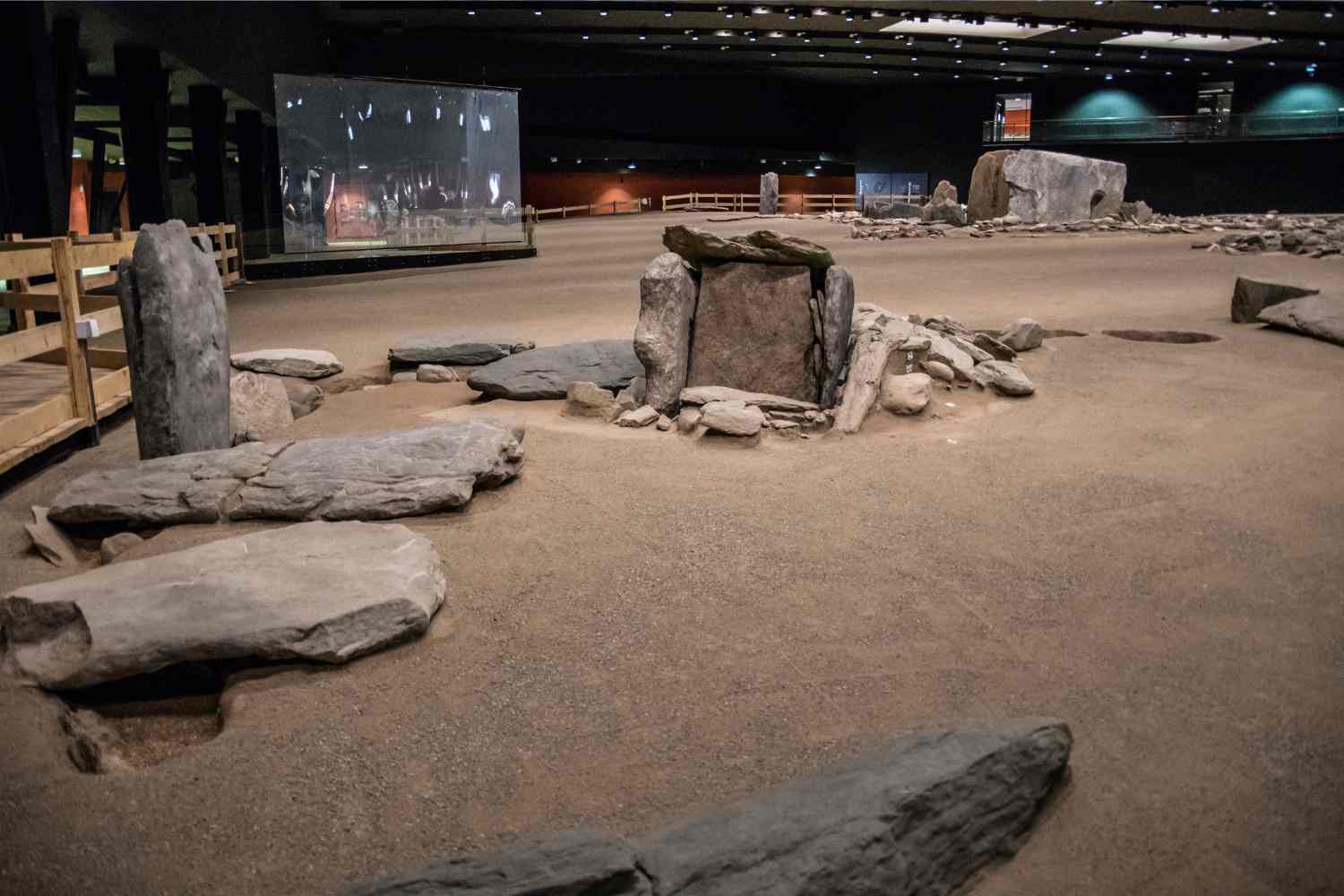
Visiting the city of Aosta it would be difficult to imagine that beneath the streets and modern buildings lies one of the most important megalithic sites in Europe, yet it is exactly like that. The excavations started in 1969 brought to light a sacred area that had been frequented for over six thousand years. The site, now a museum, occupies approximately ten thousand square meters and preserves an extraordinary succession of testimonies, consisting of ritual ploughings, wooden poles, anthropomorphic steles, wells and dolmen burials. In the 1990s Giuliano Romano and Guido Cossard, among the most important archaeoastronomy experts we have in Italy, carried out a series of archaeoastronomical surveys to analyze the orientations of the structures and the profile of the surrounding mountains. Also in this case the results seem to indicate a privileged relationship with the moon rather than with the sun.
@flickr.com
Beyond the interpretations, Saint-Martin-de-Corléans strikes us above all for the experience he brings. Going down the exhibition route means crossing thousands of years of history, one layer after another, as if time had remained trapped beneath the contemporary city.
Giurdignano
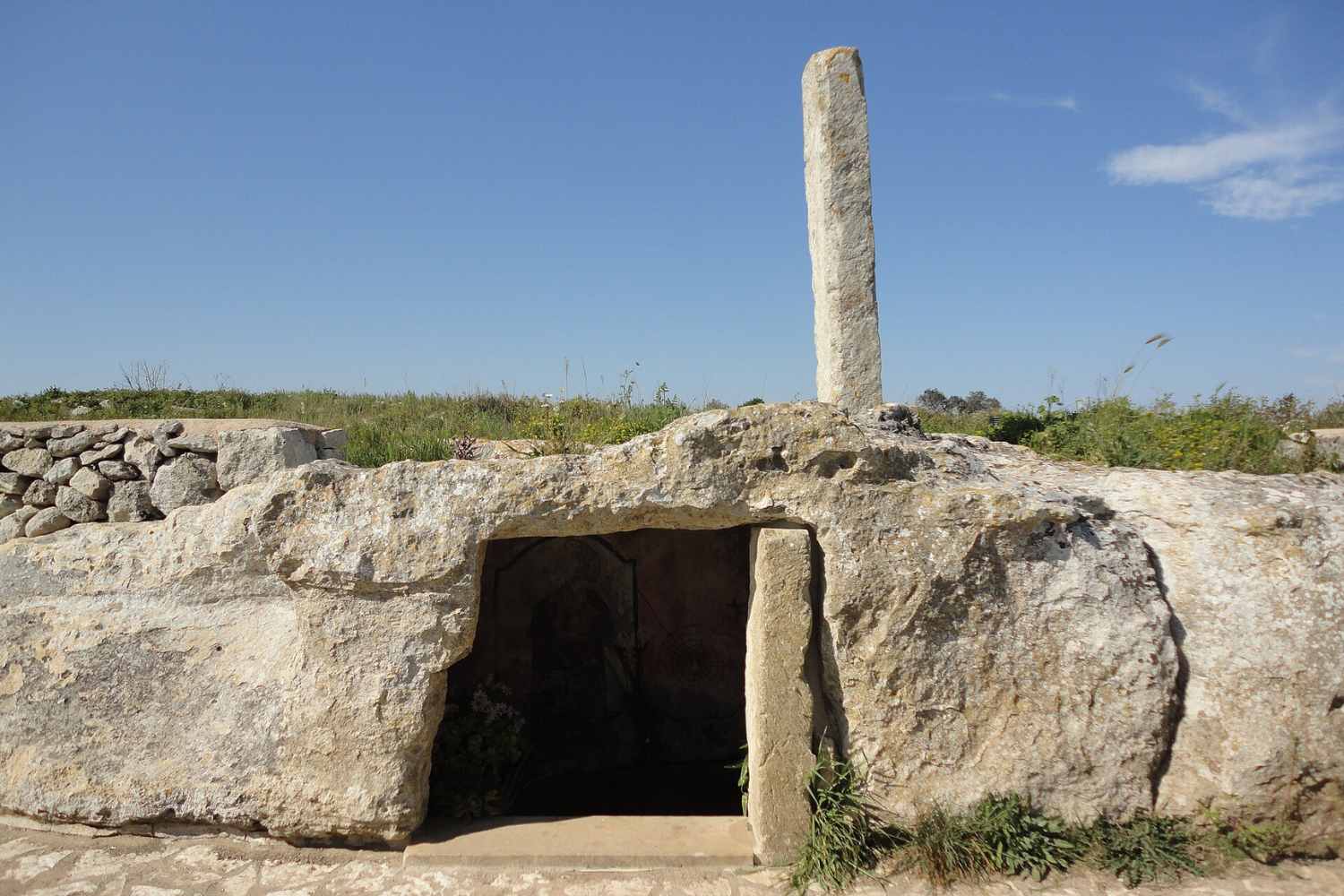
Located a few kilometers from Otranto, the Giurdignano site is often referred to as the “megalithic garden of Italy”. In the municipal territory there are eighteen menhirs and seven dolmens, to which are added other monuments still under study. In this case the relationship with the solstice does not belong only to hypotheses, given that on the Li Scusi dolmen, in the nearby area of Minervino di Lecce, the sunlight passes through the hole in the roofing slab and creates a luminous effect that can be observed precisely on the day of the summer solstice. The Stabile dolmen is also associated with a similar phenomenon: two engravings on the upper slab seem to indicate the point on the horizon where the sun, on 21 June, rises from Capo d’Otranto.
@commons.wikimedia.org
For lovers of getting up early, there is even a simple way to verify these interpretations in person, that is, showing up at dawn and watching the sun rise. On the other hand, when it comes to archaeoastronomy, no explanation can replace direct experience.
Argimusco
The Argimusco plateau, between Montalbano Elicona and the Nebrodi, has something magnetic about it, and you just need to get there to understand why someone thought of comparing it to Stonehenge. The large rocks that dot the landscape resemble human profiles, animal figures and shapes that seem intentionally sculpted. In reality, scholars agree on one point: they are blocks of quartz sandstone shaped by the natural action of wind and water. From here onwards the uncertainties begin, because the site has never been investigated through systematic archaeological excavations and therefore decisive elements are missing to establish the extent to which any human interventions have had an impact. Among the main supporters of an astronomical reading is Gaetano Maurizio Pantano, who has studied the rising of the sun during the summer solstice for years and attributes particular symbolic meanings to some rock formations present in the area.
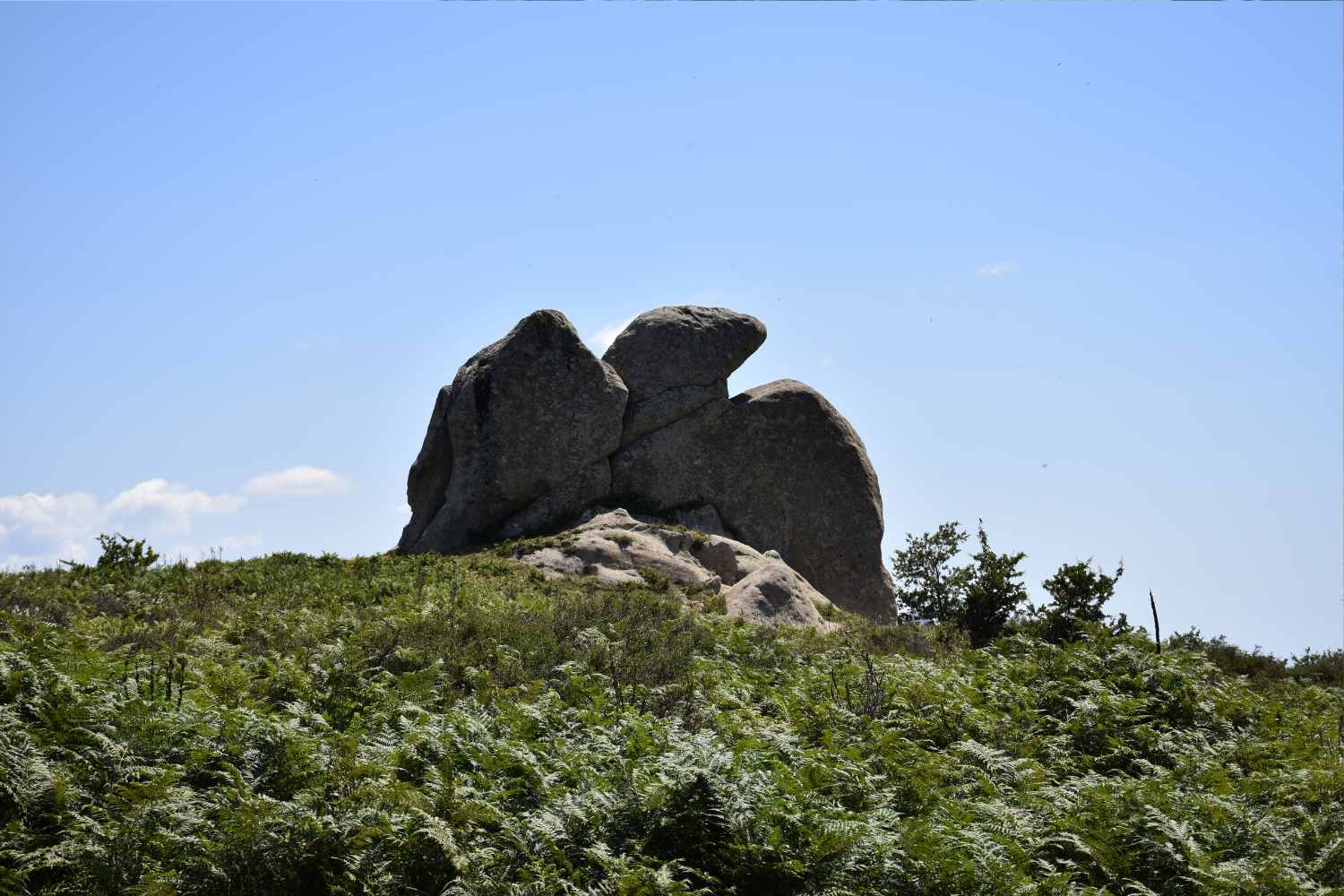
Hypotheses exist, certainties much less so, and perhaps this is precisely the secret of Argimusco, especially in an era in which every place seems to have to be, from a cognitive point of view, immediately accessible. In the meantime, the site guarantees one of the most spectacular views of the island, with a view that extends from Etna to the Aeolian Islands up to Capo Milazzo.
