
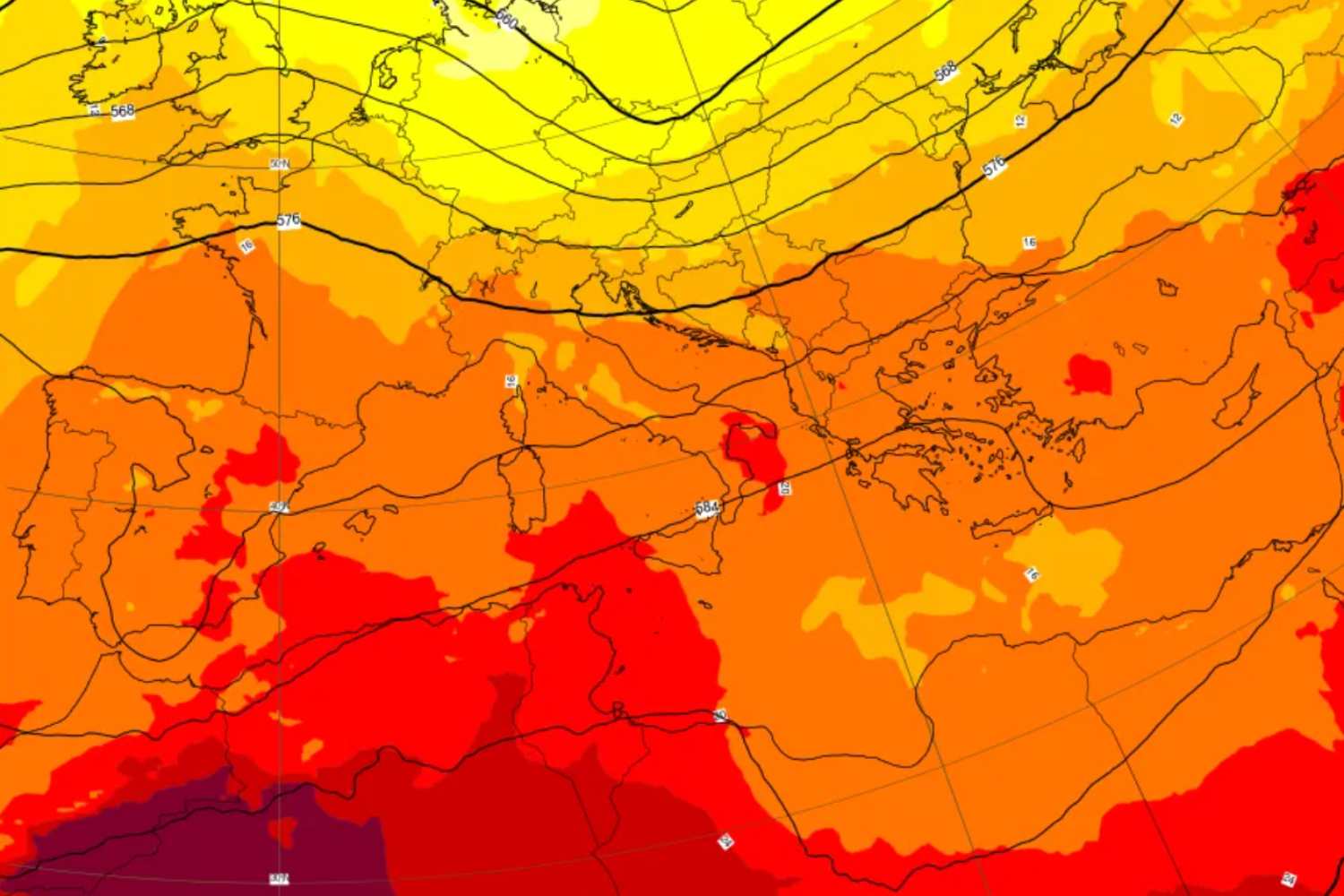
The continent faces the peak of the heat wave
Europe experiences one of the most intense heat waves ever recorded in early summer. According to an analysis by Agence France-Presse (AFP) based on meteorological data from the German Meteorological Service (DWD), at least 193 million Europeans were exposed to temperatures above 35 degrees on Saturday, a sharp increase compared to previous days. The peak of the emergency is expected between Sunday and Monday, while the hot air mass continues to move towards central and eastern Europe.
The seriousness of the situation is illustrated by the records falling in various countries. In Denmark, 36.6 degrees were reached in Odense, the highest temperature ever recorded in the country. In Germany the thermometers have exceeded 41 degrees, while France, the United Kingdom, Belgium, the Netherlands and Switzerland are dealing with exceptional values for the month of June.
Italy on alert: red stickers and tropical nights
Italy is also gripped by the heat. The Ministry of Health has issued the maximum alert level in numerous cities, while several regions are recording temperatures close to 40 degrees.
In Alto Adige, Bolzano experienced the hottest June night since meteorological records began: the thermometer did not drop below 25.4 degrees. In Sardinia temperatures in the internal plains reached peaks of 40-41 degrees. In Genoa, the Bigo panoramic lift, without air conditioning, was stopped for safety reasons, while in Milan the Pride marched regularly despite the almost 40 degrees it felt at the start.
The heat wave also had consequences on the calendar of events. Loredana Bertè canceled the concert scheduled in Bergamo, explaining that performing in such conditions would have posed a real risk to one’s health.
The heat is scary: up to 12 thousand excess deaths in three days
The greatest concern, however, concerns the health effects. A study published by The Economist estimates that between June 24 and 26, extreme heat may have caused around 12,000 excess deaths in Europe. The analysis is based on predicted temperatures in 854 European cities and on epidemiological models developed by the London School of Hygiene & Tropical Medicine to assess the relationship between heat and mortality.
The most vulnerable people are the elderly, the frail and those who live in densely built urban areas, where night temperatures remain high and prevent the body from recovering from thermal stress.
France under pressure
Among the most affected countries is France, where the heat wave affects almost the entire national territory. According to Santé Publique France, 90 departments were placed on alert and more than 90% of the population was affected by exceptionally hot conditions.
Health authorities report a sharp increase in access to emergency services and hospitalizations related to high temperatures. Several public events, including some Pride and outdoor festivals, have been canceled or scaled back for safety reasons.
The role of climate change
According to the international scientific consortium World Weather Attribution, a heat wave of this intensity would have been virtually impossible without global warming caused by human activities. Scholars estimate that similar events are up to a hundred times more likely today than a few decades ago and that temperatures have been amplified by several degrees by the accumulation of greenhouse gases in the atmosphere.
Europe is the fastest warming continent in the world and experts warn that extreme heat waves, once considered exceptional, risk becoming increasingly frequent and intense. The consequences affect not only public health, but also agriculture, infrastructure, water availability and the economy.
