
Opening the fridge and thinking “I need a protein” seems like a simple thing. An egg, a plate of beans, a handful of almonds, a slice of lean meat: in many food tables they end up in the same mental box. The body, however, reads those boxes with less bureaucratic patience.
The comparison between animal and vegetable proteins starts right here: from the distance between what appears equivalent on paper and what really becomes available in the blood after a meal. A study published in Nutrients in 2023 compared four very common foods: lean pork loin, scrambled eggs, black beans and raw slivered almonds. The question was concrete: for the same portion, how much of the essential amino acids actually reaches the circulation?
Essential amino acids are those that the body does not produce on its own. They must be introduced with nutrition and participate in the construction and maintenance of body proteins, including muscles. Here the detail stops being for experts: counting the grams of protein helps, of course, but the quality of the source and its biological availability change the result a lot.
The table says the same, the body does its own calculations
The work starts from a system used in US food guidelines, that of equivalent portions in ounces. In practice, very different foods are compared using a simplified measurement: an ounce of meat, a whole egg, a quarter cup of cooked beans or half an ounce of dried fruit can fit into the same practical scheme. Convenient for orientation. Less comfortable when you expect him to tell everything.
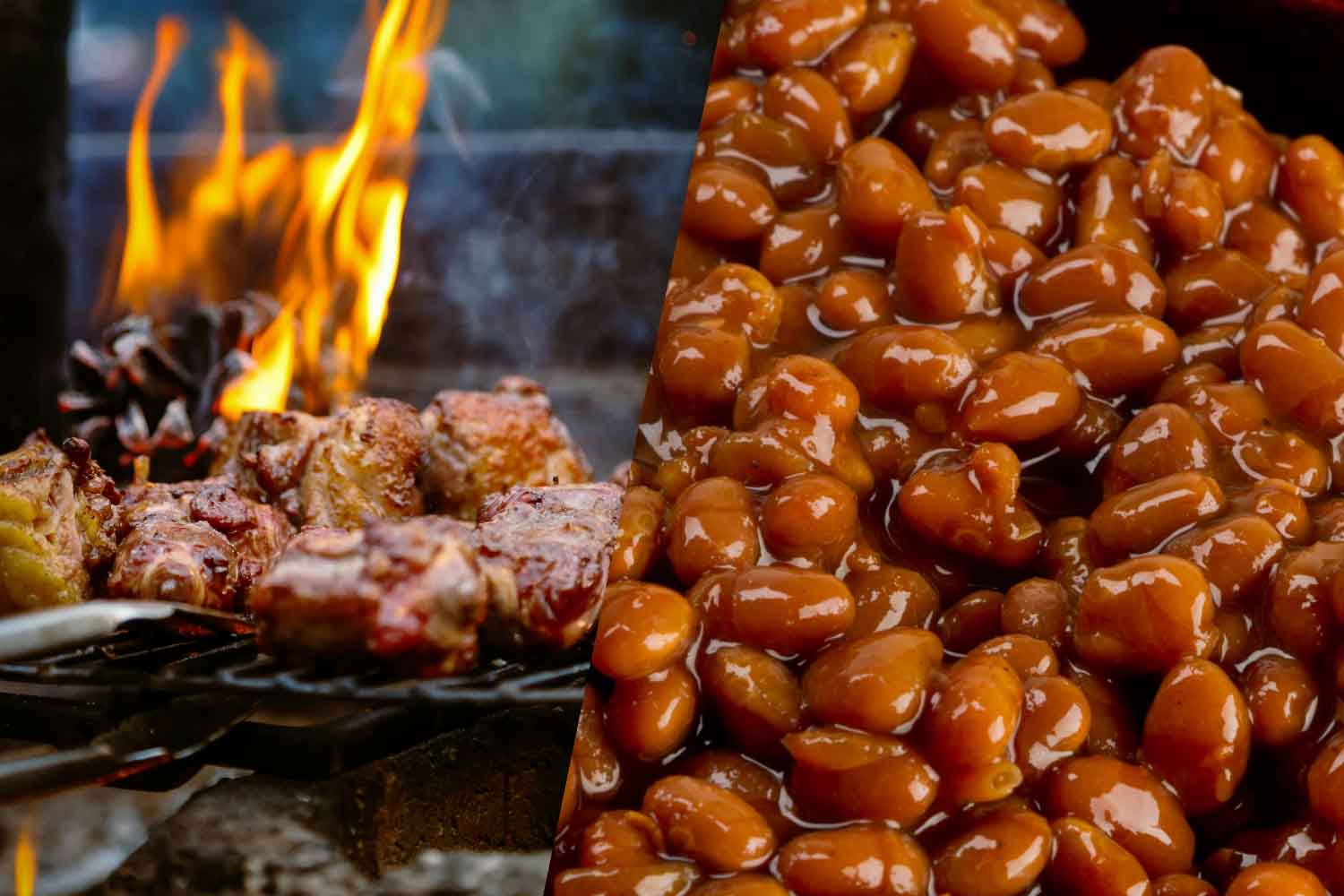
In the study, the researchers used a standard meal and paired it, from time to time, with two equivalent portions of one of four foods. The lean loin added 14 grams of protein and 7.36 grams of essential amino acids. Whole eggs 12.5 grams of protein and 5.38 grams of essential amino acids. Black beans 7.5 grams of protein and 3.02 grams of essential amino acids. Almonds 6 grams of protein and 1.85 grams of essential amino acids.
Already the word “equivalent” is starting to lose a bit of its lustre. The portion may seem the same in the counting system, but inside the plate everything changes: calories, fats, carbohydrates, fibre, total proteins and essential amino acids.
The study involved two groups: 30 young adults and 25 older adults, all in good health. Each participant completed four 300-minute sessions, separated by at least three days. After each meal, the researchers took blood samples before eating and then at 30, 60, 120, 180, 240 and 300 minutes, measuring the availability of essential amino acids, as well as blood sugar and insulin.
The main result is clear: the two animal sources tested, i.e. lean pork and eggs, produced a greater availability of essential amino acids compared to the two plant sources tested, black beans and almonds. The loin also showed higher values than the eggs. Between beans and almonds, however, the differences were not significant.
Before turning it into a plate war
At this point the temptation is to start with the usual derby: meat against legumes, eggs against almonds, omnivores against vegetables. That would be the quickest way to ruin an interesting piece of data.
The study says one precise and limited thing: in that context, with those portions and in the five hours following the meal, some animal proteins made more essential amino acids available than some whole plant proteins. It does not say that legumes are useless, nor that a diet rich in plant foods is poor by definition.
There are also important limitations. The sample was small. The researchers measured amino acids in the blood after the meal, not long-term muscle growth. Muscle protein synthesis or strength were not directly measured. The authors themselves point out that the portions used may not perfectly represent what people actually eat in daily life.
A detail should also be added: the work was financed by organizations linked to the pork and egg sectors. This does not cancel the results, but it invites us to read them with the sobriety that should be mandatory in nutrition.
A systematic review published in 2025, based on 43 randomized trials, added a useful nuance: animal proteins showed a small favorable effect on muscle mass compared to plant proteins overall, especially in young adults and in comparison with plant sources other than soy. For muscular strength and physical performance, however, the overall advantage did not emerge with the same clarity. Soy, in various studies, appears much closer to animal sources than one might think when the discussion remains generic.
The legumes remain on the plate, with more intelligence
Plant proteins often come along with fiber, complex carbohydrates, minerals, vitamins, unsaturated fats and bioactive compounds. The black beans in the study had fewer essential amino acids than eggs and loin, but in real life they are almost always eaten with something else: cereals, vegetables, oil, seeds, spices. Furthermore, almonds are not a vegetable steak. They are dried fruit: rich in good fats, energy and micronutrients, with a useful protein content but different from that of a food chosen as the main protein source.
The most sensible message stays away from slogans. Those who also eat animal foods can choose simple and minimally processed sources, without making cured meats and processed meats a habit. The WHO, through IARC, classifies processed meat as carcinogenic to humans and red meat as probably carcinogenic, especially in relation to colorectal cancer.
Those who follow a vegetarian or very vegetal diet can work on variety, quantity and combinations: legumes, cereals, soya and derivatives, dried fruit, seeds, fortified foods when needed. Protein quality is also built in this way, without expecting every single food to win on its own against an egg.
The question, therefore, is not to choose a team. It’s understanding that animal and plant proteins are not uniform blocks. An egg is not a frankfurter. Tofu is not an almond. Beans are not an isolated protein powder. The table may also say “equivalent”. The metabolism, very serenely, corrects the aim.
You might also be interested in:
