
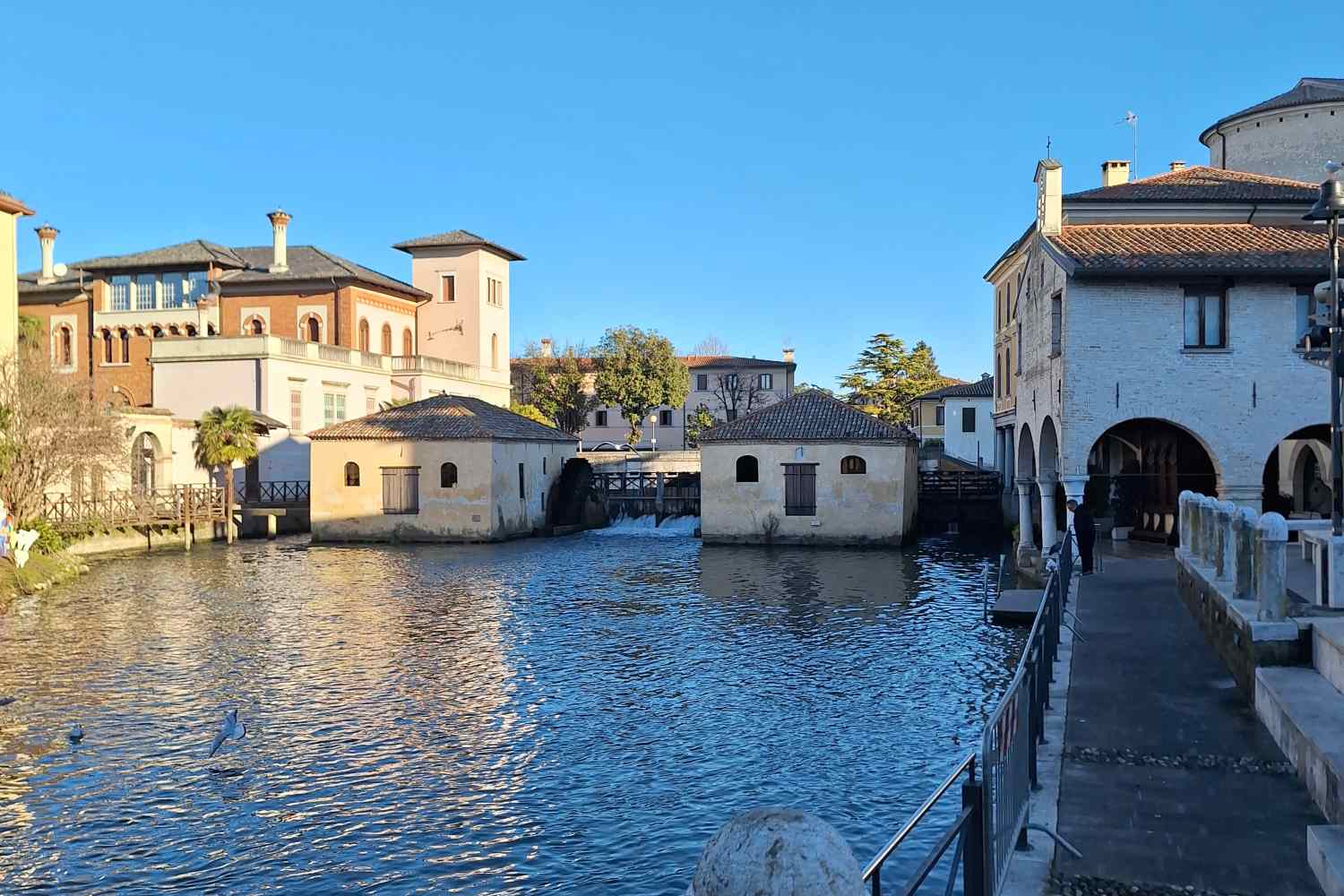
There are places capable of capturing you from the first moment, hidden gems outside the classic mass circuits that turn out to be an absolute surprise. For us, the visit to Portogruaro was born exactly like this: we were looking for a special stop to break up our journey and we came across this water village nestled in eastern Veneto, on the border with Friuli. It is often labeled as a little Venice of the hinterland, but it is enough to set foot there to understand that it is nothing like it: it has a beauty all its own, aristocratic, discreet and extraordinarily refined.
@RebeccaManzi/GreenMe
History can be felt in every corner here; the city was officially founded on 10 January 1140, when the bishop of Concordia granted Venetian merchants these lands along the Lemene river to build a river port, warehouses and homes. Today that mercantile past still lives in the reflections of its canals, which we explored on foot on an unforgettable day.
@RebeccaManzi/GreenMe
The monumental entrance from Porta San Giovanni and Corso Martiri della Libertà
Our walking itinerary began in front of the majestic Porta San Giovanni, one of the three perfectly preserved medieval gates together with Porta Sant’Agnese and Porta San Gottardo. Crossing the arch, the visual impact was immediate: an explosion of pastel shades reflected on the canal.
We went up the main axis of Corso Martiri della Libertà, an elegant avenue marked by mullioned windows, palm trees and Renaissance facades where historic venues serve glasses of Lison DOCG and Refosco DOC at any time. Along the way, we came across the famous Pozzetto del Pilacorte (also known as Pozzetto delle Grazie), an ancient water point adorned with two splendid stone cranes sculpted in 1928 by a local artist, which reflect the city coat of arms.
The political and religious heart of Piazza della Repubblica
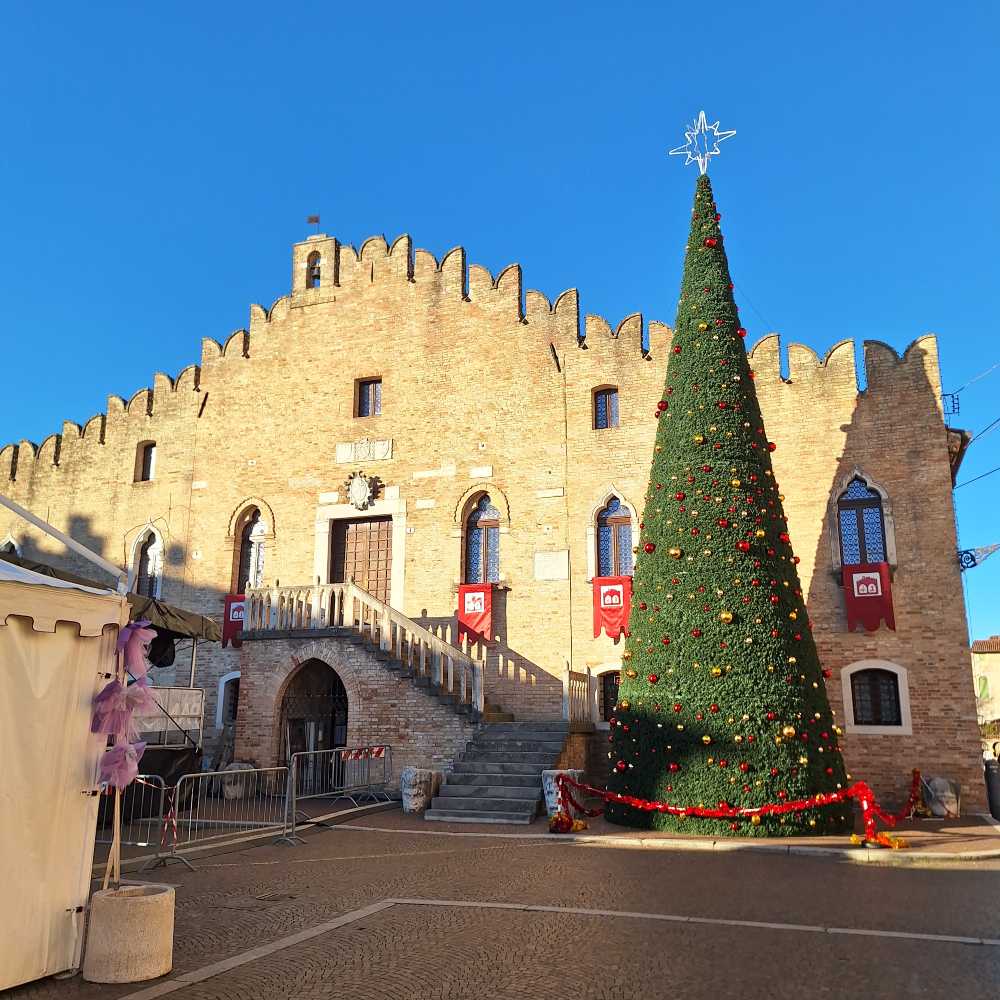
A few steps under the arcades and you reach Piazza della Repubblica, the true urban living room of the village. Here the Municipal Palace, built in 1265, dominates undisputed. It is a masterpiece in Venetian Gothic style with exposed bricks, Guelph battlements and an unusual triangular shape.
@RebeccaManzi/GreenMe
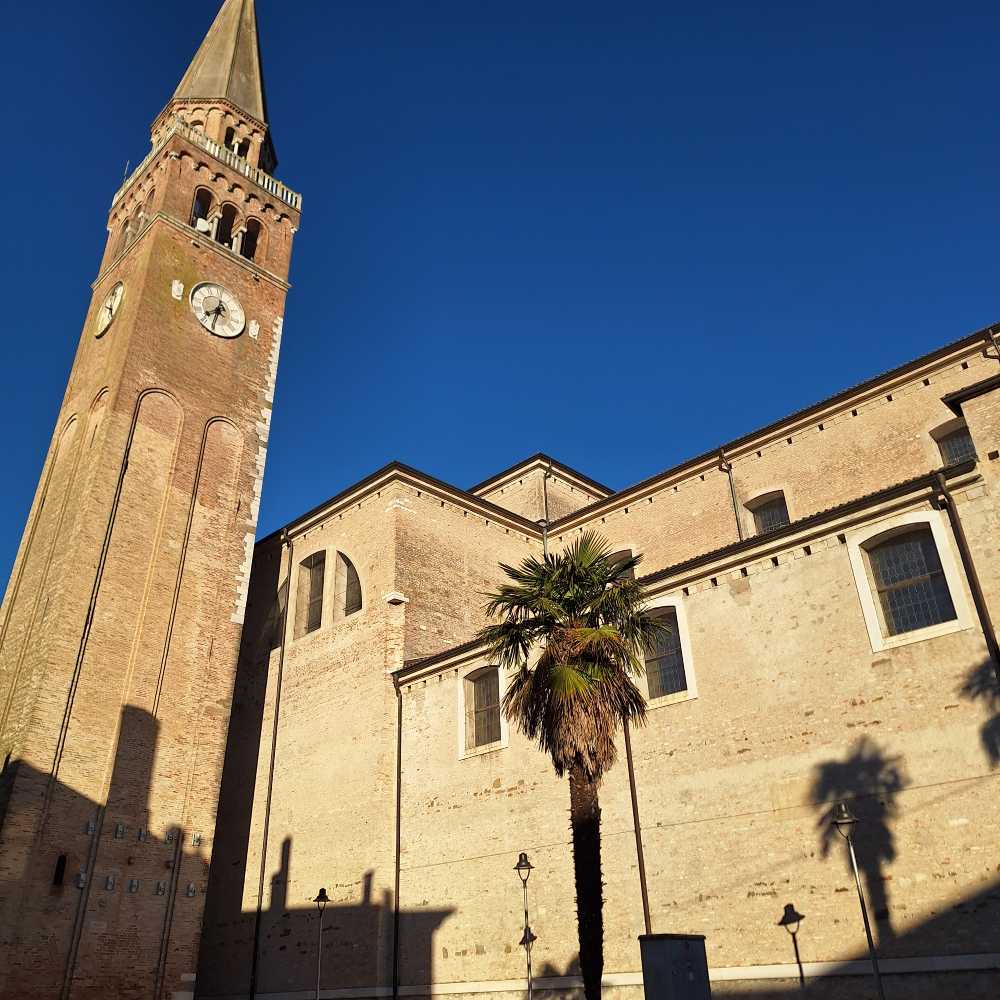
Moving a few meters you reach the adjacent Piazza del Duomo, dominated by the majestic Cathedral of Sant’Andrea Apostolo. The building, of neoclassical layout with Baroque modifications, houses valuable works of art inside, but everyone’s attention is captured by its famous crooked bell tower. 52 meters high, it boasts an impressive slope of 42 centimeters from the base to the spire, which positions it as the third most inclined tower in Italy.
@RebeccaManzi/GreenMe
The suggestive Mills of Sant’Andrea and the wooden Oratory
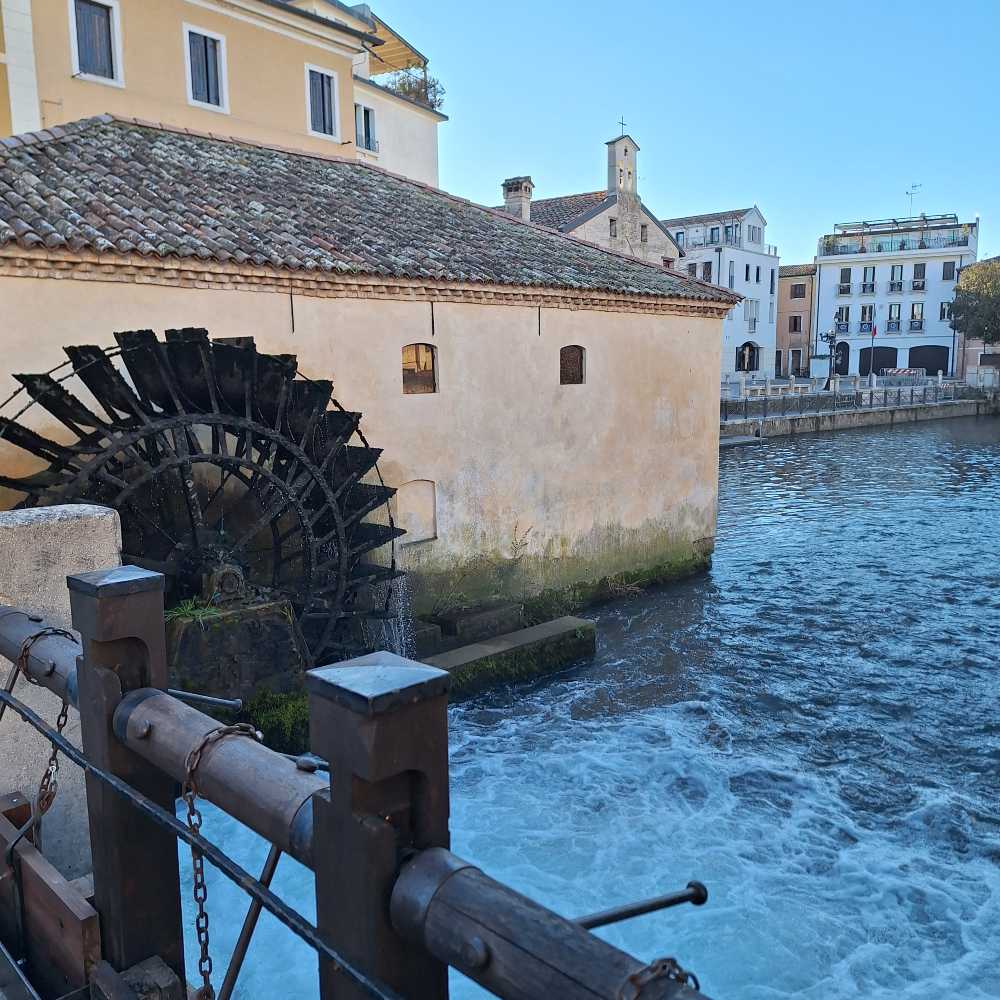
Taking the alley that opens to the right of Piazza della Repubblica, we reached the most photographed and magical corner of the whole city: the Mills of Sant’Andrea. Built in the 12th century at the behest of the bishops of Concordia, these two ancient hydraulic factories remained active until 1928 before being converted into evocative exhibition galleries.
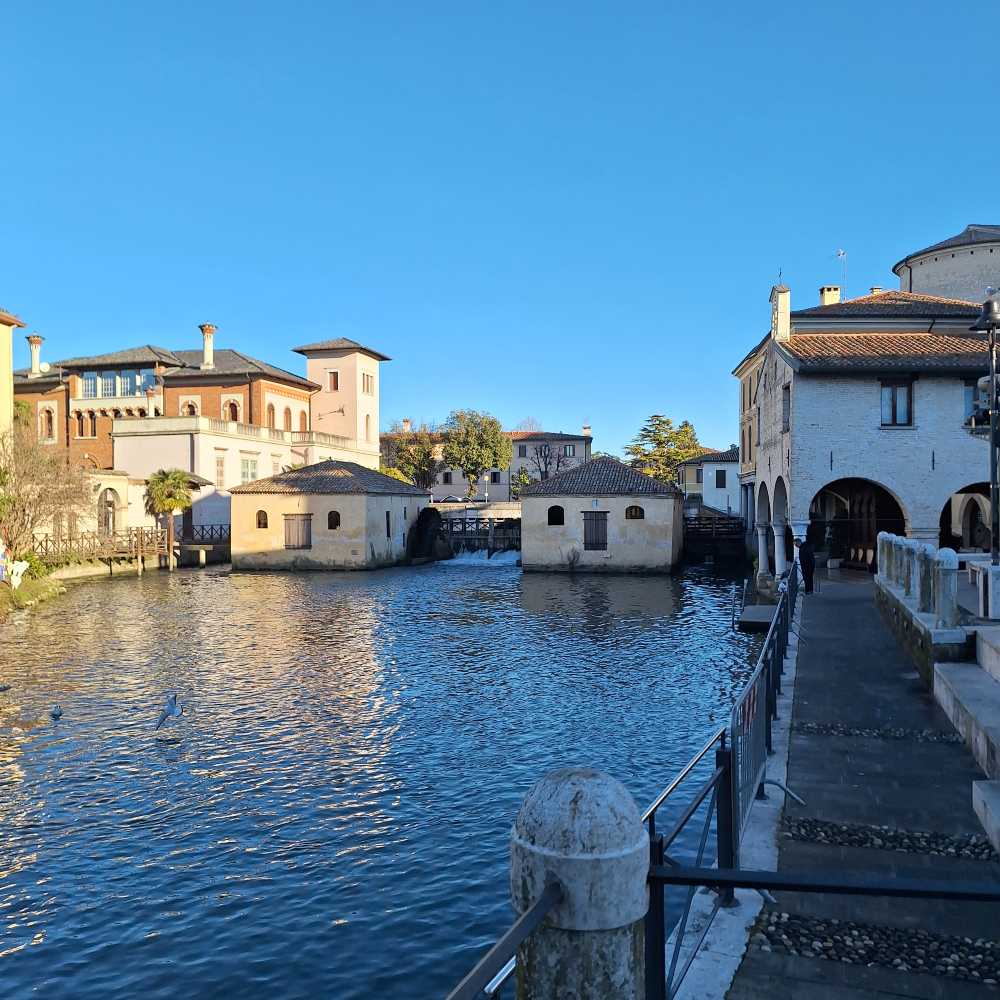
@RebeccaManzi/GreenMe
From the bridge in front you can enjoy an enchanting view that also embraces the nearby seventeenth-century loggia of the Oratory of the Madonna della Pescheria, a tiny wooden structure that houses the statue of the Madonna del Carmine, closely linked to the local devotion which culminates every 15th August with a nocturnal procession of boats coming from the nearby Concordia Sagittaria.
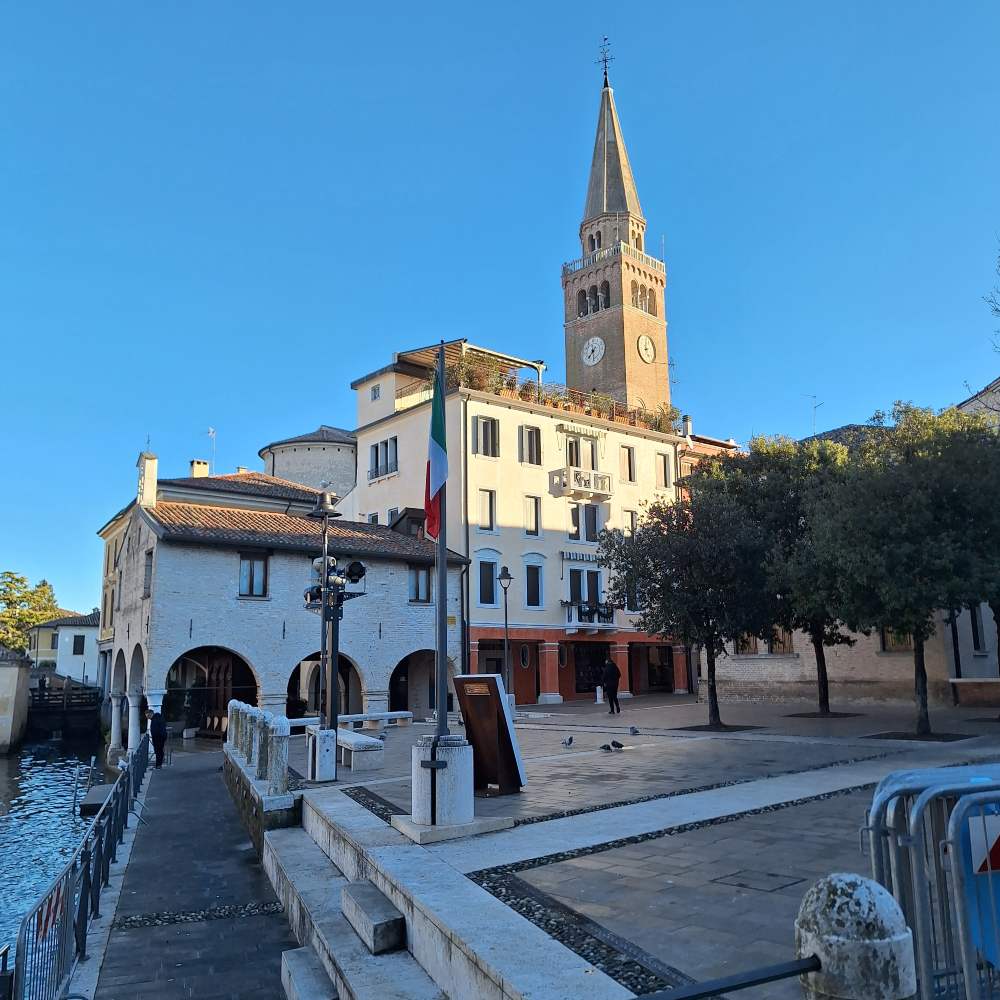
@RebeccaManzi/GreenMe
A secret maze between archeology and water labyrinths
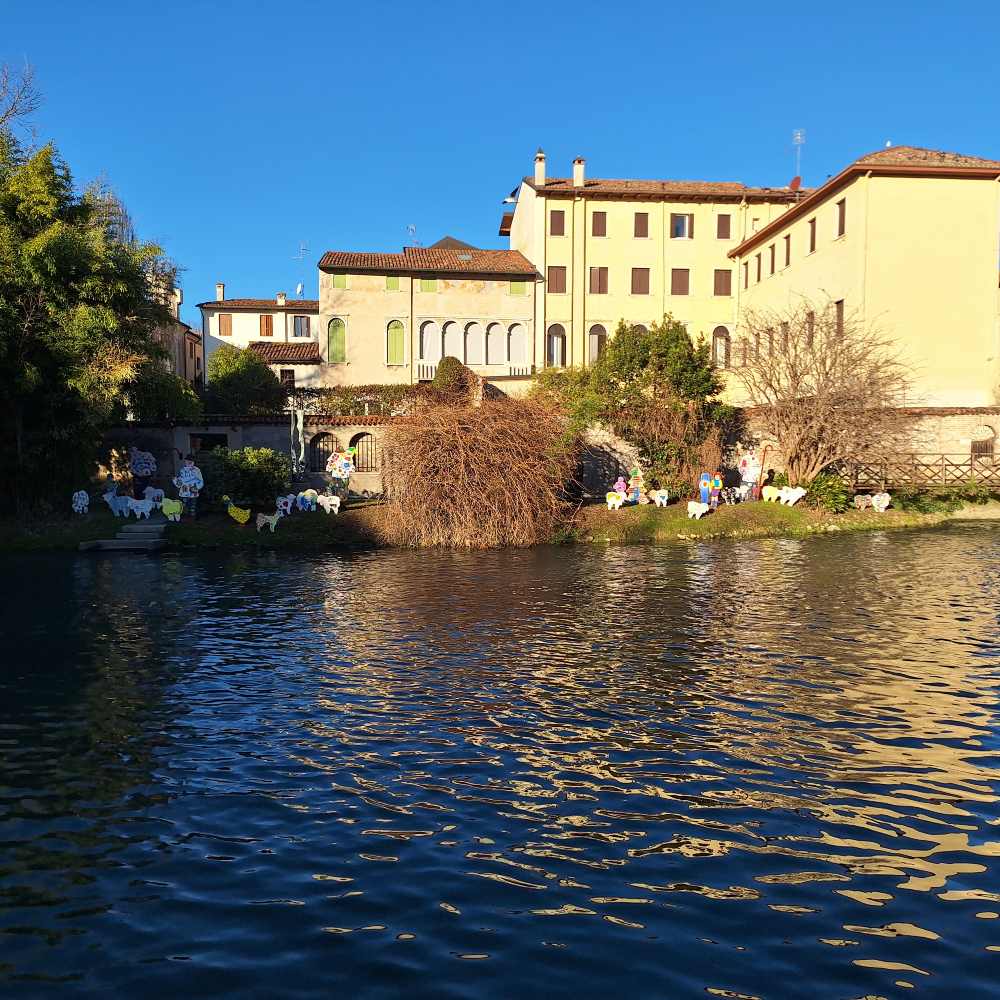
However, the true magic of the village can be experienced by abandoning the beaten path to venture into the labyrinth of herringbone streets that converge towards the river. We walked along Calle Marinaressa and Calle Beccherie, discovering discreet bridges and silent glimpses of water, and then went as far as Via del Rastrello and the charming neighborhood of Borgo Sant’Agnese. Before ending the day, we visited the National Concordiese Museum located in Via Seminario, an unmissable exhibition center that collects extraordinary finds and discoveries from the Roman era.
@RebeccaManzi/GreenMe
