
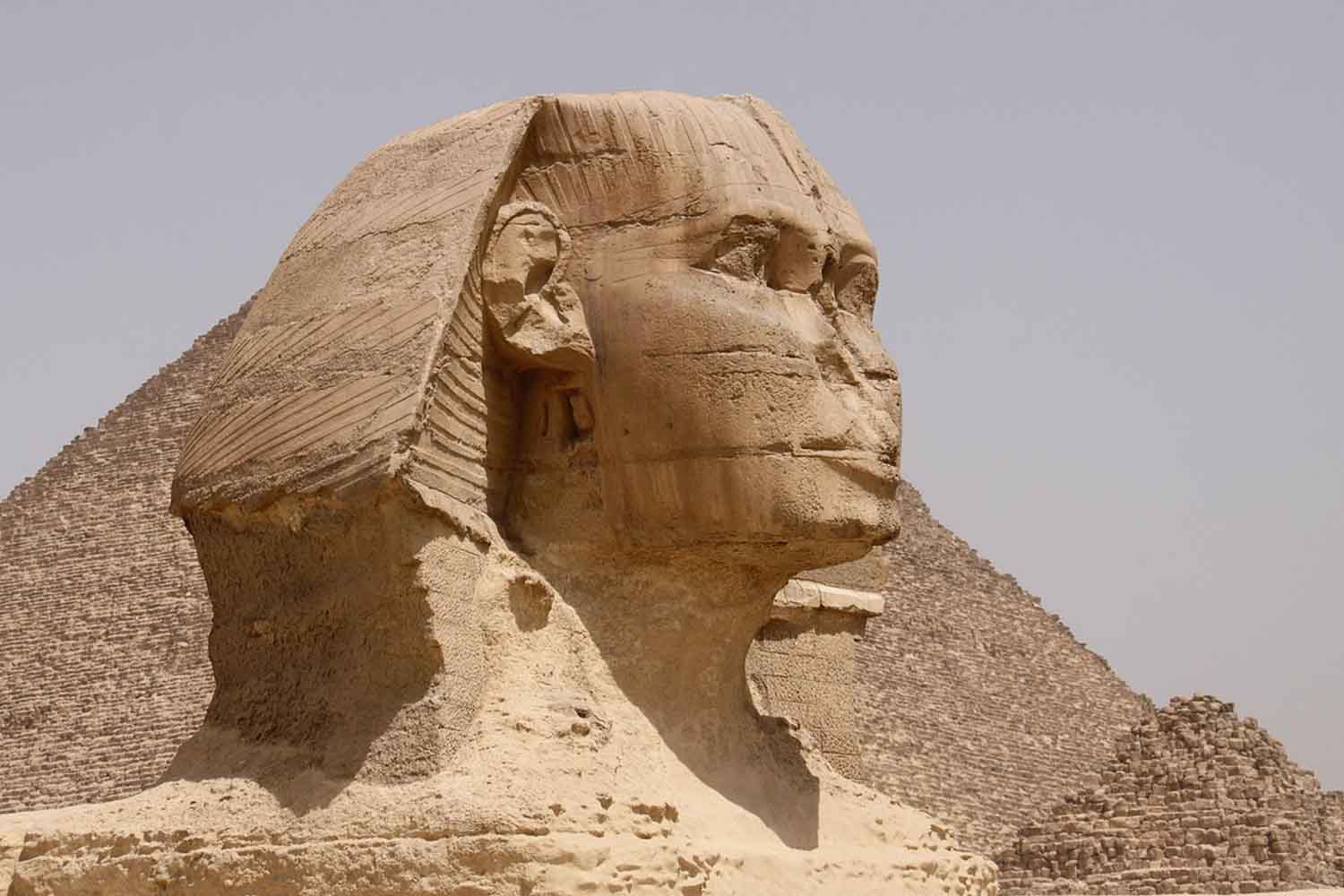
A nose protruding from a statue’s face can break relatively easily. A nose sculpted in a bas-relief, almost leaning against the wall, much less so. Yet the same damage occurs there too: face intact, nose hammered away. On many Egyptian statues with broken nosesIn short, millennia only have something to do with it up to a certain point. Someone took a chisel and hit right there.
The motif emerges from the models of destruction studied on Egyptian works and systematized in the 2019 exhibition Striking Power: Iconoclasm in Ancient Egyptorganized by the Pulitzer Arts Foundation together with the Brooklyn Museum and curated by Edward Bleiberg and Stephanie Weissberg. Nearly forty finds, some mutilated and others preserved, were compared to reconstruct a practice that was much less random than it might seem: to damage an image was to limit its power.
The nose was a weak point, even symbolically
For the ancient Egyptians a statue could be much more than a stone portrait. Images of deities and the dead could function as bodies through which a spiritual presence continued to act. The Brooklyn Museum still explains today that, according to these beliefs, souls and spirits could enter the statues through the eyes and nose. Eliminating the nose therefore meant symbolically preventing the figure from breathing.
The idea becomes more understandable by looking at another Egyptian rite, that of“opening of the mouth”. The instruments preserved at the Metropolitan Museum of Art were used in a ceremony that symbolically restored to the deceased or the statue the possibility of breathing, seeing, hearing, eating and drinking. In short, the stone received a kind of ritual life. Hitting the parts necessary for those functions was the reverse procedure.
And in fact it’s not just noses that disappear. Eyes, ears, hands, ceremonial beards, inscriptions and entire heads show damage concentrated precisely in the points capable of making the figure act or identify. On a stele dedicated to the noble Setju, for example, the face and the hand with which he reached the food needed in the afterlife were damaged; even his name was abraded. The exhibition indicated among the possible perpetrators tomb robbers or enemies who would have been interested in neutralizing the deceased before violating the funerary space.
When breaking a statue became political
The chisel could also be used to govern memory. One of the examples chosen for Striking Power it was a granite head of the guinea fowl Hatshepsutwho lived in the 15th century BC. The figure presented a very eloquent sequence of damage: the royal cobra on the forehead was hit, the beard symbol of royalty was removed, the nose was destroyed and the head was finally separated from the body.
In the reconstruction proposed by the curators, those interventions were part of the campaign launched after the death of the sovereign to erase her role as pharaoh and strengthen a different line of succession. It wasn’t enough to make a face disappear: the elements that expressed its authority, identity and ability to act were struck one after the other. A damnatio memoriae executed with decidedly less subtle tools than a press release.
A few generations later it arrived Akhenatenthe pharaoh who promoted the cult of Aten while reducing that of the other deities. In some reliefs the names linked to the god Amun were deliberately erased. After the death of Akhenaten and the return to previous cults, the direction of the chisel changed: the images of the pharaoh himself and Aten were attacked.
In a relief preserved by the Brooklyn Museum, Akhenaten is depicted with his daughter offering a bouquet of flowers to the solar disk. The face and crown of the pharaoh are destroyed, the cartouches with his name have been erased and the figure of Aten has been removed. Here the damage almost seems like a sentence written in stone: removing the name, face and god meant removing legitimacy from the scene.
The story continues in the following centuries. During late antiquity, according to the exhibition documentation, Christian groups targeted images and temples associated with previous religions, which were considered repositories of dangerous spiritual forces. In the Islamic era, however, some works were also dismantled to recover the stone as a building material. Same hammer, very different motivations: the marks left on the works help to distinguish one from the other.
One chisel, two hairstyles and several centuries later
There is a detail of the exhibition that illustrates how targeted some of the interventions were. Two limestone statues depicted the scribes Amunhotep and Djehuti. The first still has his head, but his nose has been chiseled off. The second was beheaded.
The difference could simply depend on the hair. Amunhotep’s hairdo falls to his shoulders and reinforces the stone block around his neck—removing his head required a lot of work. Djehuti, on the other hand, has short hair and a neck that is much easier to break. For one it was enough to take away his breath, for the other his head directly. Even the iconoclasts evidently economised on effort.
Time has eroded, broken, and toppled countless numbers of Egyptian works, so each missing nose doesn’t automatically tell the same story. However, the repetition of selective damage on statues, sarcophagi and especially bas-reliefs shows that many mutilations were deliberate. The stone was hard. The ideas that those images represented, enough to deserve a few blows of the chisel, must have seemed even more resistant.
