
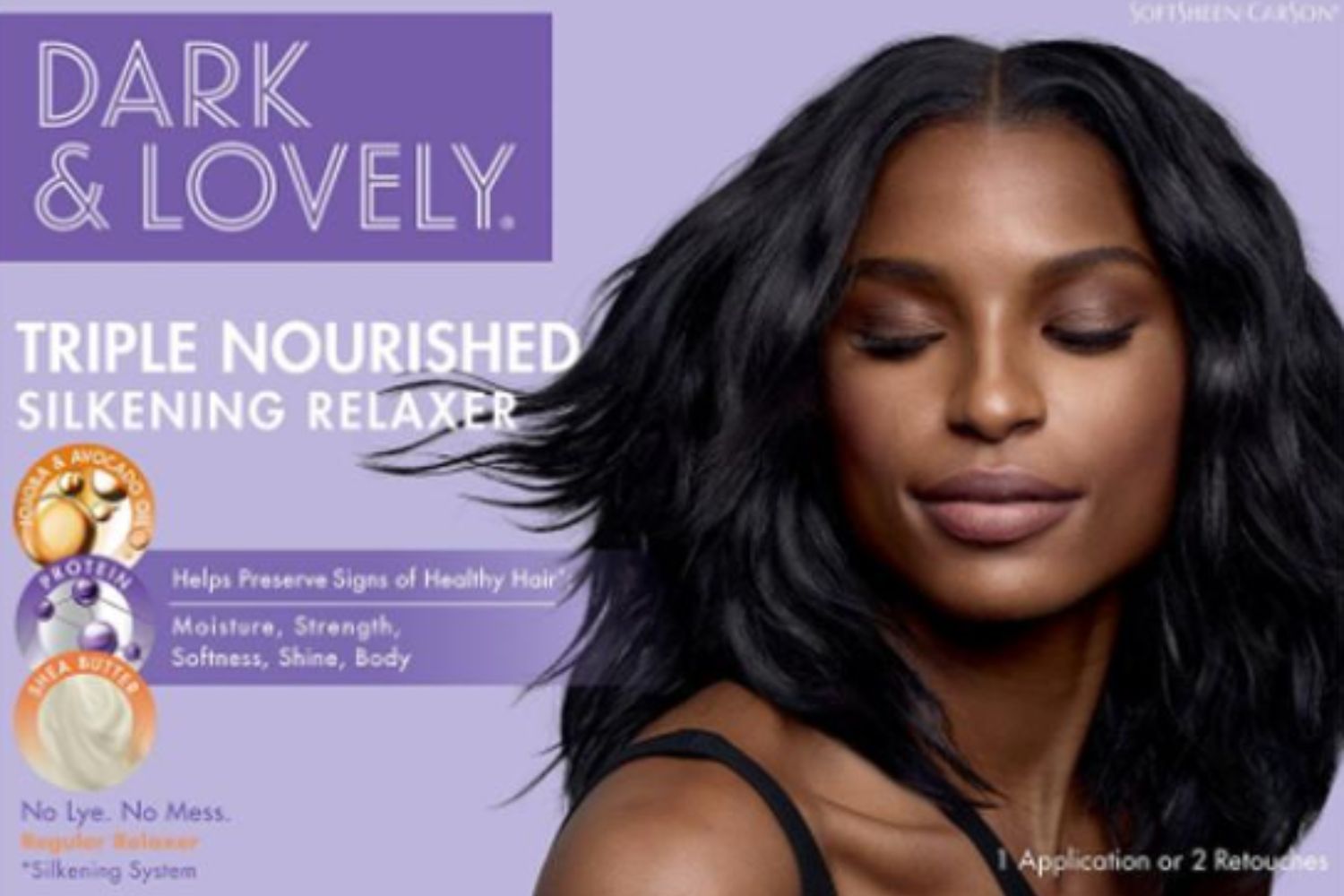
Chemical straighteners have been used for decades to change the structure of curly or afro-textured hair and make it straight. Now, in the United States, they have ended up at the center of a new legal battle involving one of the world’s largest cosmetics groups.
The State of Arizona, through Attorney General Kris Mayes, has in fact filed a lawsuit in the Superior Court of Maricopa County against L’Oréal USA, L’Oréal USA Products, L’Oréal SA and SoftSheen-Carson LLC. The accusation is of having violated the Arizona legislation on consumer protection by advertising and selling straightening products without providing, according to the prosecutor’s office, adequate information on possible health risks.
The complaint concerns several products marketed in the American state by the L’Oréal group through numerous brands. Among those expressly indicated in the judicial document are Dark & Lovely, Optimum and Mizani, but the prosecutor’s office also mentions Bantu, Care Free Curl, Look of Radiance, Roots of Nature and Ultra Precise.
According to the indictment, these products were advertised primarily to women and girls of African origin, including through beauty salons, as tools to make naturally curly hair conform to prevailing aesthetic standards. The complaint also dedicates ample space to the history of social pressures exerted on Afro-textured hair and the way in which these have influenced the straightening market.
The prosecution also alleges that some products were marketed directly to children, citing in particular the Dark and Lovely Beautiful Beginnings line, accompanied, according to the prosecution, by messages intended to reassure parents about the safety and benefits of straighteners.
How chemical straighteners work
The complaint also explains what precisely happens during the treatment. I “chemical hair relaxers” are highly alkaline products based on hydroxides that modify the structure of keratin, the protein that helps determine the shape of the hair.
The treatment breaks and reforms the disulfide bonds present in keratin, making the hair structure progressively more relaxed. Since the treated part then grows together with the new growth, the application must be repeated periodically to maintain the effect. The average frequency of touch-ups is approximately 4-8 weeks.
And it is precisely the chemical nature of these products that represents one of the central elements of the complaint. The prosecutor’s office points out that their high alkalinity can be corrosive to the skin and that repeated scalp exposure can cause chemical burns, irritation, lesions, hair loss and alopecia.
But that’s not all.
The substances that ended up under accusation
Arizona recalls several categories of substances which, according to what was reported by the prosecutor’s office, have been detected in straightening products or may be present as a consequence of their formulation.
Among these are phthalates, parabens, cyclosiloxanes, diethanolamine and benzophenones, indicated as substances with possible endocrine disrupting activity. The act also mentions formaldehyde, 1,4-dioxane, ethylene oxide and heavy metals, classified by federal and international bodies as known or probable carcinogens.
The prosecutor’s office also recalls the classifications of the IARC, the International Agency for Cancer Research of the World Health Organization: formaldehyde is classified in group 1, i.e. as a carcinogenic substance for humans, as is ethylene oxide. 1,4-dioxane is classified by the IARC as possibly carcinogenic to humans.
This, however, does not mean that every product containing one of these substances necessarily causes cancer: in the case these elements are used by the prosecutor’s office to support its dispute on the safety and adequacy of the information provided to consumers.
What the studies cited in the lawsuit say
One of the most important points of the complaint concerns the scientific literature on the possible relationship between the use of chemical straighteners and some tumors.
The prosecutor’s office first cites the Black Women’s Health Studystarted in 1995 by Boston University and dedicated to the health of more than 59,000 black and African American women. The is then called Sister Studyconducted by the National Institute of Environmental Health Sciences and the National Institutes of Health, followed 50,884 U.S. women between the ages of 35 and 74.
Among the research cited is also a 2021 study led by Alexandra White, which analyzed data from 40,559 participants in the Sister Study. According to what was reported in the complaint, the frequent use of chemical straighteners was associated with a doubling of the risk of ovarian cancer.
Even more relevant to the cause is the study published in 2022 by Che-Jung Chang and other researchers, which analyzed 33,497 women from the Sister Study. According to the complaint, a doubling of the risk of developing uterine cancer has been observed in frequent users of products to chemically straighten or relax hair.
The prosecutor then cites a 2023 study conducted as part of the Black Women’s Health Study: among women who had used straighteners, a 60% higher risk of uterine cancer was observed compared to those who had never used them. For the most frequent users the reported increase was 64%, while for those who had used these products for at least 20 years it reached 71%.
The complaint also takes into account more recent research. A study published in 2025 and based on data from the Sister Study analyzed 46,287 women, finding an association between the use of straighteners or chemical hair straightening products and a higher incidence of some non-reproductive cancers. Compared to non-users, women who had used these products had a higher risk of thyroid cancer (71%) and pancreatic cancer (166%). The authors point out, however, that further research is needed to confirm these findings.
L’Oréal knew about these studies but would not inform consumers
This is where the heart of the legal action lies. According to the State of Arizona, the companies involved were aware of the studies cited in the complaint and, despite this, continued to market the products without communicating the health risks to consumers.
The complaint specifically challenges the way in which the products were presented to the public. Advertising, packaging and promotional materials would have conveyed an image of straighteners as safe, gentle, natural, nourishing or beneficial products.
The prosecutor also claims that L’Oréal had particularly detailed information on the composition of the products and the toxicological characteristics of the substances used, precisely as a manufacturer and marketer.
According to the accusation, therefore, the problem is not only the presence of certain substances in the products, but above all the alleged omission of information considered essential to allow consumers to make an informed choice.
What does the prosecutor’s office ask of L’Oréal?
In the final part of the document, the State of Arizona asks the court for various measures. These include a finding of violation of the Arizona Consumer Fraud Act and a permanent injunction preventing the companies from continuing to sell the straightening products without adequate warnings about the health risks cited in the lawsuit.
The prosecutor’s office also requests civil penalties, refunds to consumers, the restitution of any profits obtained and other economic measures provided for by law.
Now it will be the judicial process that will establish whether the accusations made by the State are founded and what possible responsibilities can be attributed to the companies involved.
L’Oréal’s reply
Interviewed by ConsumerReportsL’Oréal USA denied the allegations in the lawsuit. A company spokesperson said all products are “rigorously evaluated in terms of safety” and that L’Oréal complies with the regulations in force in the markets in which they are marketed:
We are confident in the safety of SoftSheen-Carson products and believe that the allegations made in this lawsuit have no legal or scientific basis.
The company also contested the interpretation of the scientific studies cited in the complaint, arguing that:
the study on which this lawsuit is based recognized the need for further research and found no causal link between the use of these products and the conditions complained of by the plaintiffs.
