
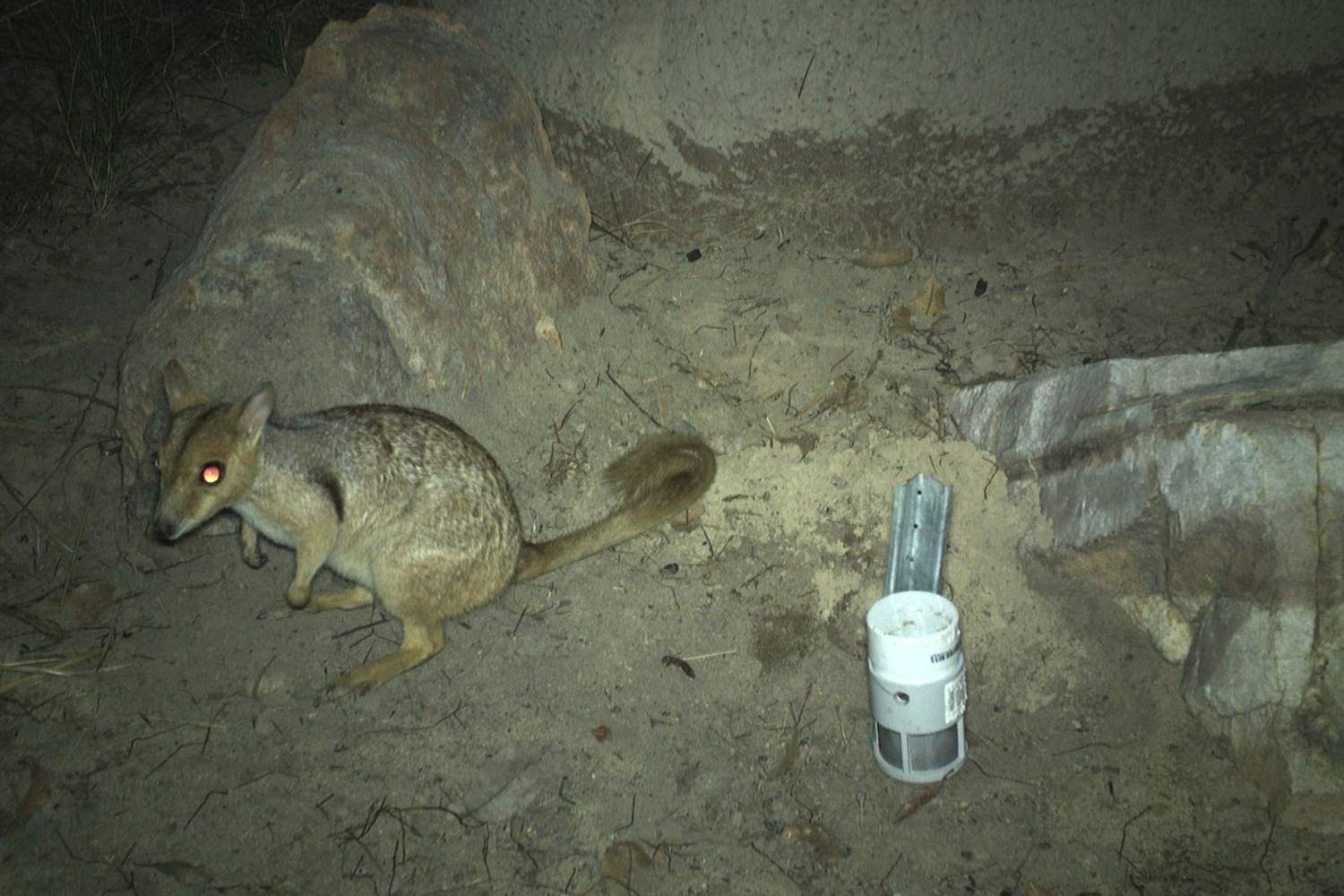
The world of zoological conservation is celebrating an exceptional milestone: the nabarlek, scientifically known as Petrogale concinna and recognized as one of the smallest wallabies on the planet, has been officially documented on the Australian mainland after a silence lasting over 50 years. The incredible discovery occurred in two different sites within the remote Kimberley region of Western Australia, thanks to the joint work of researchers from the Australian Wildlife Conservancy and the Dambimangari Aboriginal Corporation. For decades it had been feared that this marsupial had disappeared from continental territories, surviving only on a few offshore islands, but the use of advanced technologies has overturned the scenario, demonstrating that the species still resists in hidden pockets of the Dambeemangaddee territory.
A unique biological anomaly and the challenges of identification
The nabarlek is an extraordinary creature to say the least, characterized by Lilliputian dimensions ranging between 29 and 35 centimeters in length for a weight of just 1 kilo and 200 grams, comparable to the size of a common loaf of bread. Its most astonishing biological peculiarity lies in its teeth: unlike almost all mammals, this marsupial is the only one capable of continuously replacing its molars throughout its life, a mechanism similar to that of sharks in which the teeth do not emerge all together but continue to grow in the back part of the jaw.
Finding it was not at all easy, since the animal shares almost identical somatic traits with other local lookalikes such as the Monjon and the short-eared wallaby. To overcome this obstacle, senior ecologist Larissa Potter and her team combined the use of motion-sensor camera traps with rigorous genetic analysis of stool samples collected in the field, creating a verified visual library.
@Australian Wildlife Conservancy
A species in danger of extinction
Despite the enthusiasm for the species’ return, the future of the nabarlek remains highly threatened by complex and persistent risk factors. The IUCN Red List classifies the small marsupial as critically endangered (endangered), estimating a mature global population of between 5,000 and 10,000 specimens. The main threats include feral cats, which actively prey on specimens, and frequent devastating fires that alter the structure of vegetation in the late dry season. Knowing that the nabarlek resists is proof that the ecosystem still retains healthy areas, but makes new funding and targeted protection strategies urgent to prevent the definitive disappearance of this extraordinary inhabitant of the Australian bush.
